Several ancient schools of thought, originating thousands of years ago in India and in China, tell us that when you give something a name, you cut it off from the great swirling unknowable unknown that we call the universe, the mystery, darkness within darkness, or the nature of reality. Of course, those are all names, so it becomes impossible to write about the underlying nothing, since the moment we use words, we confine the thing that is too big for words.
Pulling focus to create uncertainty. Photo credit Austin Guevara pexels-photo-237898
How do creative artists, including writers, manage that paradox? On the one hand, the writer’s tools are words. On the other, in order to touch the universal, we must abandon words, abandon thinking altogether, in fact.
Leaving Thought Behind
This is why, for example, forms of meditation recommend that we ‘just be,’ focusing on breath, and briefly acknowledging and then dismissing thoughts as soon as they appear. In this context, thoughts are sometimes compared to clouds in the sky, waves on the surface of a deep ocean, or cars passing by on the road. They come and go, and have no meaning.
A teacher recently posed the problem, “Describe to me last week – without using words.” He concluded that the task was impossible, because there is no ‘last week’ without words and symbols. Ideas, relative positions in time, in fact the notion of time itself, are all constructs. All Maya.
The illusion of smoke. Photo credit Rafael Guajardo pexels-photo-604672
Maya, a Sanskrit word sometimes translated as illusion, has multiple, nuanced meanings. In Western popular-culture shorthand, maya has come to mean the shared trance that we unknowingly, collectively agree to, so that we can function in the modern world. Buying into the trance of maya, we pay our bills, go to our jobs, drive in traffic, give birthday gifts, vote for politicians, accept the names of things, and in countless other ways entertain the culturally accepted method of viewing the world. Underneath maya, though, is that limitless unknowable everything. Is being free from maya the goal of those seeking enlightenment?
My first response to the teacher’s question about communicating ‘last week’ without words, was to imagine a kind of interpretive dance, or a quickly drawn image that somehow elicited in the viewer an intuitive grasp – somehow – of the notion of ‘last week.’
Maya for Writers
Assuming for the moment that a dancer or artist might be able to do that, what does the writer do, faced with this challenge? Even the most artful, obscure poem uses words, does it not? And words, unavoidably, conjure up in each one of us our previous uses, memories, knowledge, and responses to them. In fact, words have richness and power because of all our associations with them. This is true for the writer and for the reader.
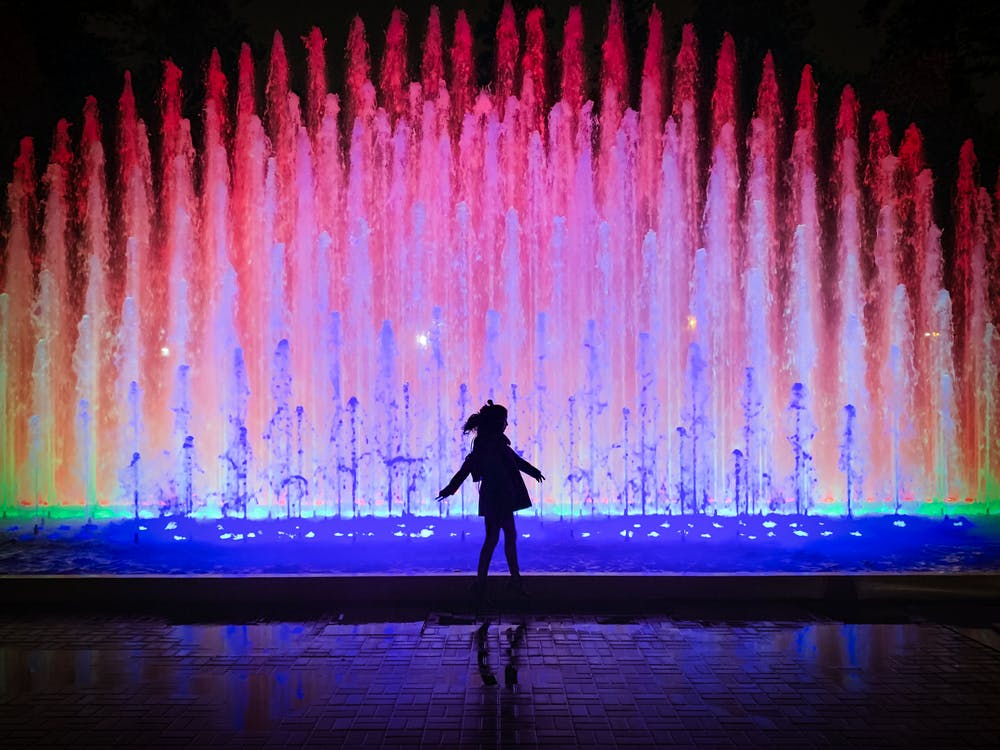
The magic of a child and an illuminated fountain. Photo credit Darren Lawrence pexels-photo-3822110
If writers cannot possibly escape maya in our work, can we use our shared unreality for good? Do we use language – our creative tools – in ways that can shift that shared maya, for a moment, into a slightly new light? Do we apply metaphors and similes? Do we arrange words in unexpected sequences to permit the reader a brief glimpse of something beyond the words, into the unknowable?
— A M Carley writes fiction and nonfiction, and is a founding member of BACCA. Through Anne Carley Creative she provides creative coaching and full-service editing to writers and other creative people. Decks of her 52 FLOAT Cards for Writers are available from Amazon. Anne’s writer handbook, FLOAT • Becoming Unstuck for Writers, is available for purchase from central Virginia booksellers, at Bookshop.org, and on Amazon.
More than once I’ve shared my writing philosophy with friends who have hit a hard bump in the road. Whether an illness, a job loss, or relationship troubles, for a writer, there’s no such thing as a bad experience. All experiences are material, the good ones and the bad ones. Especially the bad ones. The first few months of 2020 have tested this saying almost to the breaking point. This has been a year for the history books. Before I heard a word about coronavirus or quarantine or government shutdowns, I had health issues and bee hive failures.
“Two bears in one cave will not end well.” – Mongolian
Three of my four hives failed in January and February. One hive died. The second hive absconded (the bees flew away and never returned). The third hive abandoned their home for some reason and joined up with the stronger fourth hive. Losing three hives was very disheartening. I had anticipated a heavy honey season so this seemed like a personal failure. I left the empty hives where they were for the time being. It was cold, there weren’t any pests flying around to bother them, and I had bigger issues to deal with.
“Kings and Bears often worry their Keepers.” – Scot
In early March I spent a night at the hospital to repair a brain aneurysm. I was a nervous going in but the surgery was quick and I was up and walking the halls of the ICU by that evening. I took it slow and easy, more afraid of tripping over the thick socks they gave me than anything else. I walked past a couple of rooms with signs on the door saying masks were required to enter because of “respiratory particles.”
No more than a week after getting home, my apiary had an unwelcome visitor. A bear had found my three abandoned hives and decided to check them out.
Bears enter our vernacular in many ways.
Bear market
Bear witness
Freedom to bear arms
Grin and bear it
Goldilocks and the Three Bears
I cleaned up my apiary, removing all the damaged hives. I strapped down my strong hive and surrounded it with cinder blocks and tin cans dangling from string to scare away the marauding bear. My beehive had at least 50,000 bees in it. You’d think that many bees would keep any creature at bay, even a bear. You can see for yourself, my efforts were a waste of time.
What should I do? My last hive was destroyed. Should I quit beekeeping? Should I shrug off all the time and money I had put into it? Should I say this just isn’t for me and abandon my few remaining bees to their fate? So many signs told me to quit. I was healing from surgery. I was dealing with the growing threat of this coronavirus. The government shut down businesses all over my city. My beekeeping classes were cancelled. The state beekeeping convention was cancelled. My local beekeeping club meetings were cancelled.
Writers know what it feels like to get knocked down. No matter how much time you’ve spent on a story. No matter how much money you’ve spent on writing classes and seminars. Agents don’t want to represent you, publishers don’t print your story, readers write a scathing review of your work for the world to see. Writers face relentless rejection. Signs everywhere tell them to quit. Life gets in the way of writing routines, inserting personal tragedies and national pandemics into everyday life.
“The bear is in the forest, but the pelt is sold.” – Unknown
I decided try again. I saved as many of my bees as I could and placed them and what I could salvage from their hive in a shed. I locked the shed at night to protect them from the bear. It was a temporary solution, at best. Moreover, there was a good chance the queen was dead and the bees would abandon the hive. By this time, it was late March and needed to be vigilant about the coronavirus. Washing hands. Social distancing. Wearing a face mask. My husband worked at the local hospital so I had daily updates when he came home. I talked via email and phone to beekeeping mentors and asked for advice. Before I set up a new apiary, they said, I needed to make sure it was safe from bears. That meant an electric fence with a solar panel charger. Of course, I couldn’t shop around for fence and solar panel charger materials. Everything had to be researched and purchased online.
The equipment finally arrived and my husband put up the electric fence all by himself. Talk about social distancing. With his help, we moved the beehive from the shed to their new home. I repaired and repainted the hives damaged by the bear. I purchase two new packages of bees. My new apiary was all set just in time for the April blossoms. It was a tremendous about of work and might not yield any honey but all I can do is keep trying. Unlike writing, in beekeeping there IS such a thing as a bad experience. But I learned a lot and hope I’m a better beekeeper for this experience. And maybe a better writer too.
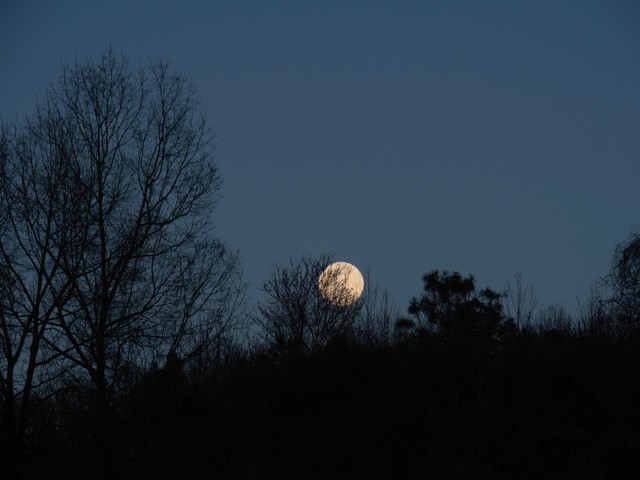
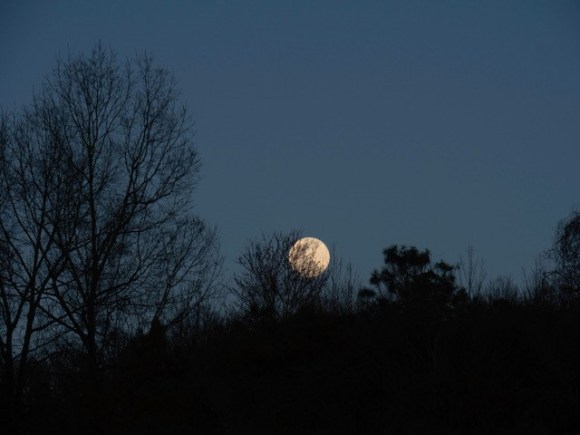
Inspiration and a Gift – Full Moon at Bent Creek by visual artist, Stanley B Watkins
Many of us are in new territory—a time of exile has begun. Swimming in the uncertain and strange, we wait and worry and wonder and shop. It’s even hard to know exactly what we need right now and how much. Perhaps, like me, you didn’t find what you were really looking for in the grocery store. No one shelved serenity in between the bags of coffee and tea, or comfort in the paper goods aisle. No guarantees that life will return to normal were stocked on the empty shelves where they used to keep bread. We may have to create what we really need right now—we may need to find serenity, comfort ourselves and each other, and stir up some hope.
In that spirit, a week ago I reached out to a handful of my creative, artist-friends with five questions—a survey of sorts about sources of inspiration and creative process. Individuals, participating in a wide variety of creative genres and ranging from 20-something to 80-something, responded with exquisite bits of wisdom and inspiration—more of it than I can share in one post, so stay tuned!
This feels like a good time to implement the “dessert first” strategy, so I’ll share some of the most hopeful parts now—answers to the questions below. I hope that you will find these thoughts as encouraging as I have during this chaotic, strange, and lonely time.
#1 Has anything inspired you lately?
# 2 If you could give the world a present…?
Joy, whose creative fields include music, design, and art, finds inspiration looking at houses—“I immediately start moving walls in my mind and imagining the full potential of the space”—and listening to music and soundsaround her—“The hum of the vacuum cleaner once turned into a song.”
Her gift:
I would love to give the world the gift of safety and security, real and perceived.
Gareth Phillips (a.k.a. January Zero), a singer/songwriter, recording artist, and poet, shared this slow-motion video of a Chinese spouting bowl being played—“I like most about this video that, well beyond its eye-candy value, it reveals the relationship between sound/vibratory waves and visual patterns.”
His gift:
I would like to give everyone an hour of perceiving the world from a completely different viewpoint. I’m not thinking of the perspective of a different subculture or religion or ethnicity or gender, although those would work well too. I’m actually imagining if everyone could see the world through the eyes of a bird or butterfly, which can see color in the ultraviolet spectrum, or from the angle of an animal (or person) who uses echolocation, like bats and dolphins. If we could smell fear or happiness, for example, as bees and dogs are said to be able to do, how might our experience of aggression and kindness shift?
JW Kennedy, who creates cartoons and music, shared this inspiration: “Red Letter Media does a YouTube series called “Best of the Worst” where they watch really bad movies and critique (but also enjoy) them”…reminding him that “a lot of earnest joy can result when someone has the nerve to put their creative project out there, even if it technically “isn’t any good.” It’s a great inspiration to GO FOR IT and be less critical of my own work.”
His gift:
I’d love to make a video game based on ideas I’ve had for more than a decade .. and let everybody play it for free.
A music teacher wrote that she was inspired “when a student plays something really well and I see their little smile to themselves that they got it. That inspires me. C played a whole song by ear on mandolin by himself and looked up at me and smiled.”
Her gift:
I would give the whole world a northern lights display or shut off cell service for 24 hours so people will look around.
Anne, a writer, musician, photographer, coach, and editor, lately has been reading numerous mystery novels—“the comparisons and contrasts are super inspiring.” She has also gotten “intuitive hits for details of a writing project I’m finishing, and I’m so grateful.”
Her gift:
I’d organize young girls to learn to write about what’s on their minds. If they learn to trust their own thoughts and ideas before they hit puberty, I feel there is hope for them to become independent women who make up their own minds.
A painter, teacher, musician recently watched the end of the movie Lucas, she said—“If this doesn’t move you, you need malox: The locusts won’t be coming back for 17 years, I wonder where we’ll be then.”
Her gift:
If I could give the world a present today, it would be a work of art on the magnitude of Norman Rockwell…..when you look at it, it will inspire peace within.
Gene Beverly, a writer, woodworker, and general creative, was inspired by this quote from Thomas Merton’s No Man is an Island: “No matter how ruined man and his world may seem to be, and no matter how terrible man’s despair may become, as long as he continues to be a man his very humanity continues to tell him that life has a meaning.”
His gift:
Tolerance and love. I believe we are all connected with one another and whatever we do or say will in some way affect the rest of creation, be it ever so small.
Carolyn O’Neal, a fiction/nonfiction writer and beekeeper, was inspired by Elizabeth Warren at the debates—“Brilliant, caring, and articulate, she captured everything I want to follow in a leader. Plus she loves dogs.”
Her gift:
I’d like to restore the oceans to their pre-industrial age health. Before whaling, before drilling, before plastics. I wouldn’t want to turn back the clock on anything else. Not on food or transportation or plumbing, and certainly not on health care. Just save the oceans.
Jeannie Beverly, whose creative fields include painting, photography, calligraphy, and writing, was inspired by the most recent film version of Little Women—“seeing the movie made me realize I have always identified with “Jo,” who is the writer. For the first time, I think that has always made me think I might write.”
Her gift:
The will and the dedication to save our planet. A greater consciousness of the beauty and variety around us all the time and how terrible it is to destroy it.
Writer, Darrell Laurant, is inspired by the organization “Better Angels” that teaches people “to listen to and communicate with others with whom they disagree. This change in attitude is badly needed, and the existence of a group like this inspired me.”
His gift:
The ability to see every other person on the planet as an individual, and communicate with him/her on that level without pre-conceptions or stereotypes.
David, a mixed media artist, writer, and idea generator, has been inspired by the return of the sun after rain, a recentexcursion tonatural settings on the outskirts of VCU in Richmond, and reading Howl’s Moving Castle—“I recommend it for those looking to return to what it felt like having childlike fantasies.”
His gift:
Does it have to physical? If so, I’d say food. A different meal for each persons needs. I believe food is a powerful tool for just about every need. If I can get a bit more magical… I’d like to send out an aura of calm energy and let the whole world just breathe and be ok together for a little while.
Bonnie, whose creative genres include gardening, landscaping, music, and conversation, was inspired bya Kombucha workshop. She found it “fascinating and yucky at the same time! Who would’ve thought that this would’ve been a delicious drink?”
Her gift:
Unplug, go outside, enjoy the day and each other.
Steve, a brilliant, subtle thinker, who “composes (prose) for an audience of one,” has been intrigued by the activity of squirrels and crows he has observed on his bike commute to work—“All the squirrels look alike to me, but I don’t understand their furtive movements, I don’t know what they do when it snows, I don’t know where they live since I see so few nests in the trees. I don’t even remember what their nests are called.
And crows are more interesting than that.
His gift:
Poverty relief is always a reasonable answer. Otherwise, an antidote.
If you’d like to participate, share your answers in the comments below.
Noelle Beverly writes poetry and prose, promotes local writers in the surrounding community, and is a member of the BACCA Literary group.
I’m in the midst of training as a creativity coach. Eric Maisel offers these trainings to people across the world. Our cohort includes students from most continents, representing many art disciplines, backgrounds, ages, and careers. Every week, we get a new set of questions to ponder and then respond to. Everyone sees what everyone writes. It’s routinely astounding to see what comes back each week — the interesting and, to me, unpredictable, ideas, observations, anecdotes, and heartfelt interpretations that our various class members bring to the group.
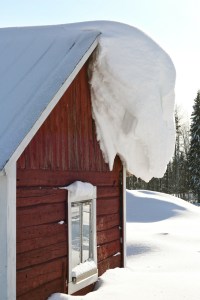
The snow on the roof. Image courtesy Visualhunt
While Maisel’s course is enriching my working life in many ways, it’s also feeding my inner creative life. One of its several big lessons is this potent reminder of the value of shared creative time with a group. I always enjoy seeing it in a new setting.
Songwriting
I got an early introduction to the phenomenon many years ago, at a summer music retreat in the Pacific Northwest where I had the pleasure of taking a songwriting class led by Charlie Murphy. One day, he distributed little scraps of paper, on which he’d written short phrases. We discovered that several of us had received the identical phrase — in my case, “the snow on the roof.”
The snow on the roof. Image courtesy Pixabay.
Our little group of five or six people went off into the woods with two directives: first, to spend a few minutes in silence, jotting down our own ideas for a song inspired by those few words. Then we were to meet and together co-write a set of lyrics that combined all our ideas. I came up with some ideas about the cycle of water in nature — from rain to snow, from river to ocean — that sort of thing. To my amazement, when we compared notes, I discovered that no one else had gone there. At all. In fact, each of us had produced, in just a few minutes, a completely different approach to those words, “the snow on the roof.” One person imagined a woman adventurer in the 19th century homesteading in the American West. Another focused on a contemporary family’s mundane life. And so on. It was such a gift, for each of us to see what five other creative minds had invented, in the space of such a short time.
Writer Group
That lyric-writing experience has stayed with me. It helped prepare me for the BACCA writer group, which has been meeting regularly for over eight years. Our monthly critique meetings offer that same quality of surprise and delight. Each of us contributes such a different take on the works in progress that our writers share with one another.
The snow on the roof. Image courtesy Pixabay.
I always benefit from the responses the BACCA writers bring to my work, and trust that it’s reciprocal. BACCA gives me regular reminders that we cannot predict how someone else will interpret our words. Just as “the snow on the roof” prompted unique trains of thought in the minds of our little band of songwriters all those years ago. And just as my fellow creativity coaches interpret Eric Maisel’s lessons and comments.
The world is so much bigger and richer than we can imagine. And any one of us is capable of imagining entire worlds. So do the math. The more that we are willing to engage with the imaginations of the people around us, the more we expand our own creative life. Everybody wins.
— A M Carley writes fiction and nonfiction, and is a founding member of BACCA. Through Anne Carley Creative she provides creative coaching and full-service editing to writers and other creative people. Decks of her 52 FLOAT Cards for Writers are available from Amazon. Anne’s writer handbook, FLOAT • Becoming Unstuck for Writers, is available for purchase from central Virginia booksellers, at Bookshop.org, and on Amazon. Anne’s recording of her song, The Snow on the Roof, based on her ideas from the Charlie Murphy class, is available here.
My compost bin is just a dirty plastic box without a bottom. I set it up under a tree near the road a good ways away from my beehive so it wouldn’t attract bears or other critters to my bees. I keep a bucket in my garage for scraps and carry them to the bin about once a week, more often in the summer during watermelon season. More often if I’m composting something tasty that my dog likes to sneak into the garage to nibble on like sweet potato peels. I compost egg shells, orange peels, and coffee grounds. I compost kale stems, pistachio shells, and leaves from my driveway. How could this hodgepodge ever amount to anything worthwhile? All I have to do is leave it be and let Mother Nature do her thing. She turns all those scraps turns into rich dirt. Rich dirt to feed my trees and create flowerbeds. Rich dirt to attract worms. My yard is more productive because of those scraps.
Here’s the deal. I’ve been researching a nonfiction project for a couple of years and let me tell you, a couple of years of research piles up. I have scraps of newspaper articles, recordings of interviews, court records, books, pamphlets. My poor little office has stacks of notebooks and ideas. The problem is I don’t know how to tell this story. The blind man and the elephant scenario. The project is so big I don’t know where to start.
FLOAT devotes a couple of pages on a topic called Compost. (pages 187-188) Not composting food scraps. Composting writing scraps.
Sometimes the most clear-eyed, thoughtful, and beneficial decision we can make about a piece of writing is to put it away…. Put it in a drawer… Archive it on a hard drive…
And walk away.
Walk away! What do I do then? Do I keep writing? Or not? I flip through FLOAT and find a chapter entitled Date Yourself on page 57.
For this date with yourself, your only goal is to do something that interests or inspires you.… By getting out, you give yourself the chance to re-set your own approach. You take a complete break from your project and simply get out into the world with curiosity and a sense of adventure.… you don’t need an agenda…. be with yourself, open-minded, curious, free.
This was exactly what I needed. Permission to do something other than write and research. Permission to do something fun. For me, that’s beekeeping. I have four hives and love to be out with them. I love to learn about bees and talk to other beekeepers.
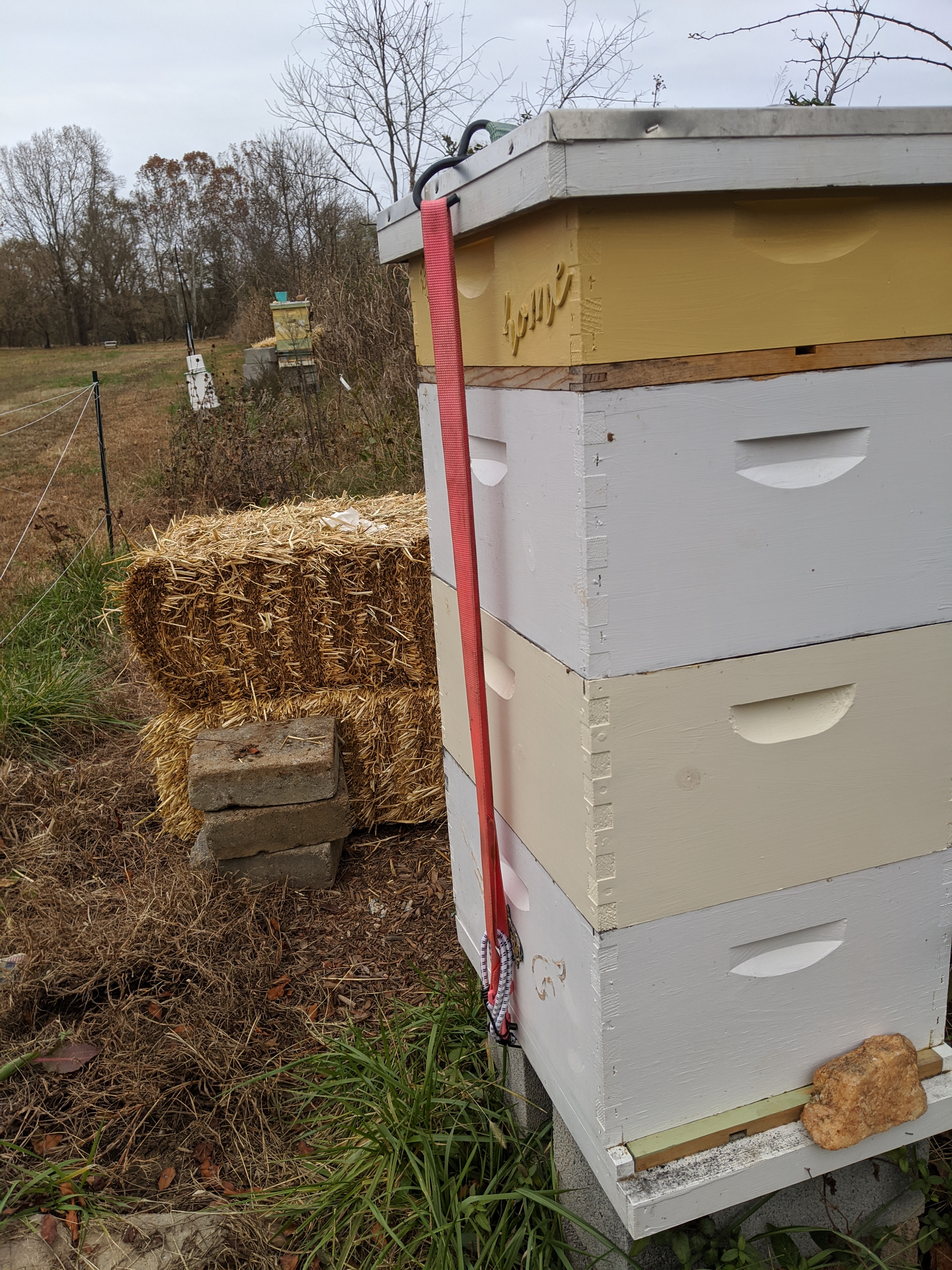
Two of Carolyn’s Four honeybee hives. Photo taken Nov. 2019
So I decide to I attend the annual Virginia State Beekeepers Association meeting. Most of the lectures are about how to maintain healthy hives. The parallels between healthy beehives and healthy human societies are legendary. The individual is moving ahead with her life in concert with thousands of other individuals moving ahead with their lives. And in the center of all this movement is the queen.
And then it happened. As I listened to the lectures about the importance of a strong queen, stories began to swirl. I went home that evening and wrote the first chapter about a fictional human family that behaves like a beehive. The family has workers, drones, babies, and a queen named Sabbath.
I’m not sure where this story is going but I’m having fun writing. And now and then, an idea pops into my head about how to shape all that research into a readable, creative nonfiction. I note of that idea and put it aside. I’ll come back to it. But for now, I’m having fun with my bees and my ideas.
A M Carley’s handbook for writers, available at Central Virginia booksellers and online.
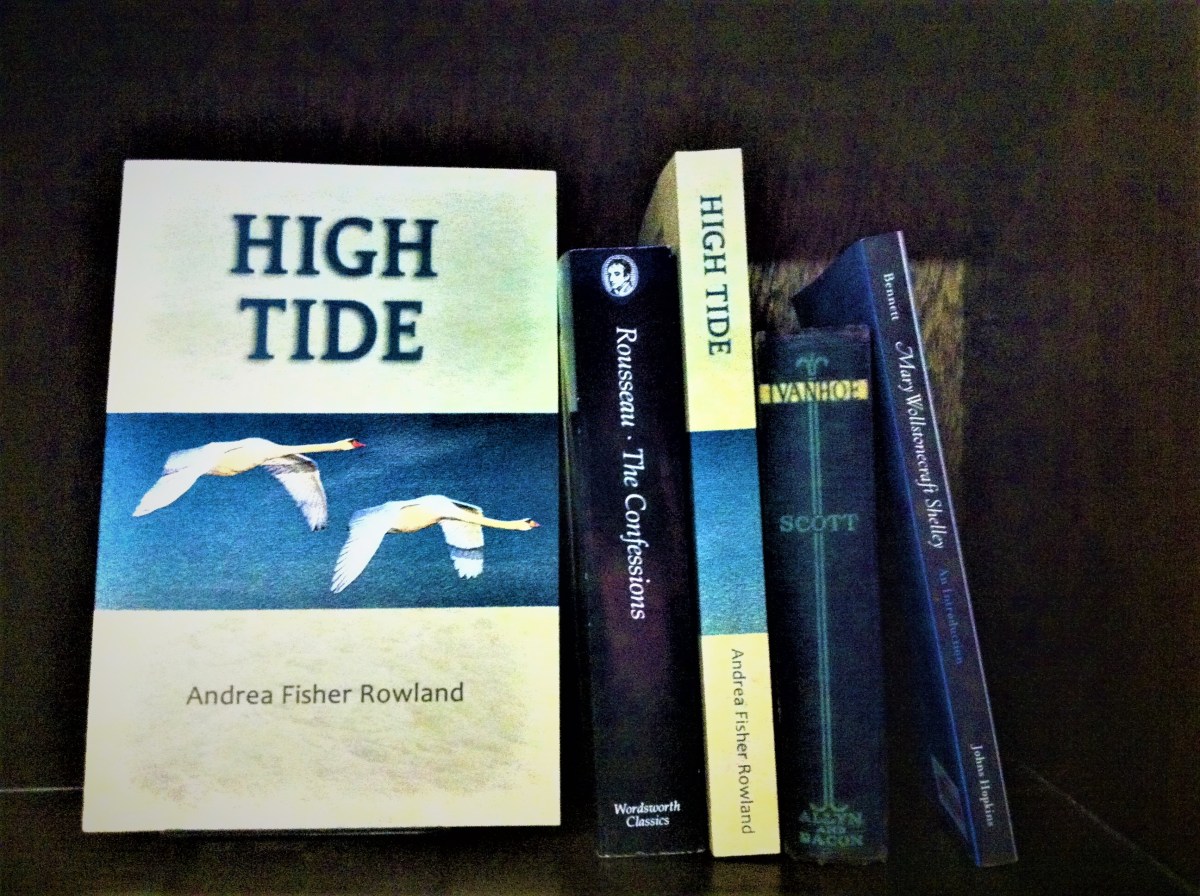
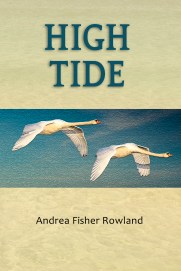
It’s here, now—the novel our friend worked on throughout her adult life. High Tide, by Andrea Fisher Rowland, is complete and beautiful. With her gone, High Tide is what we have left to hold in our hands—a little world of ideas, a collection of words born from her preoccupations and worries and loves and time. While she raised a son and taught school and graded papers and built a life, Andrea also wrote a novel and poetry around the edges of her life. In her last years, even in her last hours, she returned to these writings with hope.
Any writer knows that these are the moments to fantasize about: feeling the weight of your book in your hand, flipping through pages bound together in their final order, running a hand over a smooth, beautiful cover. From that first, hopeful, audacious moment that we set a pen to page, we dream of seeing copies of our book on a shelf in a real bookstore. Through the careful, devoted efforts and expertise of Dorene Fisher and Anne M Carley, Andrea’s dream of having High Tide published has been realized.
Members of BACCA and other writers that Andrea knew gave this novel their time too. Sharing work for critique a little at a time over months or years is an exercise in patience and mind-stretching understanding—for the writer and the reader. Scrutinizing parts of a larger work so closely, while trying to hold the whole of it in our minds over time is slippery business. I read High Tide both ways—piece by piece over months and months and all at once in a few days. After revisiting it, I found that as familiar as it felt, I had hardly known the novel at all. It was like trying to recognize something at a distance that I’d only been viewing under a magnifying glass. Before, I’d missed some of the novel’s dreamy energy, its pull, its soft momentum.
Experiencing it in its entirety, some of us have realized that High Tide isn’t so easy to categorize. Not just a drama or a thriller or a mystery, it borrows elements from these genres, while pressing questions about human impact on the natural world and the repercussions of our fraught relationship with the environment.
High Tide might be best described using words we know from other forms: art, music, and poetry. I think of a tapestry as I follow dynamics between characters, or sort out the interplay between the personal and universal. The voicing is fugal—as the point of view of one character rises and falls, the perspective of another character takes a turn, first doubling and amplifying themes, then diverting focus and introducing new ideas and emotions. In tone, the novel is often elegiac, as characters face moments of growth, love (in all forms), and death or loss. Whatever we name it, however we describe this book, it is best to be experienced—the fulfillment of Andrea’s dream and part of her legacy, a gift from her to us.
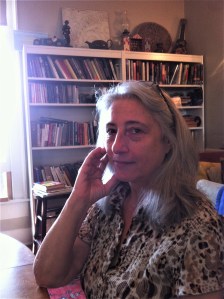
While it’s dangerous and lazy to assume that any poem or work of fiction is autobiographical, I can’t deny that writers leave a part of themselves in their work. Without assuming too much, we can still expect to meet Andrea here as we read, to find a trace of her wandering in these pages. For those of us who miss her, this is a comforting thought.
On Saturday, December 7th, we will celebrate the release of High Tide and the life of Andrea Fisher Rowland at Baine’s Books & Coffee, in Scottsville. Friends of Andrea, if you’d like to hold High Tide in your hands and meet the forces that made the publication of this novel possible (Dorene Fisher and Anne M Carley), join us in Scottsville between 10:00 am and noon.
(Baine’s Books & Coffee, 485 Valley St, Scottsville, VA 24590)
Noelle Beverly writes poetry and prose, promotes local writers in the surrounding community, and is a member of the BACCA Literary group. Photos by the author.
Continuing my exploration last time here of the nature of editing, I’m back to write about a new adventure that extended editing into publishing. I’m an editor who became a publisher for my friend and fellow BACCA writer, Andrea Fisher Rowland.
More than a year ago, Andrea and I began to work together to get her poetry collection, Family Album, polished and published. After completing the final touches on the manuscript, we also put our heads together about a cover for the book. I gave her several choices to use as starting points, and she picked her favorite, from which I made a final cover. Over the months that we worked on Family Album, Andrea learned that, contrary to expectations, her illness had taken a turn, and that she would not be expected to live much longer. We doubled down, to make sure the poems were ready for publication as soon as possible.
Family Album, the poetry collection
I decided to offer Andrea a publishing deal. The “deal” was unconventional in several ways, and not a typical commercial publishing agreement. But as her friend, I knew how important it was to Andrea that her collection be available to the public, and I knew how to make it happen. Some years ago, I inherited a small music education publisher, which I still operate. I also published my own writer handbook, FLOAT, and through my business I have advised and assisted numerous authors who publish their own work independently. I figured these experiences qualified me to extend the offer to Andrea. Her delighted response told me I had made a good decision.
Then Andrea asked me to publish her novel, High Tide, as well. I was familiar with the first half of the story, because I’d been reading it section by section as Andrea sent it to BACCA for our monthly critiques. Time was not on our side, however, and the work of polishing the novel extended past its author’s lifetime. Dorene Fisher worked with Andrea during her final days to review the text line by line, and after Andrea’s passing, Dorene and I continued. The language of Andrea’s novel is exceptionally sensitive and poetic, so we editors focused on sustaining the author’s tone and light touch, while adjusting for chronological continuity. Happy byproducts of this effort include a new friendship for Dorene and me (thanks, Andrea!) and a lovely sense that Andrea has been in the room with us, cheering us on and providing guidance. BACCA writer Noelle Beverly did us the great honor of reading through the edited version and making important and useful suggestions, and both Noelle and Carolyn O’Neal provided extensive moral support.
High Tide, the novel
Andrea died in June of this year, after holding Family Album in her hands. At her sister’s request, I also gave Andrea a version of High Tide, its cover inspired by her request for imagery of two swans in flight and a blue and gold color palette. As publisher, I also needed to tick the requisite legal boxes, turn the edited manuscript into a print-ready book, get ISBNs assigned, and complete the numerous other behind-the-scenes tasks that precede any publication. Now, after a summer of work, I expect to receive the first printed proof of High Tide any day now. Soon it will be out in the world, ready for its reading public.
Accordingly, we’ve put together two events to celebrate the publication of both of Andrea’s books. All are welcome to attend. My fellow BACCA writers play an essential role here, as well, since Noelle Beverly and Bethany Carlson Farris have each extended themselves to make these events possible, on Saturday morning, 7 December at Baine’s Books & Coffee (Scottsville, VA) and on Tuesday evening, 12 November at Renaissance School (Charlottesville, VA) respectively.
With gratitude to Andrea for entrusting me with her work, to my co-editor and friend Dorene Fisher, to Andrea’s kind family, to BACCA for the warm support we have come to rely upon from one another, and to future readers everywhere, thank you, all.
Andrea Fisher Rowland
— A M Carley writes fiction and nonfiction, and is a founding member of BACCA. Through Anne Carley Creative she provides creative coaching and full-service editing to writers and other creative people. Decks of her 52 FLOAT Cards for Writers are available from Amazon. Anne’s writer handbook, FLOAT • Becoming Unstuck for Writers, is available for purchase from Central Virginia booksellers, at Bookshop.org, and on Amazon. #becomingunstuck
Fiction creates new worlds and fills these worlds with heroes, villains, comics, romantics. Fills them with humans or monsters or aliens from another dimension. Fiction can be as wild and unbelievable as the author’s imagination.
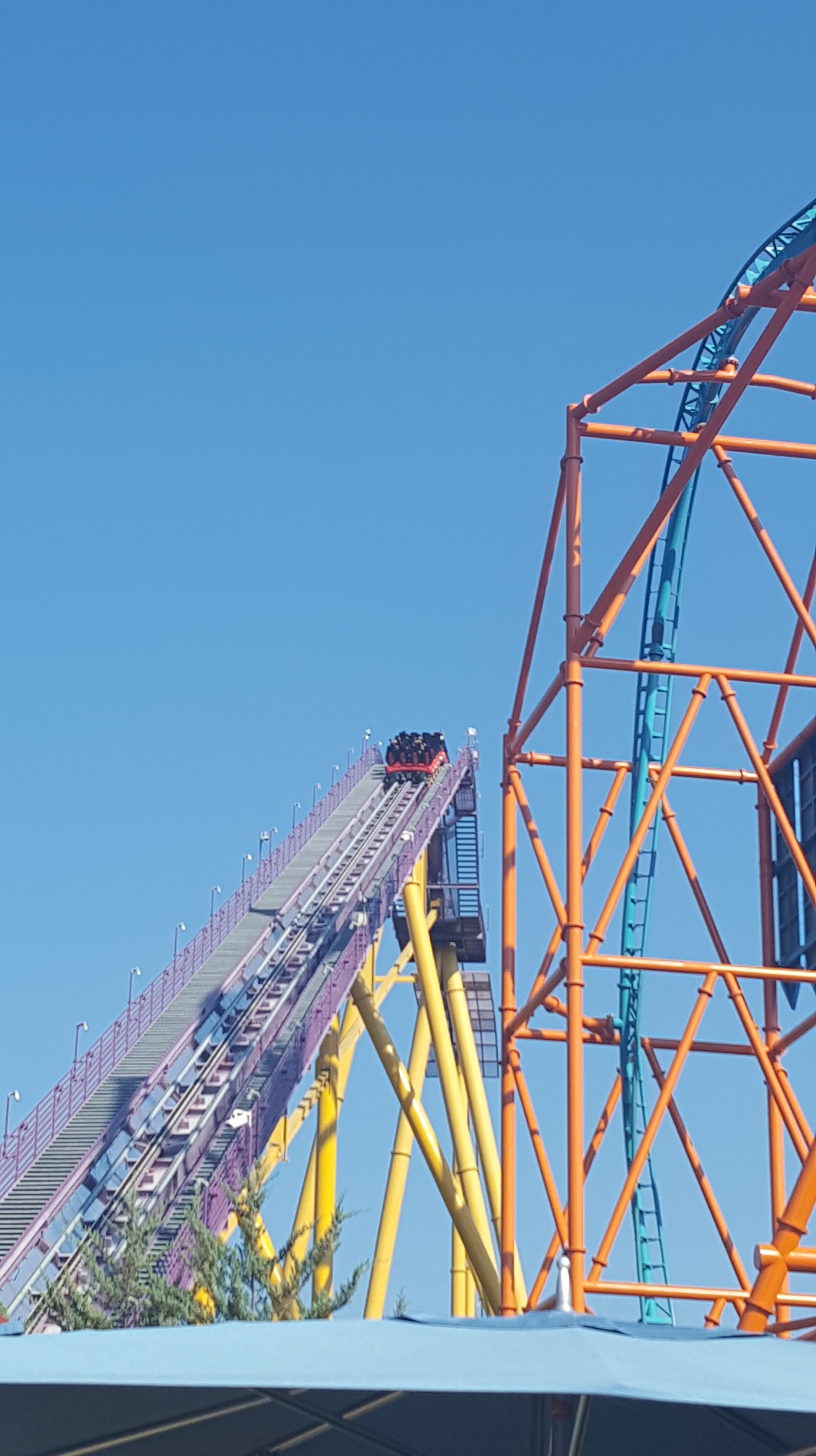
Every paragraph is a roller coaster.
Everything is fair game.
Everything is up in the air.
Enjoy the ride and let your imagination soar!
Nonfiction has rules.
Nonfiction takes place in a location the author can and should visit
Creative Nonfiction takes place in a location the author can and should visit, whether it’s the graveyard down the road or a ship in the middle of the ocean. Not to say writing nonfiction can’t be fun, but the author doesn’t have the same freedom to make up worlds or characters. The people and places must be real.
Nonfiction isn’t a roller coaster.
It’s a maze and research is the author’s only map.
Newspaper articles, interviews, books, and (occasionally) Google.
This is how I contrast my experiences writing fiction versus writing nonfiction. First drafts of fiction dance off my keyboard. Ideas pop into my head. My writing group asks “why did he do that?” about a character and in fiction, I can create the motivation. In nonfiction if I can’t find his motivation in my research, I can’t answer that question. I can’t make up an actual person’s motivations for his or her actions.
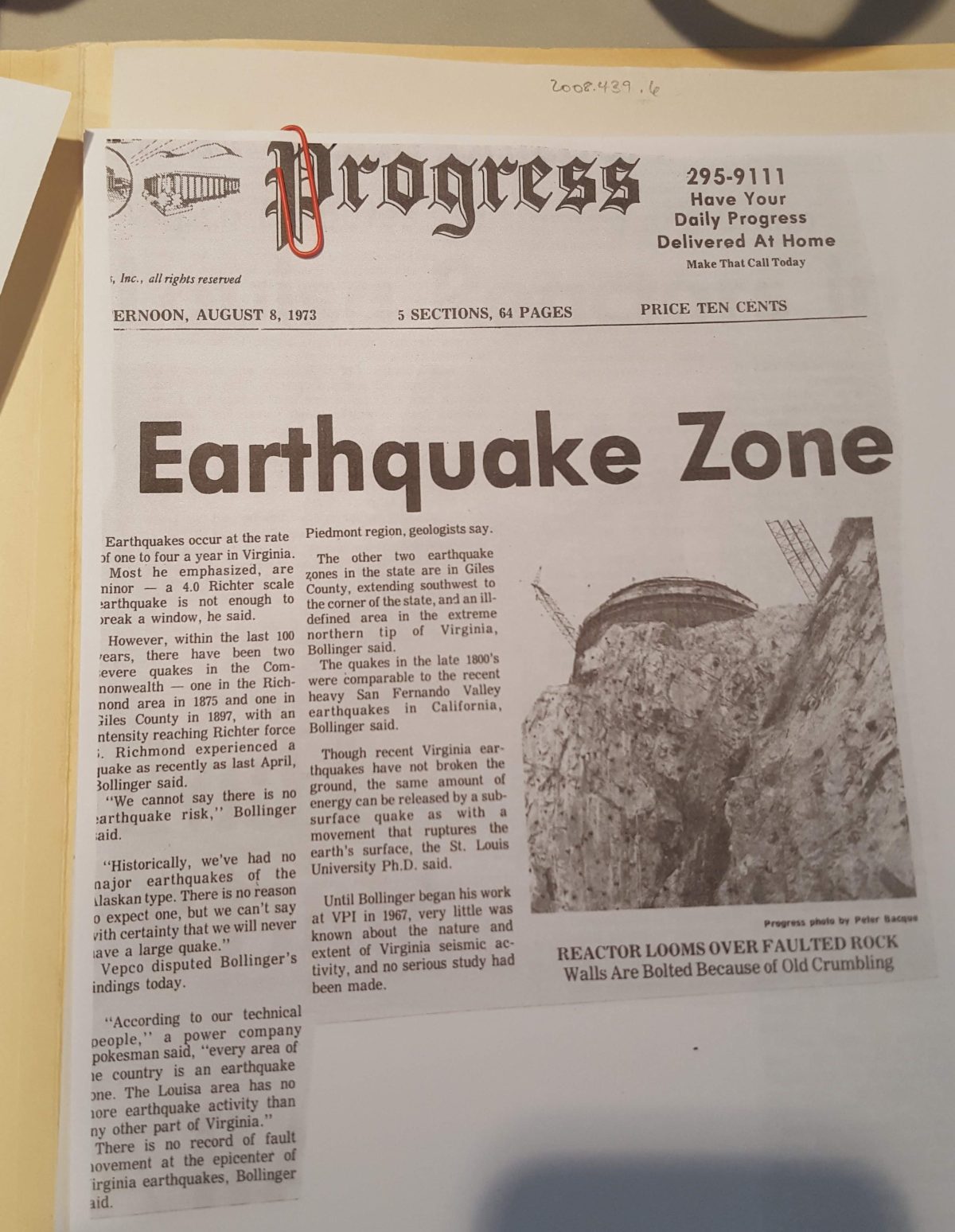
Most of my research comes from newspapers and interviews.
I have been researching a complex, creative nonfiction project for years.
Set in the late 1960s and early 1970s, this creative nonfiction centers on the man who discovered an earthquake fault under the North Anna Nuclear Power Station in Virginia and ended up with a bullet in his head.
It’s an exciting story with a thousand twists and turns, just like an intricate maze.
Am I near the end of the maze or still in the center? Only careful research will help me find my way.
Which is more satisfying as a writer? Fiction or nonfiction?
That’s like asking what is more satisfying to eat, dinner or dessert.
I’ve started a list of books that I consider “required reading”—not books that were forced on me, or titles that I would force on anyone else, but books that made me, the stories out of which I seem to be built.
Like most human beings, I resist when I’m told to read something and I don’t linger long in the company of those who enjoy shaming others for what they haven’t read yet. Anyone who really loves reading knows that there are too many wonderful books to read in one lifetime—you have to choose. So, while I don’t like bossy imperatives, or veiled humiliation techniques, I do love to see lists of things that have inspired others. I’ve started my own list with one of the first books that really mattered to me: The Once and Future King, by T. H. White.
I’ve heard that if you want a clue for what to do with your life, a vocation to pursue, you should look back at the things you loved to do as a kid. Buried in the play of childhood you’ll find the rewarding work of adulthood. When I was young, I became fascinated with King Arthur, and I began reading versions of the Arthurian legends and comparing them—letting the versions sink into me, letting the differences and irreducible truths permeate. I took that story in from every angle—devoted myself to it.
I could have started with Tennyson or Malory, but I began with T. H. White. The Once and Future King became the standard bearer for me and one of the building blocks of my understanding, one of the contributing factors of my emotional range. For years, if asked, I called it my favorite book. After I had studied literature for awhile, I decided that I should read it again, to see if it still had something to give, somewhere else to take me. I found that it had weathered very well.
Beyond the legend, beyond the story itself, which manages to hold up under all this re-visitation, here are just a few reasons why I love this book:
The Once and Future King starts with a children’s book. The Sword in the Stone (Book I) isa lovely book about humility, deep friendship, loyalty, forgiveness, and learning to see the world from the perspectives of others. It introduces us to Arthur before he’s a king, when he is just “the Wart.” Growing up with the protagonist, as Harry Potter fans can attest, is a powerful way to get to know a character. For the curious, there are versions of The Sword in the Stone, too—subtle variations between the stand-alone title marketed separately for kids, and the one included in the complete novel, which some critics say is darker, influenced by the horrors of World War II.
Also, one of the characters moves backwards through time, growing younger while others age. This formal choice is how White gets away with his use of anachronisms, and the 20th century social and political commentary sprinkled throughout the book. Another tiny, perfect reward that this device offers is a moment that I didn’t catch my first time through. Near the beginning, two of the characters meet—for one character, it is an introduction, the origin of what will be an important relationship, for the other (who experiences time backwards), that meeting is the very last time he will lay eyes on a beloved friend. This little heartbreak, nestled into the opening pages, disappeared the first time I read it. I could only fully feel it—as devastating as a tragic ending—after I knew what the characters would mean to each other, on my second read through.
And, I have White to thank for manticore, bodkin, escutcheon, greaves, angelica, featherfew, varvels, jesses, guidons, vergescu, fewmets, menee, hurdy-gurdy, foin, gelid, limner, ricks, rusks, purlieus, slee, souterrain, and widgeon. This is just a sampling of the rich vocabulary from The Once and Future King, a brief catalog of terms you might learn from various categories, including falconry, jousting, armory, architecture, hunting, heraldry, and archery.
Finally, The Once and Future King is full of flawed characters and human truths. I consider it a brief, effective course in empathy. The pretty people in the story aren’t always good, and the “good” aren’t always very likable. Most Lancelots you will encounter are handsome, dashing, irresistible. White’s Lancelot, however, is homely, isolated, uncomfortably religious, and he feels bad about himself most of the time. The book also gives us despicable characters who get redeemed, and decent, well-meaning characters who land in terrible positions, often of their own making—sometimes through big, glaring mistakes, sometimes through a series of little, shuffling missteps that eventually lead nowhere good. Finding themselves in tragedy, or violence, or grief, they have to choose a best way forward, an honorable way to keep going and make things better.
Do you have a core of required texts? A list of books or stories or poems, without which you’d be someone else? Please share titles from your list in the comment section below.
Noelle Beverly writes poetry and prose, promotes local writers in the surrounding community, and is a member of the BACCA Literary group. Photos by the author.
The BACCA writers mourn one of our own. Andrea died at Hospice of the Piedmont in Charlottesville, VA on 7 June.
Andrea Fisher Rowland spent her childhood years in New Zealand, and thereafter was a Virginia resident for most of her life. She graduated in English from James Madison University, where hers was the first student-written play – entitled “Fancies” – ever presented on the main stage of campus and for which she won the Norman Lear Award for Comedy Playwriting. She earned an MA from the University of Virginia with a concentration in Creative Writing, studying with John Casey and Greg Orr.
She went on to earn a PhD from the University as well, working with Karen Chase and Edgar Shannon. Her dissertation, The Supernatural Muse: Representations of the Creative Impulse in the Fiction of Emily Bronte, Charlotte Bronte, and Charles Dickens, examines the supernatural figures (ghosts, genii, etc.) appearing in those authors’ works.
She worked as an Assistant Dean and Director of Studies at the University of Virginia, taught composition and literature at Wake Forest University, and taught introduction to theater at James Madison University. She has directed readings and productions of Shakespeare and other early modern playwrights at Wake Forest and at the University of Virginia. Most recently she taught English at Renaissance School in Charlottesville.
Throughout the years, while raising her son Liam, she wrote poetry, plays, and fiction, notably her novel High Tide. In 2017, an excerpt from High Tide was a finalist in the Virginia Festival of the Book Fiction Contest, and her poem, “These Same Fields,” won the Writer House / Jefferson Madison Regional Library Poetry Competition. In 2018, her poem, “Waikato,” was published in Artemis Journal.
A poetry collection, Family Album, was recently published and her novel, High Tide, is forthcoming in 2019, both from Chenille Books.
Andrea and I were co-workers – even co-teachers, occasionally – as well as neighbors, and members of two writing groups together, and friends. We both liked gin & tonics, and we both had jukeboxes on in our heads all the time. We would sing and whistle out loud and give each other earworms. We had one fight that was dumb, and lots of raucous laughter. I liked goats and she liked poetry and we both liked New Zealand. I was organized and she was spontaneous.
I am grateful she is no longer in pain, but I don’t understand yet what it means that she is gone, and I already miss her terribly.
— Bethany Farris
I first met Andrea through her writing. I had moved to Buffalo and she joined BACCA (our writing group) in Charlottesville after I left. Writers know, sharing a draft is like sharing one’s secret self. To send a draft to a virtual stranger takes courage and trust. For my part, I was sharing professional non-fiction writing. It felt low stakes for me. But Andrea was sharing from her novel, High Tide. I was at once intrigued and soothed. I learned from her work that she loved nature, especially things to do with water. As a Pisces and a native Michigander, water connected me to the things she cared about. I also learned that she deeply empathized with our fellow humans, even the most flawed. To quote Anne of Green Gables, I realized Andrea was a kindred spirit before we ever met.
I’m grateful that in June 2017, I could attend a writing retreat, and spend 2 days getting to know Andrea the person as well as the writer. I wish it had been more. She was obviously full of love and rich perspective. She generously and thoughtfully helped me improve my own book, written for teachers. I’m grateful for the chance to know Andrea, and to reflect on knowing her. I look forward to reading her book, and learning more about a very special human being.
— Claire Elizabeth Cameron
Our writing group was looking to add a new member when Bethany introduced us to Andrea. That was a few years ago yet seems like yesterday. I appreciate Andrea’s love for nature and passion for the environment. Her words were always poetic. Her heart was always full. I mourn with her friends and family. She made a difference in the world.
— Carolyn O’Neal
Andrea had already made an impression on me before our writer group considered her as a new member. I met her the previous year at a party. I only knew a little bit about her – from her voice, her presence, and her spontaneous creativity that evening. But I knew I wanted to get to know her, and her words. I was delighted when she joined BACCA.
Meeting monthly, sharing our words and our voices, I grew to admire Andrea and her inventive, perceptive mind. When we became friends, I learned to admire more — like her love of family, her deep knowledge of English literature, her devastating low-key sense of humor, her dedication to her students, and her musicality. Knowing Andrea enriched my life. May her memory be a blessing to all of us who shared our lives with her.
— A M Carley
Time worked its tricky magic on us. Taking something, giving something. Sleight of hand. When I joined BACCA as the sixth member, shortly after Andrea became the fifth, I walked to the table with velvet ropes erected around myself—hopeful that I would find and give help, insight, understanding—but cautious, too. I have found myself in prickly, stingy, even dangerous writing workshops before. In BACCA, I found a safe and generous community.
Andrea was a large part of the comfort I found. She and I were “new” together. We shared a love of poetry, Shakespeare, and music. For all of our shared loves, I knew I had a host to learn from Andrea too. She knew countries I’ve not yet seen. She spoke eloquently in public. She kept a luxurious pace that reminded me to slow down. Most of the time, she seemed composed. Zen-like. Steady. Even if she was remembering something important that she’d forgotten. I also admire the dreamy, lush language of her novel, High Tide, and the lovely way that poetry haunts her prose, evokes. Her characters, two of them in particular, feel real to me. I think about them, and worry about them still.
Time is tricky. Something happens when we meet, month after month, and share this much of ourselves. Somewhere—between seven months and ten—velvet ropes disappeared, caution dissolved, and (without even much fanfare) I realized we were friends. Just when things fall into place, sometimes, time moves again. And now we have to figure out how to do this without her.
— Noelle Beverly
Thanks to Gareth Phillips, Noelle Beverly, and Andrea’s family for the photos.







 While it’s dangerous and lazy to assume that any poem or work of fiction is autobiographical, I can’t deny that writers leave a part of themselves in their work. Without assuming too much, we can still expect to meet Andrea here as we read, to find a trace of her wandering in these pages. For those of us who miss her, this is a comforting thought.



 And, I have White to thank for manticore, bodkin, escutcheon, greaves, angelica, featherfew, varvels, jesses, guidons, vergescu, fewmets, menee, hurdy-gurdy, foin, gelid, limner, ricks, rusks, purlieus, slee, souterrain, and widgeon. This is just a sampling of the rich vocabulary from The Once and Future King, a brief catalog of terms you might learn from various categories, including falconry, jousting, armory, architecture, hunting, heraldry, and archery.


 BACCA Literary