Categories
BACCA Writers Holiday Image only

Bacca writers are taking a break

See you in January

Categories
BACCA Writers

Don’t let conflict block your creativity

Of the many roadblocks I face as a writer nothing kills my creativity quicker than conflict with beloved family members and friends. The very same sensitivity that gives me my writing voice also makes me keenly vulnerable to harsh words and deeds. Angry confrontations are as debilitating as physical trauma, a metaphorical car wreck that incapacitates me for days or even weeks.

Photo by Karola G on Pexels.com


Has this happened to you?


You’re humming along, ideas are flowing then BAM, an argument, a conflict, an unkind word. You feel disrespected and unheard. You’re angry and hurt. You run the conflict over and over in your head. You can’t sleep. Your introspection kicks in and overrides your sense of self. Were you at fault? Should you apologize? Humble yourself? You try to rationalize your point of view. You work to find potholes in theirs. You consider never speaking to them again. You consider demanding an apology. You consider a hundred different things that all prevent you from returning to your writing.
With family holidays looming there are many possible points of contention. But how do you stop obsessing over hurt feelings? How to do you stop replaying the conflict over and over in your head? How do you put that aside and return to your muse?


Putting the conflict aside.


I recently had a conflict that consumed me for weeks. It was in my head when I went to sleep at night and when I woke up. I replayed my part in the conflict over and over and replayed theirs over and over, trying to figure out who was right and who was wrong. I was angry and hurt and afraid. Not only to confront the other party but also to lose them in my life. It became an emotional tug of war that I couldn’t put aside. I spoke to a trusted ally about my struggle, and they suggested a couple of action plans:


ONE: Write down what happened and write down how it made me feel. Give it a chance to breathe and dissipate.


TWO: Write a letter to the other party with no intention of sending it. Tell them all of my anger and outrage and disappointment but keep the letter locked up on my computer.


What if writing isn’t enough? What if the only way to find resolution is to confront the other party? How can you address what happened and how it made you feel?

Consider using Situation-Behavior-Impact, or (SBI)™ to address how your feel.

The Center for Creative Leadership website describes SBI as

clarifying the Situation,

describing the Behavior,

and sharing the Impact.

Then, if you like, you can explore intentions vs. impact with the other party.

Here’s a simple example:


Me: “At our recent gathering I wanted to leave early.” (Situation)
Them: “I remember.”
Me: “You insisted I stay longer.”
Them: “Yes, I know.”
Me: “You raised your voice to me” (Behavior) “and that hurt my feelings” (Impact)
Them: “I didn’t realize I’d hurt your feelings, but I felt you were being… …..” (Explore intentions vs impact)

Learn more about using the Situation-Behavior-Impact approach at the Center for Creative Leadership Website: https://www.ccl.org/articles/leading-effectively-articles/closing-the-gap-between-intent-vs-impact-sbii/


And find your muse again!

Photo by Bo Ponomari on Pexels.com
Categories
BACCA Writers

A Simple Study on Point of View

A Simple Study on Point of View

As fiction writers, there are many writing exercises to help improve your craft and your story. One of the best is changing your story’s point of view, and here’s why…

You learn a lot from seeing your story, your setting, your characters, from various angles. You may find the story works better from a different POV, but even if that doesn’t happen, you’ll see something new. 

Don’t make this a large undertaking. A great exercise is to rewrite a chapter. At the very least, you’ll gain new perspectives on your characters. You may confirm your POV choice, and now you know why this is the best vantage point for your story.

Is your story told in first person? That is often exciting and fast-paced. It’s nice to be inside the protagonist’s head. But from there, you and your readers can’t be sure what any of the other characters are thinking. And there’s no way of knowing what’s going on elsewhere.

Omnipotent is not currently in fashion, but can be a great exercise and may add to your knowledge of the world your characters live in.

Third person is often used to give a broader perspective. If third person seems a bit too distant, you might try close third, allowing for access to characters’ thoughts and feelings.

Changing POV is a great way to add depth to your work.

For some fun simples POV ideas check out Eva Deverell’s page…

https://www.eadeverell.com/point-of-view-worksheet/

Pamela Evans is an author and award-winning educator, early childhood specialist, and director of educational programs

Categories
BACCA Writers

Frida Kahlo – Art and Artist

photograph of Frida Kahlo in traditional Mexican garb with a flower hair adornment, seated on a white floral bench against a green background with white flowers.
Frida on White Bench, New York (detail), 1939, Nickolas Muray (American, born Hungary, 1892–1965), Carbon pigment print. Private Collection ©️ Nickolas Muray Photo Archives, Licensed by Nickolas Muray Photo Archives

If you have the time and resources, I recommend exploring the haunting exhibit, Frida: Beyond the Myth, currently on offer at the Virginia Museum of Fine Arts in Richmond, Virginia. Open through September 28, 2025, this exhibit presents paintings, drawings and mixed-media art pieces by Frida Kahlo, as well as photographs of the artist taken by intimate friends and professional photographers, including Lola Alvarez Bravo, Imogen Cunningham, Julien Levy, Dora Maar, and Nickolas Muray. This thoughtfully constructed VMFA exhibit invited me to consider multiple questions about Kahlo’s work and life.

I’ve always found Frida Kahlo fascinating—inspiring in a difficult, even dark way. She found solace in her art, a respite from the excruciating, ever-present pain she endured after surviving a terrible, near-fatal bus accident. I’ve seen her work in person before, but this time her pain was outshined by her commitment to making art in spite of her pain, using whatever tools necessary to create from a reclined position on her bed post-surgery. Some might assume she was an artist because of her pain, but it’s clear that Frida Kahlo created through all the colors of her emotions—joy, rage, bliss, boredom, and pain. As much as pain is visible in her work, so are her passions, her preoccupations, and her love.

In Kahlo’s work, her own face is the most visible, repeated image, self exposure the most predominant theme. Not only did she incorporate her image into numerous works, but friends, family, lovers, and other artists were inspired to photograph her face as well. The many iterations of her own visage, the multiple versions of self that she propelled onto canvas or paper, or allowed to be captured in a photographer’s frame dominate this exhibit as well.

Kahlo-themed selfie station, Frida: Beyond the Myth Exhibit, VMFA

After seeing so many shades of expression, so many of her moods, it’s tempting to believe that I understand something about her. In the days after I explored this exhibit, however, I began to wonder if she really exposed her true self in these works of art. Had she surrendered herself to be the subject of art and disappeared into it? Or had she transformed herself into art outside of canvas and film? Early on, she adopted the practice of wearing traditional Tehuana clothing, braiding her hair, and adorning herself with Mesoamerican jewelry, essentially creating an intentional, stylized projection of herself that honored her Mexican heritage. Perhaps she was the art, and every photograph, every painting represented a brief, still-frame capture of the living art she had become.

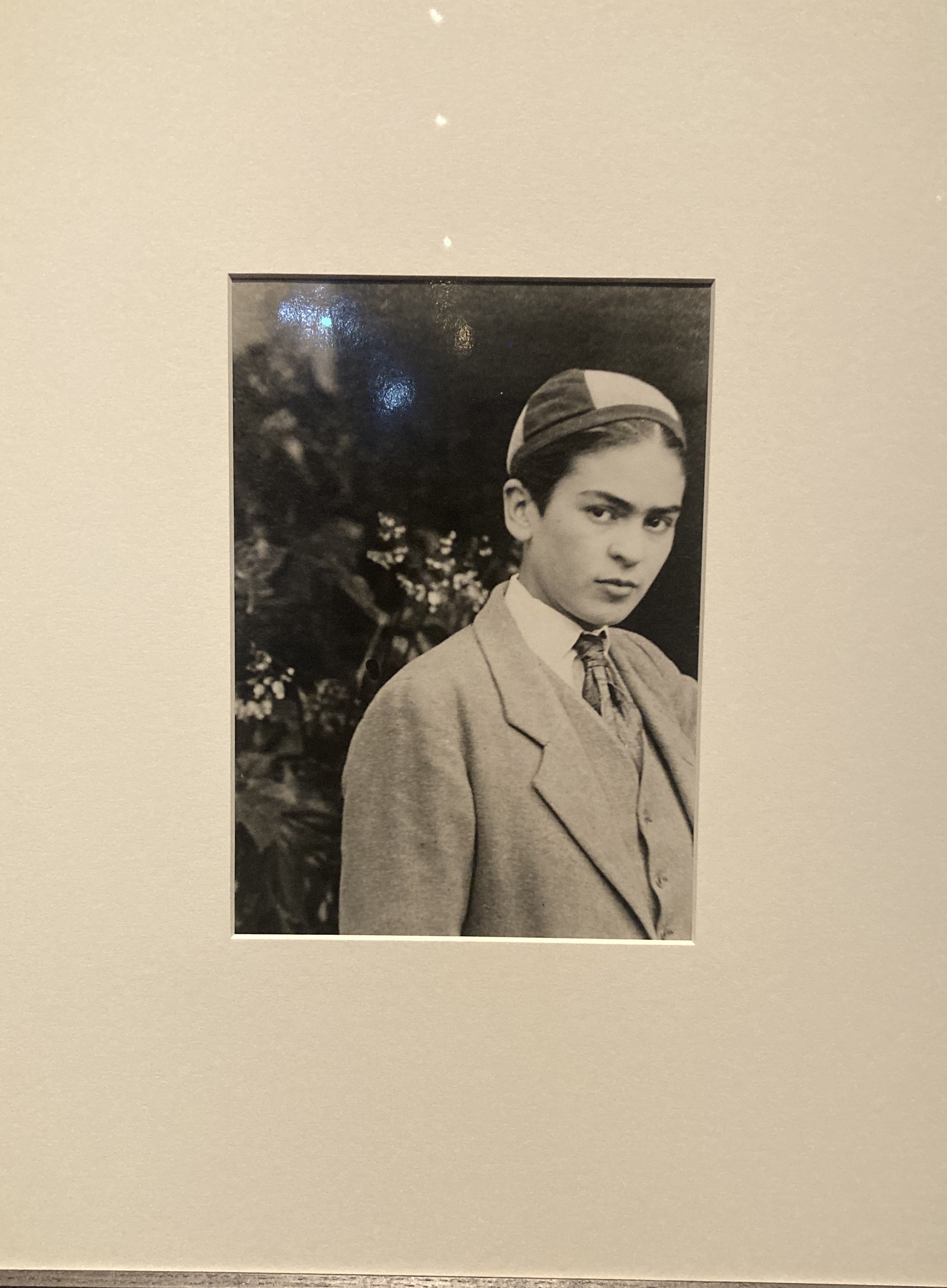
Frida Kahlo’s first photographer was Guillermo Kahlo, her father. The opening pieces in the Frida: Beyond the Myth exhibit are his photographs, in which she poses, sometimes solo, sometimes with others, dressed as a boy. It seems that Frida Kahlo learned early on to redress the power dynamic between artist and muse, creator and subject, by first taking on a persona—becoming art and then allowing herself to be framed.

Experiencing these works by Kahlo and others in person gave me so much to consider about what it means to create and live a full life as an artist. The thoughts I’ve shared here barely scratch the surface. Co-curated by Dr. Agustin Arteaga and Sue Canterbury, Frida: Beyond the Myth is showing at the VMFA in Richmond through September 28, 2025.


Noelle Beverly writes poetry and prose, supports local writers in the surrounding community, and is a member of the BACCA Literary group.

Categories
BACCA Writers

Rainy days should be great for writing.  Why am I so unproductive?

I received a message recently asking whether a nonfiction book I’m working on had found a publisher.  To be honest, I’ve finished the manuscript but have stalled in my efforts to secure a literary agents or publishers.  I’ve received some nibbles, some great feedback, and some flat-out rejections but that’s not what has stalled my efforts.  It’s this constant rain.

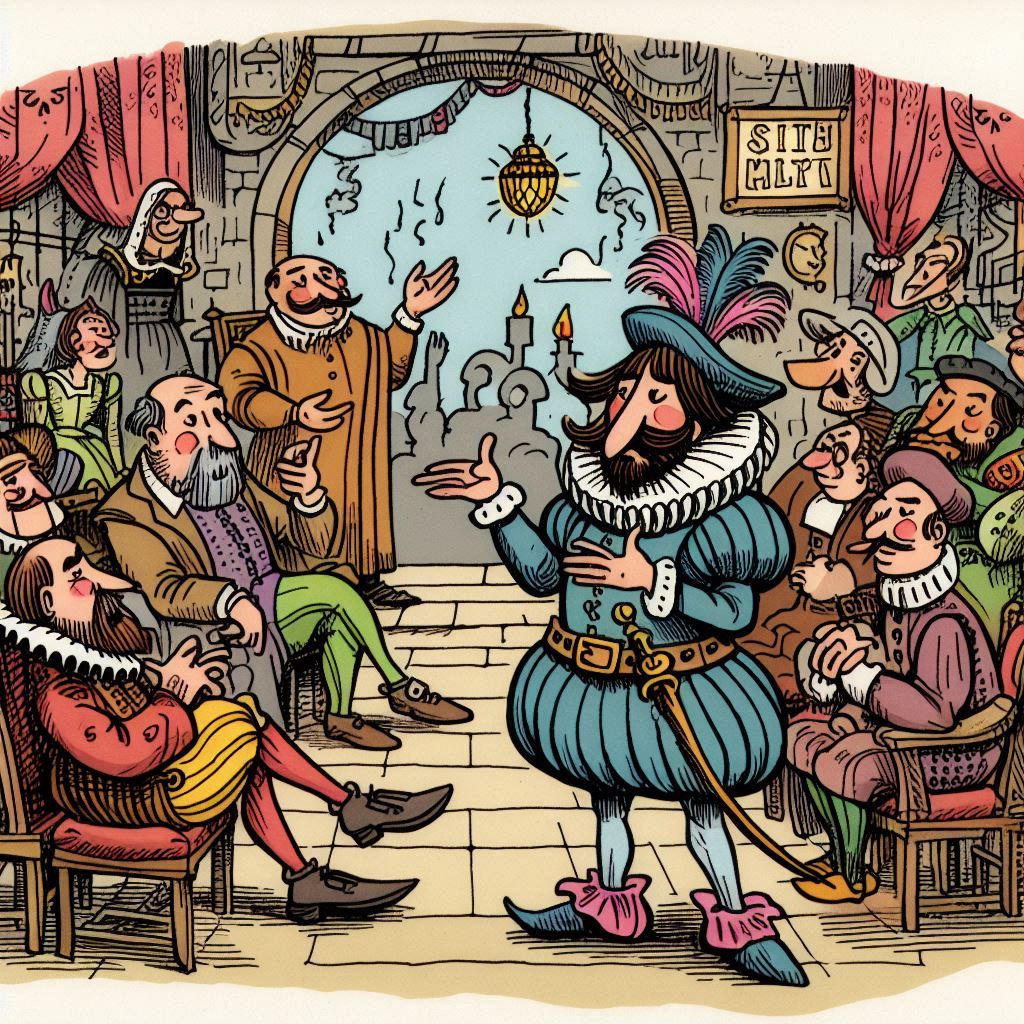
This summer in central Virginia has been insufferable. If this summer were a literary character it would be Malvolio from Shakespeare’s Twelfth Night.  The Riverside Shakespeare describes Malvolio as “the pompous Comptroller of the Royal Household.”  Like the constant rain, Malvolio destroys happiness everywhere he goes. 

At a party where everyone is joyously drunk, Malvolio is the guest who insists on remaining cold sober, who reads long lectures on temperance to everyone else, and threatens to summon the police.

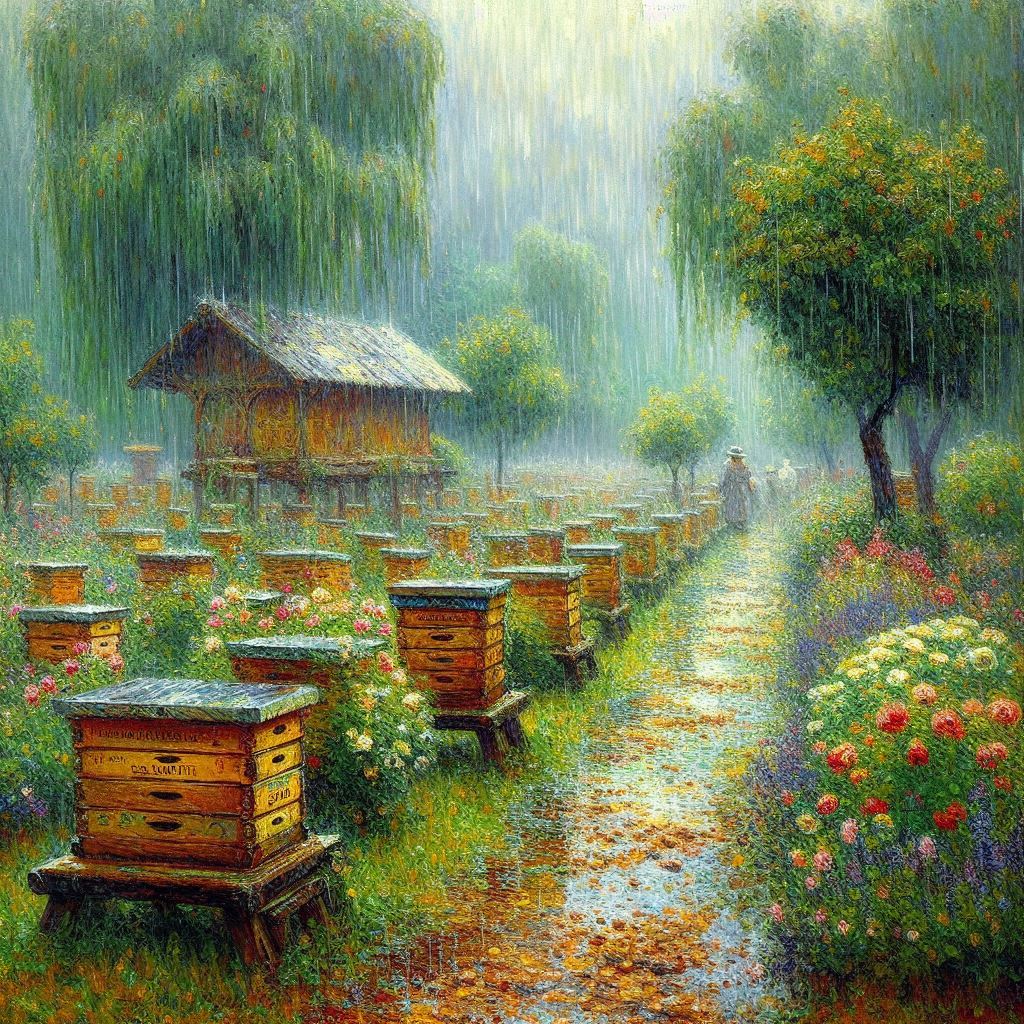
It’s not just my writing that has suffered from the constant rain.  By this time last year I’d harvested over a hundred pounds of honey.  I didn’t even bother cleaning my honey extractor this year. 

My poor bees. They’ve been stuck inside their hives almost every day because of the rain – with disastrous results. Much of the nectar and pollen they rely on has been washed away by the constant rain. If this rain continues I’ll have to feed them sugar water to survive the winter. 

Compared to others in America and across the globe I’m lucky. The James River hasn’t flooded my apiary. My hives haven’t been swept away.  My family and friends, both human and animal, are safe.

But the constant rain is depressing.  I want to visit my apiary and listen to the humming of the bees.  I long for the focus and energy the sunshine brings. I need to return to my writing. 

I better log off my computer now. Sounds like another storm is heading this way.

Images created using Bing Image Creator

Categories
BACCA Writers publishing

Are You and Your Book Ready for an Agent or Publisher?

or

When my children were young there was a wonderful climbing tree in our front yard. You had to be a certain height to reach the bottom branch and pull yourself up into the arms of the tree. Very young children often asked if I could help them up onto that branch. Not wanting anyone to get hurt, my answer was, “When you can pull yourself up, you can climb the tree.”

How does this apply to writing and getting published? Let’s discuss the often-dreaded synopsis. You must know your story well to write a decent synopsis. Many editors offer synopsis writing services for authors and there certainly can be a time to use one of those services, but I would counter that if you’re not ready to write a halfway decent one yourself, you’re probably not quite ready to submit your manuscript.

I’ll be the first to admit that writing a novel or work of nonfiction is a different skill from crafting the synopsis, but they truly complement each other. For the synopsis you need to have identified the strongest components of your work. You’ll need both the surface level – who, what, where, when – and the deeper why, blended into a compelling and clear summary.

Being an author means you spend half your time writing and half your time selling your work. An author must be able to describe and sell their book to an agent, a publisher, and to readers, even if self-publishing. In fact, if you’re self-publishing you’re the sales team. Either way, you’ll need strong synopses of different lengths to sell your masterpiece! Think of the synopsis as a way to ensure you know your work on every level and can discuss it clearly without hesitation. Until you have that piece, you’ve only done half the job.

Once you’ve got the goods, a great manuscript and a solid synopsis, you’re ready to query or publish. We’ll save the art of the query for another time!

Pamela Evans is an author and award-winning educator, early childhood specialist, and director of educational programs

Categories
BACCA Writers

Good Tools: The Elegant No

The word "no" spelled out using pieces of jewelry.

Writers need to know how to say No. In creative (and other) circles, there are magic words that have power, carry weight, move us forward. They aren’t a secret; we know them well.

Please. Thank you. Tell me more. Yes. No.

More so than the others, Yes and No shape our lives. Our time, energy, and other resources flow according to when we say Yes and how often we say No. For some people, No seems easy, a default answer they were either equipped or born with. For some of us (me!), No is hard. Some of us are trained to be accommodating, to say Yes first and figure out how to follow through later—all so we can be liked and considered useful, so we can help out the collective. As I’ve gotten older, and my time tighter, this Yes-first strategy has become impossible. Always offering Yes in place of a necessary No threatens the integrity of the rest of my life: my creative work (the first to be cut for time), my relationships, and eventually my health. If I want to function well, the collective is going to have to do without me, at least some of the time.

Cobbling Together a No

So, how is it done? If you aren’t born with or taught No, how do you find one in yourself? How do you employ this important tool well? First, I have to know my own heart and what I really want. I have to have a realistic conception of my schedule and my capacity. I have to know if I even have the adequate skills to accomplish what is being asked of me. (I had a terrible job once, where I had to fail hard to prove to my manager that I really can’t decorate cakes. It’s simply not in me. Good—that’s something I don’t ever need to say Yes to in the future!) Even more importantly, I have to keep a firm grip on my creative goals. When I perpetually support the projects of others at the expense of my own, I become the most bitter and angry version of myself—and of no benefit to anyone. So, I’m finding No by gathering together some important pieces of myself: intuition, self-knowledge, realism, and sometimes my stubbornness, my ability to resist.

How to Say No: Travel Light.

Simple, elegant, sufficient, the word No carries enough weight all on its own. Tacking on elaborate explanations, pity parties, or a string of apologies weakens and bleeds No of its power and energy.

No is precise, clear. It’s a light ship that will get you quickly, cleanly on to what you need to do. If you begin to tack on extra cargo to NoI feel so bad, I wish, maybe—your streamlined conveyance to freedom gets weighed down, stuck in the muck. Or possibly waylaid, hijacked, commandeered to the land of unintentional Yes. No good. Best to keep it light, simple, and straightforward.

Hone the Skill

A safe, low stakes opportunity to employ the No tool is a rare find. Recently, I had this opportunity. From another room in my parents’ home, I heard my mother answer the door. After just a few seconds, I knew she wasn’t talking to a friend or neighbor, but a pushy solicitor trying to convince her that she needed home security. He was young, full of energy, and had obviously been trained to never take no for an answer. (I still pray he doesn’t carry that skill over into his personal relationships.)

My mother was trapped. He had no intention of releasing her from his well-rehearsed sales rhetoric. To let the young salesman know that he had not found easy prey, but, in fact, a very well-protected house, I stepped to my mother’s side. As he shifted his barrage of warnings and promises in my direction, I began wielding the magic word—No—over and over again. I used it politely and firmly. In a calm voice, I said No at least a dozen times. Somewhere in the middle of this volley, I realized I had a choice. I could steam up, get mad and rude with him, or I could seize a rare chance to practice. For the next few minutes, I said No until it felt natural, comfortable, easy—almost fun. The young man’s training held strong. In the end, I had to use an additional magic word to release all of us from the encounter.

“No. Goodbye,” I said, and shut the door.

My heart still beating quickly from doing new work, I looked at my mother and we both laughed. Then we moved on with the rest of our day! In retrospect, I would only do one thing differently. I would invite my mother to practice, too.

Magic words open doors. No might feel like a door slam, but it opens another door too, as long as we don’t get stuck on the threshold, feeling guilty, replaying what-ifs and imagined consequences for saying what we want. For the person who says it, No has a hidden Yes on its obverse side. When I’ve said No to what I can’t or won’t do, I’ve said Yes to other wonderful things—time for discovery and rest, the opportunity to generate ideas and make good work—the treasures of a creative life.


Noelle Beverly writes poetry and prose, supports local writers in the surrounding community, and is a member of the BACCA Literary groupPhoto by author.

Categories
BACCA Writers

Maybe I just have a bad memory

I don’t understand memoir. How do people remember enough details about their childhoods to write a book.

How do memoirists know their memories aren’t lying to them?

Unlike much of nonfiction, most of our personal memories can’t be fact checked. I can look up what day in 1968 the construction of the North Anna Nuclear Power Plant was announced. I can fact check that date against regional newspapers from that era. I can explore the life of local hero Spurgeon Moss by talking to people who knew him. I can fact check these memories by visiting the Louisa County Historical Society.

But memoir is different.


Let’s say I wanted to write about my childhood. Let’s say I wanted to write about my experiences playing the flute in my elementary school band. I clearly remember that I chose the flute because “flute” and “drums” were the only two instruments I knew how to spell.

Clarinet? Saxophone? Sixty years later and I still have to spell check them.


I was a terrible musician.

My recollections are that I had a decidedly negative impact on my elementary school band. The only part I really liked was the uniform. I have a vague memory of being part of a marching parade.

I wore my uniform and played my flute. I only knew how to play one song: The Marine’s Hymn.

“From the Halls of Montezuma
To the shores of Tripoli;
We fight our country’s battles
In the air, on land, and sea…”


Have you ever heard a flute played horribly? It sounds like a rusty car door squeaking open and closed. I most certainly had no idea where the Halls of Montezuma or the shores of Tripoli were or why the US Marine Corp was fighting in either location.

Both, in fact, are fascination historical events worth a well-researched narrative nonfiction!

Categories
BACCA Writers

Is It Time for You to Clean House as a Writer?

I’m not citing the way many of us procrastinate by cleaning. For most writers, there will come a time when many of the groups and activities that helped you get started will get in your way. Balance will be key. Focus on the writing itself.

First, what you already know…

Helping new writers get a start is big business. Once you end up on a mailing list, you’ll hear from marketers encouraging you to invest in various classes, platforms, and software. You’ll also be courted by established writers who supplement or make their living by editing, teaching classes, and speaking events. Recommendations on books to help you with your writing will be abundant. As a discerning consumer, find the groups and products you need in this moment and let them go when the moment has passed.

As your skills and confidence grow, the very groups which gave you an inspiring start can block your path forward. As an example, the mixed genre writing group you loved and learned from early on may be holding you back as you home in on your creative style. Find a group with more established writers that know your genre well. Assess and find what you need for the stage you’re in. The right support at the right moment will keep you inspired and help grow your craft.

Joining groups to learn and network is useful, but over time, the focus needs to be on your work. Put other activities aside. At least for a time, unless you are a hobbyist, and your interest lies in comradery more than the actual writing. There’s nothing wrong with making that choice, but it is a choice you could be making unwittingly.

If you’re serious about writing, don’t be shy about leaving a group which no longer works for you, even if it was helpful at the start. Those connections may become helpful again, especially if you were a strong contributor to the group. Leave or take a leave of absence on good terms. Thanks so much, but my time is limited, and I need to use it to write. Any writer will understand. If they don’t, they aren’t there to support you. Your time and focus are precious.

Networking is important, but not more important than developing your craft. Book promotion is important, but it comes after you have a book to promote. Many writers rush to query before their work is ready or worry about marketing before they have a product to sell. There’s always time for networking and marketing after the writing is done. In today’s viral world, it’s easy to put the cart before the horse. The best way to become and author is to write, as often as possible. The rest will fall into place.

Take stock and clear away anything impeding your writing.

Unsubscribe! Are you deleting emails from organizations you once dealt with, but now you don’t even read their emails or posts? Stop wasting time and cluttering your mind and inbox.

Turn off notifications for email and social media. Check in on your terms. Don’t let these businesses break your focus when writing.

Leave groups which no longer feed your creativity. You can always join again.

If chores distract you at home, write somewhere else—a library or a coffee shop.

A couple hours of thoughtful cleaning will reward you with new-found writing time!

By Pamela Evans

Pamela Evans is an author and award-winning educator, early childhood specialist, and director of educational programs. As a consultant for preschools and music programs, Pamela specializes in curricula for young families. A life-long learner, Pamela enjoys sharing and fostering a love for the natural world, the educational benefits of story-telling, and an appreciation of music and the arts with students, parents, teachers, and fellow authors.

Categories
BACCA Writers

Worthy Work

by Noelle Beverly

A bookshelf of notebooks
a fraction of the notebooks I’ve filled with ponderings, queries, and ideas…

Why bother writing today? What is all this effort for? Why should I keep filling and making books?

These questions have been slinking in and curling up in my mind lately. In an era when it feels like all light and joy and freedom are getting speedily sucked out of this nation and the world, my insistence on making space for a creative practice seems frivolous and selfish, not to mention exhausting.

Still, I keep plodding on. Deadlines push me forward. A company of writer-friends, who encourage and commiserate, pull me through the jungle of doubt. And, on most days, I like what I do when I manage to do it. It feels better to make something than to wallow and worry.

I’m learning to be content with this—writing for my own satisfaction and delight. I would love to find a home for my books, perhaps an audience, but those goals can’t be the why of why I write. Right now, I don’t really have much extra time and energy to keep questing after an agent or publisher, but I’m trying not to let that stop me from moving my projects forward. I’ve found some inspiration for this predicament in an interesting place (or rather, time) …1925.

I’m fortunate to have an interesting day job working at a local history museum, and some colleagues and I recently put together an exhibit that looks back 100 years to 1925. Although the exhibit focuses on social life, the artifacts and stories we’re featuring point to a strong sub-theme: exuberant, irrepressible creative expression. One artifact in particular speaks to this: the Mayo Bass Scrapbook.

  • Scrapbook page from the 1920s with hand-tinted photos of a woman with a parasol
  • Scrapbook page from the 1920s, with stamps, cut out post marks, and a photo
  • Scrapbook page from the 1920s with notes and cut out images
  • Scrapbook page from the 1920s, including cigarette butts
  • a scrapbook page from the 1920s, including an image of a woman working a math problem on a chalkboard

Lynchburg native, Mayo Leola Bass, was a young teenage girl still in high school when she began collecting the various papers and pieces that floated into her life and assembling those bits into a scrapbook. She mingled hand-tinted photographs with bright-colored bridge cards, programs, invitations, and party favors. She pasted letters and newspaper articles next to cut out post marks, and dance tickets. One page is filled with the stubs of cigarettes, with the name of each smoker carefully noted beside it. Comprised of ephemera—scraps literally intended to disappear—the scrapbook still has value and meaning 100 years later. It speaks.

The pieces Mayo Bass selected and saved could have just as easily ended up in the trash bin. I imagine someone might have even told her so. But she chose to save them and the result is remarkable. Pages and pages of seemingly inconsequential bits and pieces, which together add up to so much more—a provocative, funny, and informative record of a life. Thanks to this artifact, I feel like I know something about the young woman who created it, as well as the essence and flavor of that time she lived in and that place.

Mayo Bass Scrapbook page, featuring bridge cards and place cards.
A page from the Mayo Bass Scrapbook, ca. 1925, courtesy of the Lynchburg Museum

The Mayo Bass Scrapbook, in my opinion, is a piece of art as much as an historical artifact. It is an artfully made collage of the concerns and delights of a young woman living in the 1920s. My guess—Mayo Bass never dreamed anyone would see her creation that way. She likely made it solely for her own satisfaction. Perhaps, also for her daughters to peruse and enjoy one day. But for it to end up on display in a museum as the touchstone for an entire exhibit 100 years later? I bet she would have flicked the ash off her cigarette and laughed at the idea.

Mayo Bass didn’t know the future of her scrapbook or how it would be valued or perceived. This thought encourages me. It also encourages me to think of her cutting and pasting, creating an enchanting object, all just to suit herself. We don’t know the future of our creative work. But if one person finds delight in it, even if it is the artist herself, I think that’s enough. To make something beautiful, or provocative, or funny, even just to please ourselves, is worthy work.

The Mayo Bass Scrapbook will be on display at the Lynchburg Museum, 901 Court Street, through March 31, 2025.


Noelle Beverly writes poetry and prose, supports local writers in the surrounding community, and is a member of the BACCA Literary groupPhotos by author.