Categories
BACCA Writers

The Stories We Tell

I loved to make up stories when I was a kid. It seemed a simple, easy thing to do, back then. As I grew up, I stopped writing stories. Later, I committed to other art forms, and when I wrote sentences, I wrote nonfiction, not stories. Not long ago, I began again. I dared myself to try making up stories, by signing up for classes at WriterHouse.

Since then, I have slowly gotten more competent through practice, practice, and practice. My writer group, BACCA Literary, is one reason why. We first met, in fact, in a fiction class at WriterHouse.

This writer group has provided me with a monthly deadline for producing – well, something. We’ve been sharing work with one another for at least thirty months. I’ve emailed a Word document out to the others by the late-Friday deadline, every darn month. Well, there was one exception, when my family life was too chaotic, a couple of years ago. So let’s say I’ve been sharing work for at least 29 months and leave it at that.

Good Enough?

Sure, I recognize that I haven’t always sent my best work to the other three writers in the group. “Best” is relative, measured on a sliding scale. Over time, I raised my standards for what’s good enough to send out to the writer group members. After I allocated more time each month to work on writing, I became dissatisfied with my earlier stories. Now I can predict with confidence that the stories I am pleased with now will one day look a little shabby to me.

Your Best doesn't always look the same
Your Best doesn’t always look the same

Meanwhile, I have become less able to turn off the inner voice whispering, “Go ahead. Send something out and see if it gets published.” It was easy the first couple of years to hush that voice. I knew my work wasn’t ready to travel beyond the writer group.

For new-ish writers like me, hushing that voice gets trickier over time. We want to believe we’re improving. We want to believe there’s going to be an audience one day, however small or particularly quirky that audience may reveal itself to be. We want to nourish the creative spirit that energizes our whole enterprise. We want to begin to send work out to people – strangers – not in our writer group. I considered how to start.

The P-Word

To prepare to send work out into the world, I set up a spreadsheet to track my efforts to get published. Then I let the spreadsheet sit for quite a while, untouched. Later on, I added a tab to my spreadsheet with key facts on the publications that most appealed to me – things like deadlines, formatting preferences, lag time before they decide what to publish, method of submission, categories they favor, contact information, etc. The enhanced spreadsheet sat again, for a long break. More recently, I actually sent a few things out and made entries into the spreadsheet. I’ve heard back with two rejections, which I dutifully entered into the appropriate cells. I’m waiting for replies from the others.

I hesitated to send out my work until I felt satisfied enough with it that it didn’t feel too embarrassing. I chose carefully the places I sent those first few submissions – not too grandiose, and yet consistent with who I am as a writer.

And that just begs the questions, doesn’t it?

Questions

Who am I, as a writer, and why am I doing this? Author Dan Holloway, in his recent essay, What Do You Want from Your Writing in 2014 and Beyond? at Jane Friedman’s blog, says:

“If you don’t know what you want from your writing, what on earth are you doing writing anything? How can you possibly tell whether your words do what you want them to?”

It’s actually not that hard a question. It rests on a more fundamental one. Why do you write?”

Please don’t tell me the answer is “I make art because I must.” To me, that feels lazy and self-aggrandizing in a “poor-me,” humblebrag kind of way. Besides it ignores free will.
the words, Why Write?
Oh. THAT question.

I could tell you I write because I’ve engaged with the challenge to improve my work. The challenge is difficult enough always to involve real effort, yet rewarding enough, because of the progress I am making, to continue to motivate me to get better at it.

I could tell you I write because my life with music was altered when hand surgery made playing instruments too difficult. I could tell you I write because I’ve grown old enough to take a longer and more loving view of life. I could tell you that there’s plenty to love about writing for its own sake. Polishing a story can make my day, even when no one else has seen it yet.

Also, the most fun I’ve had with my writing lately was when some visiting non-literary friends asked me to read them a piece after I cooked them dinner. That was a blast. My fellow BACCA-ite, Claire Elizabeth Cameron, touched on this recently when she wrote,

“People are doing work for free, work for fun, work for creativity all over the place, and it’s making this world a better place. Success [in writing] is making a connection.”

So why am I writing? To get better at it. To see how much I can improve. To see if my embarrassment-meter gives me the green light to send out stories to more publications. To see if I receive a green light in return. And, in the meantime, to keep telling stories.

#amwriting

A M Carley

A M Carley is a co-founder of BACCA Literary. She owns and operates Anne Carley Creative.

Categories
BACCA Writers

Kickstarter For Writers

Most Kickstarter publishing category campaigns fail to raise even a fifth of their funding goals. Data nerds like me may want to visit kickstarter.com/help/stats for the full post-mortem. Suffice to say: raising money to publish your book is really hard.

Failure Rate

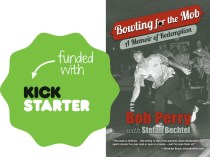
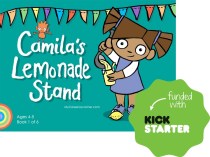
But it’s not impossible. I have produced successful Kickstarter campaigns for writers, ranging from a gritty New Jersey mob memoir with a ten-pin twist, to a gleefully adorable children’s picture book introducing entrepreneurship. Their successes were not a coincidence. Despite their very different audiences, their paths to success were nearly the same.

Bowling For The Mob  Camila's Lemonade Stand

I’m looking forward to teaching an afternoon workshop at WriterHouse on February 16, 2014, to walk through these case studies and what we can learn from them. For now, I’m happy to share three of the ten essentials for Kickstarter success for writers.

  1. Tap into your extrovert and PROMOTE. This is conjecture, but perhaps the reason book campaigns fail disproportionately is because writers tend to be introverts. We want that loophole whereby our work will be found without us having to tell anyone about it. Nope. The Kickstarter campaign is excellent sales boot camp. For both Bowling For The Mob and Camila’s Lemonade Stand, we had a month of promotion prior to the campaign before launch. The goal was to make sure everyone relevant heard about the campaign at least 10 times during the 30 days before launch, through the 30 days up to close.
  2. Map out the money in advance. The occasional Kickstarter campaign goes viral, even books. However, all 125,000 campaigns in the history of Kickstarter have not. In all likelihood, yours will not. So you need to know both exactly how much money you need to produce your book, and exactly where that money is going to come from. After learning the nail-biting hard way on Bowling For The Mob, for Camila’s Lemonade Stand we went through a detailed Kickstarter Estimator process before the campaign launch. This was like a wedding guest list, but with the added columns of how much money the invitees were likely to pledge, and for what kind of reward. Then we applied the 65% rule – because not everyone we invited to the campaign was going to show up (they didn’t).  So let’s say we need to raise $6,500 to produce a book. We sit down and tally up all of our friends, colleagues, family, and fans, and what they’re likely to pledge. That comes to $10,000. We multiply by 65%, get $6,500, and voila, this is a campaign that has a chance to succeed. If, on the other hand, we need $20,000 to produce the book, and then we tally up our likely pledges and that comes to $5,000, well… we don’t even need to bother with the 65% rule. This campaign is almost certainly going to fail. 65 Rule
  3. Shoot a decent, short video. Kickstarter makes a big deal about having a video – any video. People want to see and hear from you. Good light and good sound go a long ways towards making a homemade video watchable. For Bowling For The Mob we had Bob sit directly under a skylight and used a microphone and an iPhone propped on a soda cup; For the Camila’s Lemonade Stand video we used a bright floor lamp with the shade removed behind the camera and a Samsung Galaxy phone with a tripod and microphone. Neither of these videos will win any awards, but they are watchable, informative, and they are SHORT. Don’t underestimate how brief attention spans are. Keep it under 3 minutes.

No Oscars. Successfully funded.

These 3 are the tip of the iceberg. At the seminar we’ll be covering how to tap into the extrovert and promote, how to map out the money in advance, and how to shoot a decent, short video. We’ll also be covering how to pick rewards and at what pledge levels, the (somewhat complicated) mechanics of setting up the necessary accounts for payment processing, some (hilarious!) case studies of what not to do, how to stay within key Kickstarter guidelines so that your project gets approved, what to do when you hit the mid-campaign slump, among other essential elements to success.

kickstarter for writers

If you only take away one idea from this post, it would be “if you build it, they will come” does not apply to Kickstarter. Some lucky folks are salespeople by nature. The rest of us need to practice the steps to master them. And it’s easier to do it with a team.

This creepy crap only works in 80’s Costner movies

If you’ve read this whole post thinking, “what the heck is Kickstarter?!?”, you’re not alone. For Bowling For The Mob, the campaign was the first Kickstarter experience for the writers and a majority of the people who pledged. It’s a fundraising platform for artistic projects which, since 2009, has raised nearly a billion dollars. The best way to learn more is to wander around on Kickstarter.com. Enjoy!

If you’re considering Kickstarter to fund your book, it’s hard – but possible. No hocus pocus required.

Please consider yourself invited to the Kickstarter for Writers seminar at WriterHouse on 2/2/14.

Please visit the successful campaigns for Bowling For The Mob and Camila’s Lemonade Stand.

And, please feel free to stop by The Artist’s Partner for more information on the services I provide – like Kickstarter campaign production – to artists who want to keep a bigger share of the profits by producing and distributing their work.

Bethany Joy Carlson is a co-founder of BACCA Literary, a WriterHouse board member, and founder of The Artist’s Partner.

Don’t worry. You can’t pitch worse than 90’s Farley movies

Categories
BACCA Writers

Business for Critique Groups

BACCA meets monthly to discuss and critique our writing projects. Sometimes we extend the meeting to include “Business.” What does that mean? What business could we possibly have, as a noncommercial private critique group?

Image courtesy of cooldesign / FreeDigitalPhotos.net

When we began our routine of monthly meetings, it wasn’t long before we were reluctant to leave when the critiques were done. We wanted to keep talking – about who had submitted work to publications and contests, who had been sending out query letters to agents, the considerations for and against self-publishing an e-book, the best tools to keep track of submissions, queries and responses. On a related point, we were quick to provide moral support when the agent was silent, or the contest was not won.

One month, a member submitted her own writer-website as her work-in-progress. This helped lead us all to the gradual realization that we were each struggling, in various ways, with how to present ourselves publicly as writers. One of us, after reading up on author platform, branding and the like, suggested we might benefit from working together to pin down our author identity: What our persona is, for the purposes of placing our manuscripts, blogging, reading publicly, and marketing our work. We extended our next regular session to include a Business meeting.

To prepare, based on an idea from a music-performance coach, each of us agreed to choose three words or terms that described us as a writer. Then we’d provide constructive feedback – we were by then familiar enough to trust one another with this sensitive work. Digging in at the meeting, we brainstormed and came up with terms that felt juicier and more attuned to our identities as writers. For example, from Impatient | Imaginative | Honest, Bethany ended up with Decisive | Powerful | Storyteller. Claire’s takeaway words were: Candid | Insightful | Compassionate. She had started with Unconventional | Perceptive | Humane.

Two years on, Claire and Bethany still like their three words: “At the time it was something I aspired to, and now it’s a core part of my identity. It went from who I wanted to be, to who I am,” says Bethany about the experience.

This illustrates a larger, perhaps unanticipated, consequence of our Business meetings. Focusing on “Business” focuses us on our purpose as writers, and our relationships with the larger world. Carolyn explains, “The first Business meeting legitimized the time I was spending writing. Made me feel ‘real,’ like writing wasn’t just a lark. It wasn’t a hobby that wouldn’t amount to anything. The people we associate with are our mirrors. Associating with BACCA gave me confidence in my writing.”

After that three-words exercise, we enjoyed that year’s Virginia Festival of the Book. One of us suggested we offer to present a session at the Festival in 2013. We agreed to go for it. Needless to say, a good deal of business was involved in the planning for that panel. Session proposals were due to the Festival in October. Over the summer, we each drafted a proposal. From those four, we committed to a panel about how to create a great writing group. Each of us signed on for specific tasks with calendared deadlines – promotion, graphics, web, social media, liaison with the Festival organizers, etc.

We set up a group photo shoot, on the theory that, whether or not our proposal became a presentation at VaBook, some good author-headshots would come in handy. A local photographer, Fareine Benz, met us in Crozet before we began that month’s critique meeting, and took individual as well as group photos. We wanted the group photos for our own writer-group website, baccaliterary.com, and – we hoped – publicity for the Festival of the Book 2013.

red piece
Image courtesy of Idea Go / FreeDigitalPhotos.net

Speaking of which, we added some Business time to another critique meeting, to agree on a way forward with the BACCA website – what we wanted it for, what purposes it served, how to get a logo and a graphic ‘look,’ what content we wanted to keep as permanent resources, how frequently we intended to add new blog posts (like this one) to it in future, etc.

We went live with our website in time to use it as a promotional tool for our panel – yes, our proposal got the thumbs-up! – at the Festival of the Book in March, 2013. Each of us wrote one or more permanent resource pages for the website, one member organized the design aspects, and we reimbursed another member, who had the foresight to have reserved the domain name baccaliterary.com. Our first blog posts concerned the Festival – promoting our appearance beforehand, and telling the story of our experience, afterwards.

When we set up a weekend retreat a few weeks before the Festival, we planned to focus on an overnight writing challenge, and prepare for the presentation coming up soon. Business items came up that weekend, too. We decided to table them until after the Festival.

The panel at the 2013 Festival of the Book went well. It also provoked more questions about our identity and purpose. At our next extended critique session, we set aside time to talk about where our writer group was going as an entity. Did we want to work together providing literary services? Did we want to alternate or redefine our leadership responsibilities? Did we want to collaborate with local groups for joint projects? We tabled those questions, for discussion at the next Business meeting.

What would we blog about? Who would manage website maintenance? We agreed to a monthly schedule for new blog posts, rotating authorship and subject matter. Did we want to send in a proposal to the Festival of the Book 2014? Deferring that larger issue, we requested feedback from the 2013 Festival organizers, to see what people had said after attending our session.

We recently received the compiled comments from our audience members at BACCA’s VaBook panel last spring. Overall the feedback was quite positive, with nuggets like these: “Fantastic to see another perspective on writing.” “Great ideas to improve our writing group.” “ Excellent handout.” “Extremely well organized and presented; thoughtful; as advertised; a lovely contribution to the festival!”

Constructive criticism came from someone who said with more audience involvement the session would not have lapsed into feeling a bit ‘self-congratulating.’ Another person requested specifics on writing and illustrating for children’s books, and someone else wanted to hear from a variety of writer’s groups. A few commenters suggested we extend opportunities for audience participation next time.

Image courtesy of cooldesign / FreeDigitalPhotos.net

More recently, our Business has included keeping the BACCA blog fresh with monthly posts, and plotting our next steps, as individual writers and as actors in the larger world of letters. We keep each other apprised of interesting news and commentary, and notes from writer conferences, through our private facebook page. Throughout it all, we’ve kept our monthly critiques going. BACCA member works in progress currently include memoir, graphic novel, short story and novel formats.

So, why do we hold Business meetings and what do we get out of them? As Bethany puts it, “they help to set writer goals that become a reality.” I agree. Our Business meetings recognize that even for relative newbies like us, the business side of writing is something to engage with, rather than avoid.

It may be coincidence, but since we began our Business meetings, a couple of years ago, Carolyn completed a novel and wrote a prize-winning short story for the Hook’s annual fiction contest, Claire edited the recently published book, Braver than You Believe, Bethany founded a literary enterprise and I got involved with publishing and author coaching.

So can you guess what we’ll be discussing at our next Business meeting? Judging from past experience, I’d wager there’ll be a few surprises. I can hardly wait.

A M Carley

Categories
Events

BACCA Literary at Virginia Festival of the Book 2013!

Before there is a book to publish, before the agent, before the copyeditor, there is the intense process of writing. This session is by writers-in-progress, for writers-in-progress, and focuses on the process of becoming a better writer within a supportive community. Learn from the four members of BACCA Literary, a Charlottesville, VA writer group, how to build your own. Co-sponsored by WriterHouse (Charlottesville), where the members of BACCA first met.

BACCA is:
Claire Cameron PhDA M CarleyBethany Joy CarlsonCarolyn O’Neal.

Come join the four members of BACCA Literary at this FREE event at Virginia Festival of the Book.

We’ll talk about Creating a Great Writing Group.

Mark your calendar!

WHEN:  10am, Saturday 23 March 2013.

WHERE:  The Omni Hotel, on the Downtown Mall in Charlottesville, VA.
Look for the Preston Room, inside The Pointe restaurant (turn Right inside the lobby doors, if you enter from the Downtown Mall).

  • Want to create your own writing group, or find out how to improve the one you’re in now?

  • Want to learn how to get help with your writing project, in a smart, supportive, ongoing environment?

  • Want to spend some time with other writers at a free event on a Saturday morning in a comfortable, windowed room on Publication Day at the Omni in Downtown Charlottesville?

See you there!

P.S.  If you want to tweet about our event, use hashtag #BACCALiterary