I don’t understand memoir. How do people remember enough details about their childhoods to write a book.
How do memoirists know their memories aren’t lying to them?
Unlike much of nonfiction, most of our personal memories can’t be fact checked. I can look up what day in 1968 the construction of the North Anna Nuclear Power Plant was announced. I can fact check that date against regional newspapers from that era. I can explore the life of local hero Spurgeon Moss by talking to people who knew him. I can fact check these memories by visiting the Louisa County Historical Society.
But memoir is different.
Let’s say I wanted to write about my childhood. Let’s say I wanted to write about my experiences playing the flute in my elementary school band. I clearly remember that I chose the flute because “flute” and “drums” were the only two instruments I knew how to spell.
Clarinet? Saxophone? Sixty years later and I still have to spell check them.
I was a terrible musician.
My recollections are that I had a decidedly negative impact on my elementary school band. The only part I really liked was the uniform. I have a vague memory of being part of a marching parade.
I wore my uniform and played my flute. I only knew how to play one song: The Marine’s Hymn.
“From the Halls of Montezuma To the shores of Tripoli; We fight our country’s battles In the air, on land, and sea…”
Have you ever heard a flute played horribly? It sounds like a rusty car door squeaking open and closed. I most certainly had no idea where the Halls of Montezuma or the shores of Tripoli were or why the US Marine Corp was fighting in either location.
Both, in fact, are fascination historical events worth a well-researched narrative nonfiction!
How do I love thee? Let me count the ways. I love thee to the depth and breadth and height My soul can reach, when feeling out of sight For the ends of being and ideal grace. I love thee to the level of every day’s Most quiet need, by sun and candle-light. I love thee freely, as men strive for right. I love thee purely, as they turn from praise. I love thee with the passion put to use In my old griefs, and with my childhood’s faith. I love thee with a love I seemed to lose With my lost saints. I love thee with the breath, Smiles, tears, of all my life; and, if God choose, I shall but love thee better after death.
This may seem dangerously weird of me to say, but I could almost direct that entire poem to my relationship with books. (The ‘after death’ part might be overdoing it, and I’m not really into lost saints.)
Books are among the loves of my life. When I was little, they were a super-significant source of entertainment and escape. We were late to acquire a TV, and even once we had one, its use was seriously rationed, its location itself – in the former coal storage room – discouraging. My sibs were a lot older, and had their own lives. The street we lived on had more babies and infants than kids around my age. So I took advantage of the public library, just a few blocks away, along with the contents of the many shelves in our house, and occasional gifts from my grandmothers and parents. I could hole up under a lightbulb and read the hours away. I’d hide under the covers with a book and a flashlight after bedtime. The stories I was reading and the information I was gathering enlivened my waking and dreaming hours, every day. I read voraciously, unquestioningly, thirstily, with little thought to the authors or their circumstances, much less how their books came to be published and distributed. Those levels of awareness developed over time.
Once the classroom teachers expected us to regurgitate book reports on a regular basis, my unthinking enjoyment had to change. Now I had to introduce new analytical processes, alongside my love of character and setting and narrative. My fifth-grade teacher memorably demanded ‘the gist’ of each book’s story, requiring more of an overview than I had thought necessary. I adjusted – and savored even more the books that I read strictly for pleasure. The magic of words on a page, transporting me to someone else’s imagined or reported world, in another time, place, and culture – that was the best thing ever. I didn’t need to remember all the details for later reference. What mattered most was the immersion: dissociation at its best. I was uncritically indulging in showers and rivers and oceans of words.
High school brought longer-form papers, based on multiple books, and the dreaded outlines. (I’m a pantser to this day.) Footnotes. Index cards. Through it all, I sustained a love of reading, sighing with relief each time the heavy lifting of term-paper generation had ended and I could return to the uncritical inhalation of books.
Life sped up with college. Thereafter, my love affair with books alternated with other kinds of love affairs – plus work and assorted adult responsibilities.
Fast forward to my life now. Working less, with fewer responsibilities and the love life of an immune-compromised old person during a pandemic, books and I are hot and heavy once more. I binge without shame.
And when I write my own sentences, I breathe a prayer of gratitude to all the writers of all the books. Couldn’t do this without you. Mwahhh!
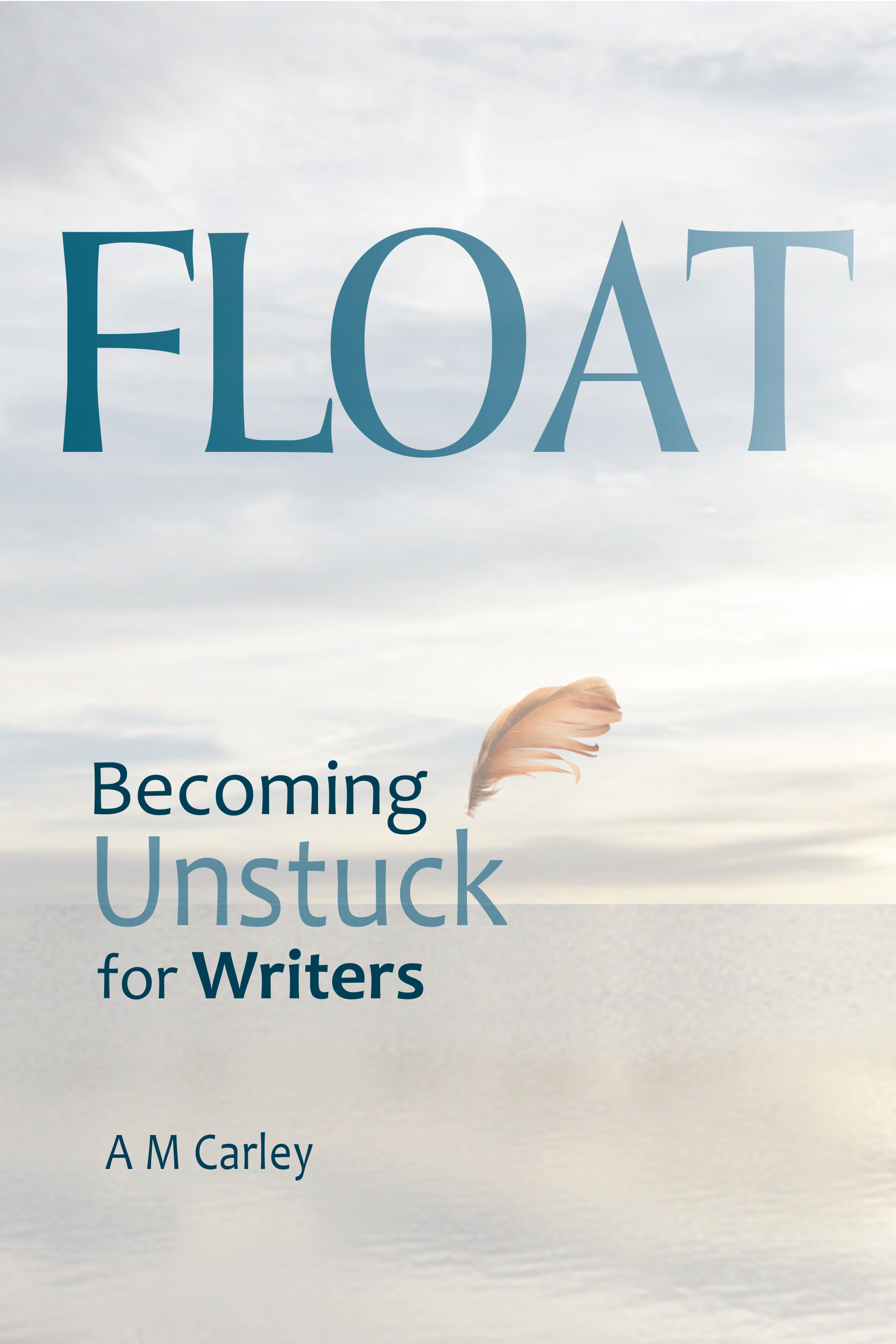
— A M Carley writes fiction and nonfiction, and is a founding member of BACCA. Through Anne Carley Creative she provides creative coaching and full-service editing to writers and other creative people. Decks of her 52 FLOAT Cards for Writers are available on Amazon. Anne’s writer handbook, FLOAT • Becoming Unstuck for Writers, is available for purchase from central Virginia booksellers, at Bookshop.org, and on Amazon. She’s querying her first novel, and writing her second.
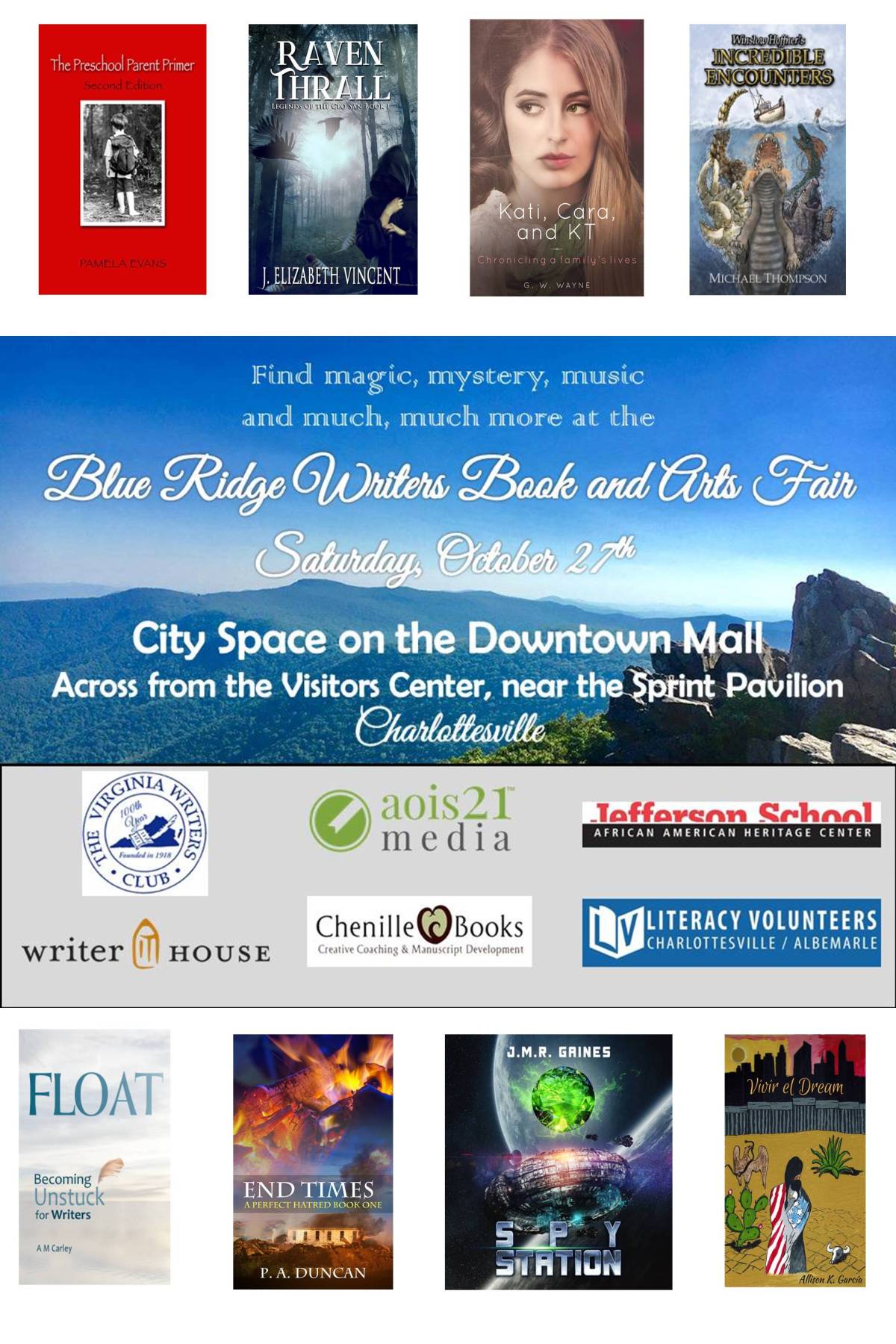
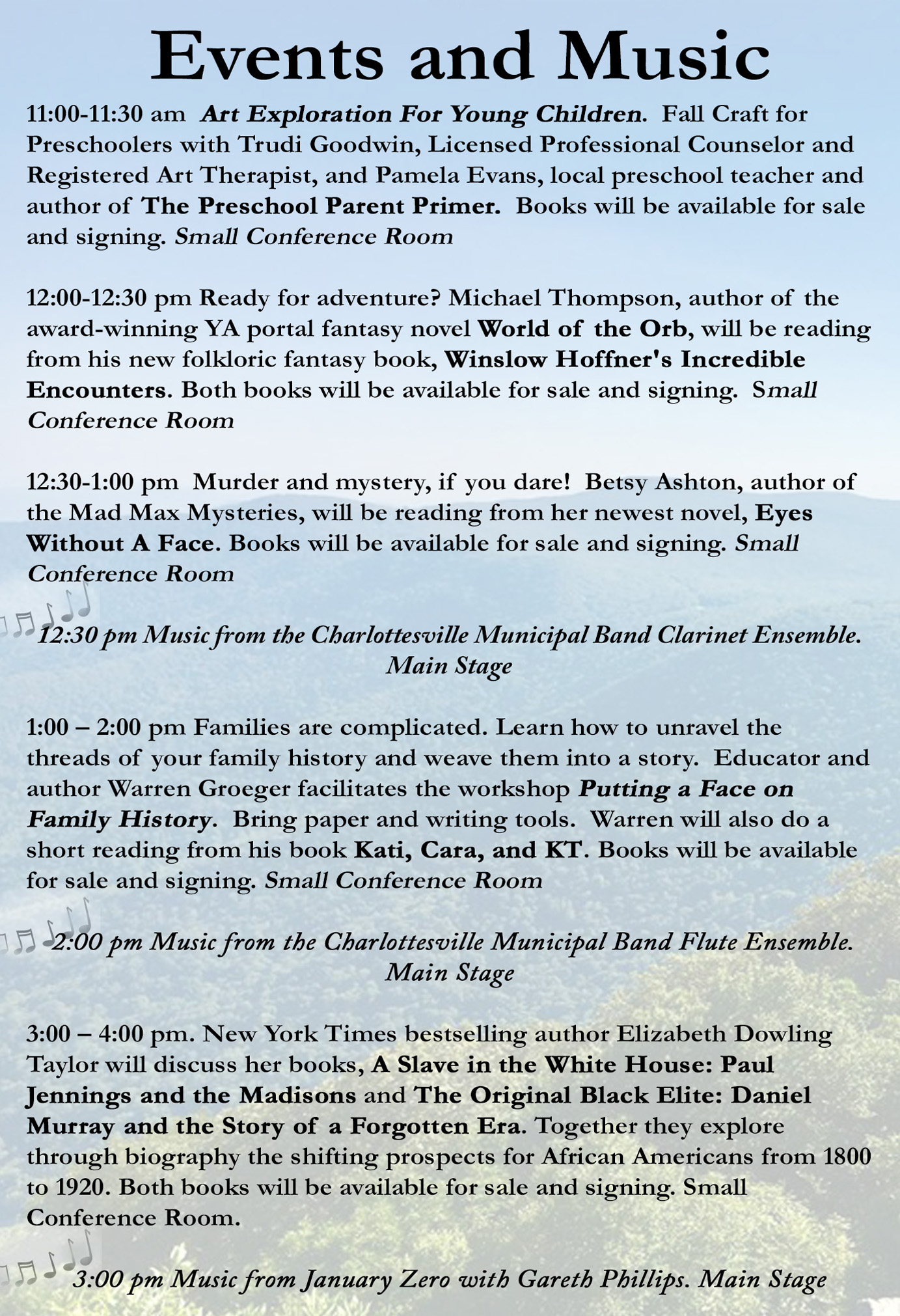
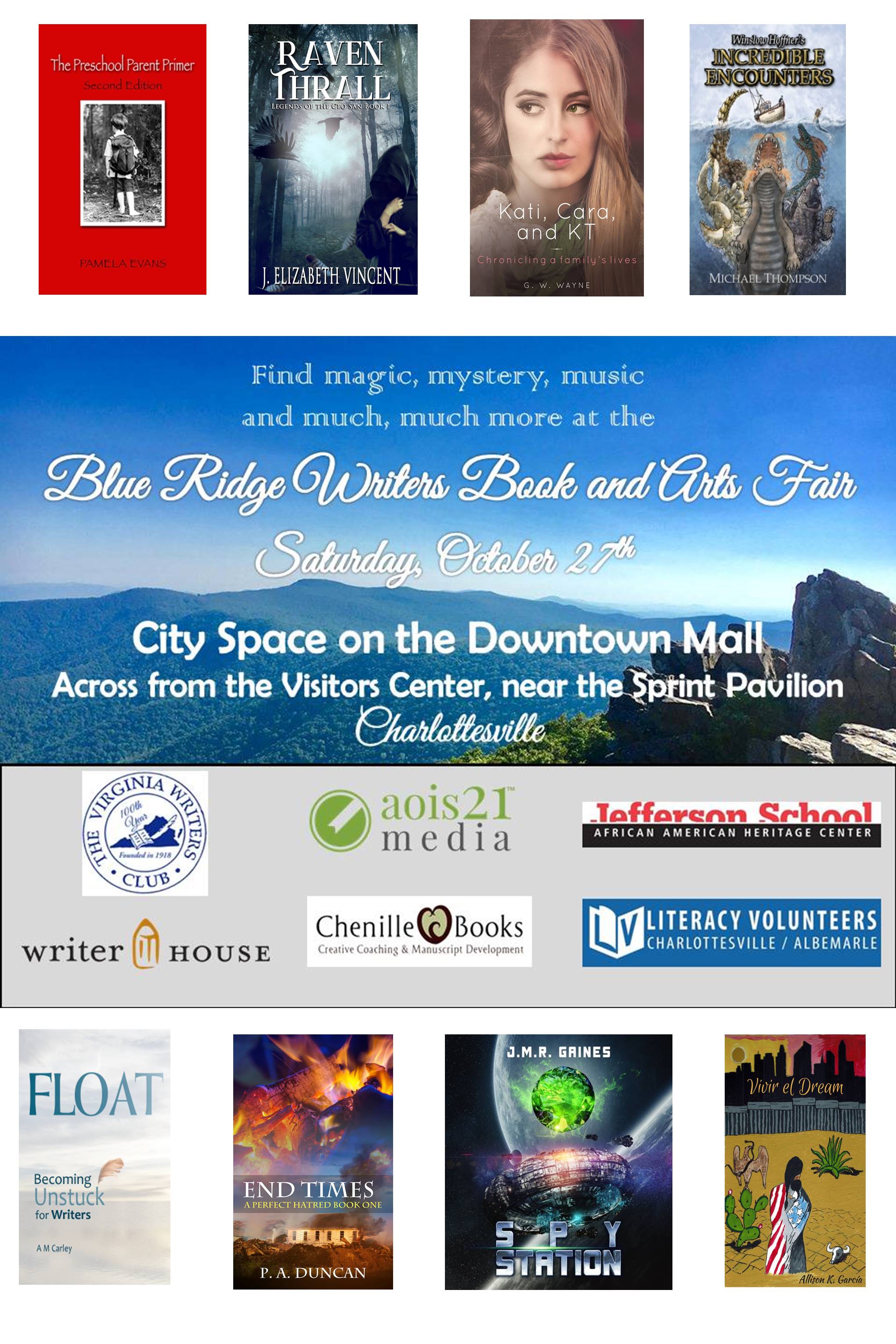
Come for the books, stay for the events! Crafts, workshops, author readings, and music! Need a map? Click here!
Almost time! Come to downtown Charlottesville for the 2018 Blue Ridge Writers Book and Arts Fair!
Don’t miss it!
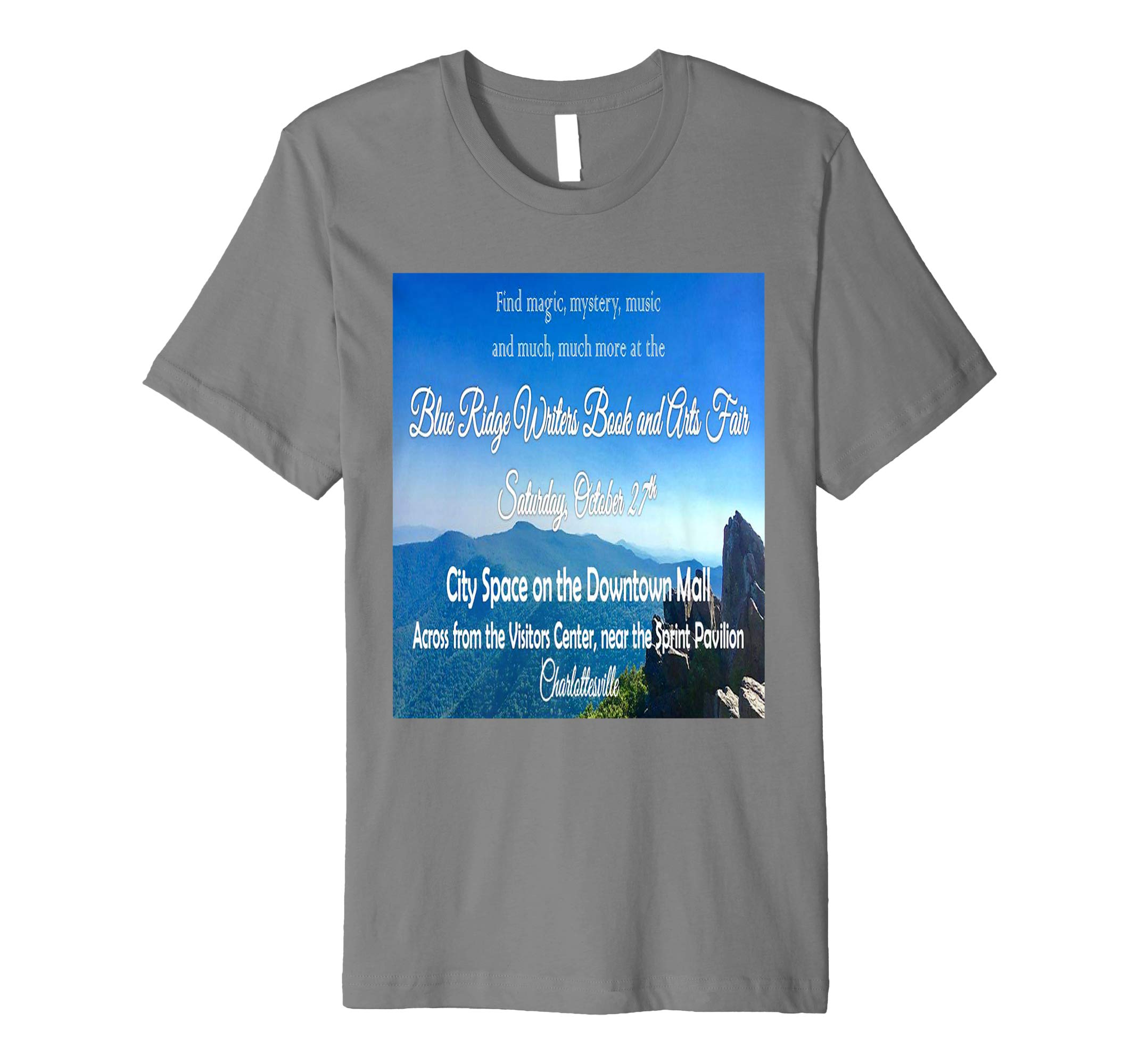
Show your support for local talent! Help spread the word everywhere you go by wearing the Blue Ridge Writers Book and Arts Fair t-shirt. Premium quality, multiple colors, men’s and women’s sizes. Only $19.99. Available on Amazon at https://www.amazon.com/dp/B07G4JXSB6
BACCA writers, like many writers, want to get our best work out of the shortest amount of time. How do we do that?
Planning
One way is to plan ahead. Like really ahead. A whole year’s worth of planning.
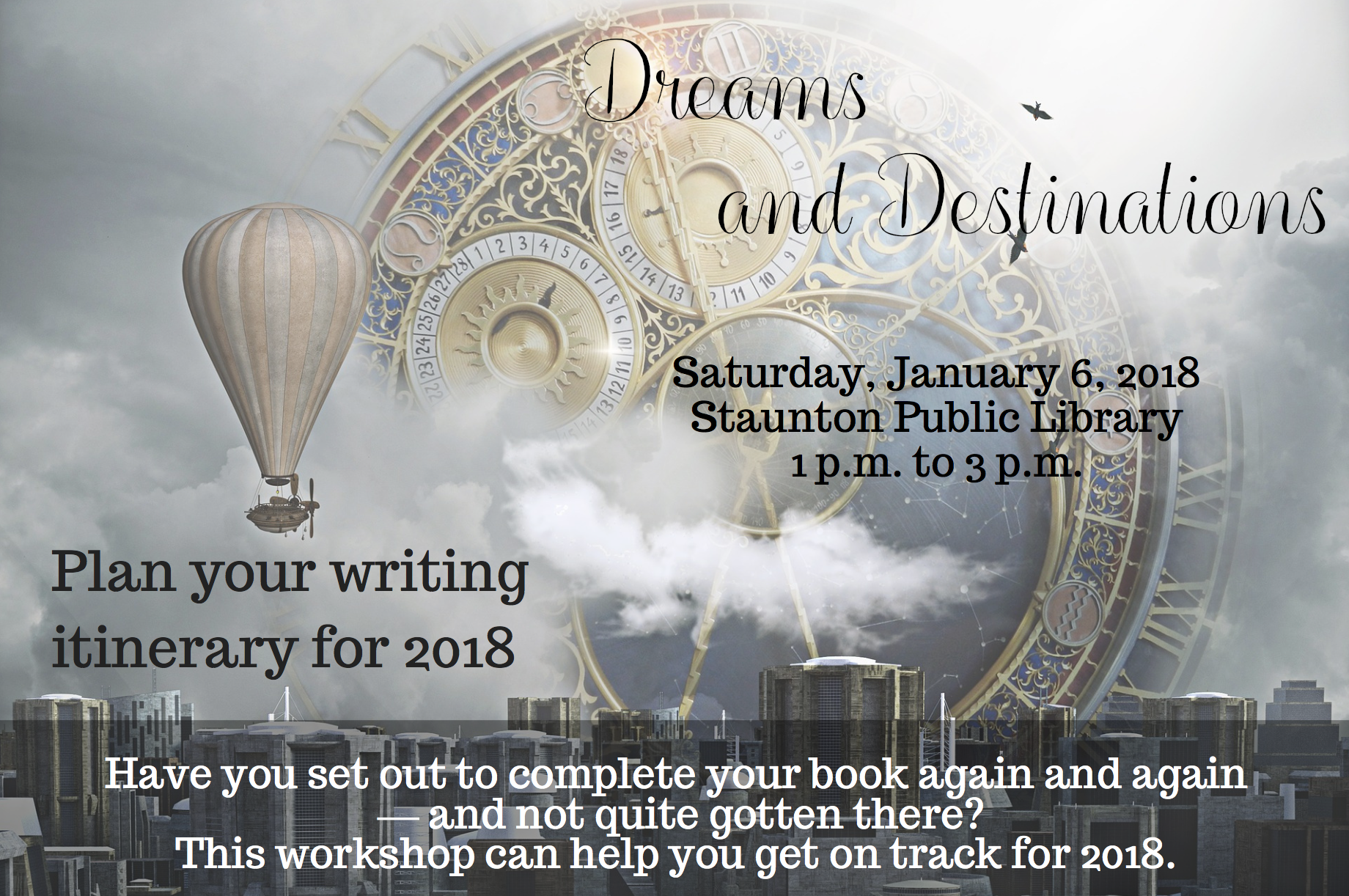
To mark the start of this new year, I worked on a new method to organize the time in a writer’s year. Then, with my colleague and fellow writing coach Ginger Moran, I co-facilitated a workshop on the subject, sponsored by SWAG Writers and hosted at the public library. We met in Staunton, Virginia with a group of writers dedicated enough to attend our session despite subfreezing temperatures and bleak skies.
The poster for our Staunton writer event. Thanks, Maggie Duncan.
Ginger and I talked about how to embrace being a creative person; how to resolve to make changes in the face of our own hardwired fear of change; how to make realistic, doable lists, and how to consider the variety of tasks that make up writing, publishing, and marketing.
We introduced a hierarchy of first choosing one big step for the year and then working backward, identifying medium steps, and within those, tiny, doable steps.
A M Carley’s handbook for writers, available at Central Virginia booksellers and online.
After Ginger’s excellent remarks on being a creative person, paradoxically both bold and sensitive, I began by quoting someone – was it Thomas Edison? – who said (more or less), “I haven’t failed. I’ve discovered ten thousand ways that didn’t work.” I love that attitude. It’s on us as creative people to remember the longer view of our projects, goals, and creative intentions. We can learn from all of it, not just the glowing successes. It gives us hope to get up in the morning and reminds us how much value there is in the things that went sideways, and can still be really useful.
Lists can be your friends, and they can torture you. The key is that for each item you put on a list, you’ll be able to know with absolute certainty when it’s complete. That means precision and compassion. Being specific with yourself, so that you know when you are done. When we’re looking ahead at the year, list hygiene can make all the difference.
Recap Routine
Remember, counterintuitively, always to look back at what you’ve done. We’re built not to appreciate our achievements, and we tend to forget them quickly. So we can complement our innate dismissals and stop to notice. “Oh, we did some good work there.” Or, “I didn’t get any good work done but I knocked three things off the list and cleared my head for tomorrow.” With a recap routine in place, it won’t feel like you need to flog yourself to keep going. Keep in touch with your basic vision, your channel, your source. Set aside time to appreciate what you’ve done. Then, once it becomes habit, the practice becomes so rewarding it reinforces itself.
I touched on a couple more FLOAT tools that haven’t made it (yet) into the book.
Getting Real
The purpose of our workshop was to encourage each person to develop a 12-month itinerary for their writing journey, beginning with the one big step that mattered most to them for the entire year. In that light, I wanted to say a few words about being realistic when setting goals. I suggested that writers meet in the middle, between grandiose and boringly doable. You want to come up with something that’s stretchy enough, so you hear yourself say, “I’m not sure I can do this,” and also grounded enough that you can say,”It’s possible.” If, instead, you know that even if everything went brilliantly, that goal would still not be possible, I recommend you don’t set yourself that goal. Doing so wouldn’t be fair, and might well stretch to the breaking point, snap, and leave you sad rather than exhilarated.
Clock It
Can you estimate your available time resources? Do you know how much time you actually have to devote to this year’s big step? Before you commit to a stretch goal, it’s useful to know how much time you’ll actually be able to devote to it. If you’re not aware of where your time goes, it’s a good exercise to keep track of everything you do for one week. Although it can feel like really annoying busywork, it’s really informative. Clocking the actual time we spend on all the different parts of our lives helps us see where the time goes. It also shows us what turns out to be important to us. For example, if I underestimate how much time I spend reading, or listening, to the news, I’m not being helpful to myself. And, by the way, I’m not doing this to go, “A-ha! That’s what I’m doing wrong!” It doesn’t need to be about self-criticism. Instead, it’s about getting a handle on what your time resources really are. Once you block out the time you know you don’t have, you’ll find out how much time is available for writing. And that’s part of being realistic.
After Ginger and I spoke, everyone got to work. Judging from the questions and comments from participants, progress was made. And, as Ginger was careful to point out, the next step after planning out the year’s big step, medium steps, and tiny steps is to enter them all into your working calendar. You know, so you’ll remember that big vision and do the incremental tasks that bring it to fruition. Hey, this could work!
Do you have a stretch goal for your writing in 2018? Happy New Writing Year!
— A M Carley writes fiction and nonfiction, and is a founding member of BACCA. Her company, Anne Carley Creative, provides creative coaching and manuscript development services to authors. Decks of 52 FLOAT Cards for Writers are available on Amazon. Anne’s writer handbook, FLOAT • Becoming Unstuck for Writers, is available for purchase at Central Virginia booksellers and on Amazon. #becomingunstuck
Why some movies CAPTURE or IMPROVE the author’s work
While others turn a night at the theater into an expensive nap zzzzz…
“What Book to Movie translation is your favorite?”
Mike:
Lord of the Rings.The three Lord of the Rings books were very descriptive and well defined (honestly, sometimes to the point of tedium). This level of description gave Director Peter Jackson ample material for his creative team at Wingnut Films. The acting, special effects, and the musical accompaniment combined to capture the feel of J.R.R. Tolkien’s world of Hobbits, Kings, and Wizards. The classic trilogy translated well to the screen.
Don:
The Godfather. The Godfather was Mario Puzo’s pulp novel about gangsters. However, in the loving hands of Director Francis Ford Coppola, this dime-store story became a classic film trilogy equal to the great Shakespearean dramas about family and betrayal. The story of Don Vito Corleone and his corrupt children became a twentieth century King Lear.
With both the Lord of the Rings and The Godfather, the movies increased the fan base and boosted book sales.
But this isn’t always the case….
“What Book to Movie translation DIDN’T work?”
Don:
The Book Thief. The movie had the major plot points but didn’t capture the emotion of the book. Even worse, it didn’t capture the unique voice of the author. So much of The Book Thief is about the author’s writing style, but the movie had none of that. The take home is that words do matter, not just the plot.
Carolyn:
The Book Thief. No novel since To Kill A Mockingbirdhas captured the lives of young people caught in a tragic world of prejudice and death like Markus Zusak’s The Book Thief. Set in Nazi Germany during World War Two, the narrator is Death, and he’s busier than he’s ever been. But Death takes a liking to a young German girl and her adoptive family. A riveting plot, yet there is much more to love about the novel. The author’s unique point of view character allows the reader to experience tragedy and hope on the same page, sometimes, in the same sentence. The movie version of The Book Thief only hinted at the depth of the emotional impact of the book. It never ventured into the stories within the story that provided much of the character development. Hitler and the Holocaust are barely mentioned in the movie, yet they are in every chapter of the book, as if the movie version thought that telling this side of the story would be too much for viewers.
Carolyn:
The Firm. John Grisham gave readers an exciting tale of moral ambiguity, even among the heroes. The movie sanitized the hero and changed the last third of the story, leaving viewers with a hero that didn’t change from the beginning of the movie to the end. Isn’t that one of the primary caveats of a good story? That characters change?
Mike:
The Watchmen. Once again, the movie version sanitized the source material, this time a Hugo Award-winning graphic novel. The novel was weirder and more political, and had a stronger ethic than the movie.
These opinions belong solely to the O’Neal family. Read the books, watch the movies, and decide for yourselves. Add more titles in the comments!




 The three Lord of the Rings books were very descriptive and well defined (honestly, sometimes to the point of tedium). This level of description gave Director Peter Jackson ample material for his creative team at Wingnut Films. The acting, special effects, and the musical accompaniment combined to capture the feel of J.R.R. Tolkien’s world of Hobbits, Kings, and Wizards. The classic trilogy translated well to the screen.
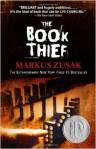 The Book Thief.
 BACCA Literary