Categories
BACCA Writers

Searching for Dr. Funkhouser

Finding Fault

All I wanted was to research manmade earthquakes.  I was pulling together ideas for a new novel about villains  triggering an earthquake under a nuclear power plant.  I had visions of them rubbing their hands together as they watched chaos unfold. But how could I research such a thing?  Where would I go to find something as unlikely, as farfetched, and as absolutely insane as a nuclear power plant built on top of an earthquake fault? Well, lucky for me, there’s one in nearby Louisa County, Virginia.

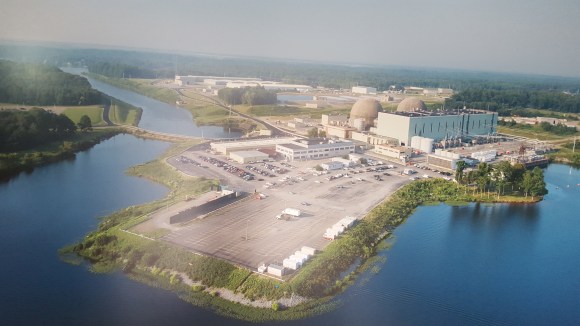
North Anna Nuclear Power Station
North Anna Nuclear Power Station. Photo is from image of the North Anna Nuclear Power Station at the front entrance of the visitor’s center in Louisa County.

The North Anna Nuclear Power Plant was announced in The Daily Progress in 1968 and a couple of years later, after clearing and excavation had begun, a geology professor named John W. Funkhouser discovered the earthquake fault. That was in February, 1970.  I found many interesting articles about the building of the nuclear power plant and the discovery of the fault but one that really stuck out was a small piece about what happened to Funkhouser three years after he discovered the fault.  He was murdered on December 3, 1974 via a single gunshot to the head.

Professor Funkhouser taught geology at John Tyler Community College in Chesterfield, Virginia. He was scheduled to testify before the Atomic Energy Commission (now called the Nuclear Regulatory Commission) in early 1975, but his murder quashed that appearance.  Twenty-four year old unemployed electrician Ray W. Cook, Jr. was convicted of his murder. The more I read, the more questions arose.  What brought Funkhouser to the power plant’s construction site back in 1970?  How did he uncover the fault?  What happened after he told the Virginia Electric and Power Company?

I tried to return to researching for my novel. I found reports of certain human activities triggering earthquakes. Activities such as damming a river to create a massive lake on a previously quiet earthquake fault. This is what geologists call reservoir-induced earthquakes. The construction of Hoover Dam, for instance, created Lake Mead in a part of the country with no previous record of seismicity. Even before the lake was completely full, people reported feeling the ground shake. Another suspect is fracking. According to the U.S. Geological Survey, “wastewater produced by the hydraulic fracturing process can cause induced earthquakes when it is injected into deep wastewater wells.”  I contacted geologists and a couple of engineers to ask about the plausibility of my villain’s dastardly scheme. Yes, they speculated, a lake on a fault line plus fracking might trigger an earthquake, so I was rather pleased with myself as I moved forward with writing the first few chapters.

But this man, this Professor John W. Funkhouser, the man who discovered the fault under the North Anna Nuclear Power Plant and was murdered, kept surfacing in my mind.

bizhub-O2128-20180108110501
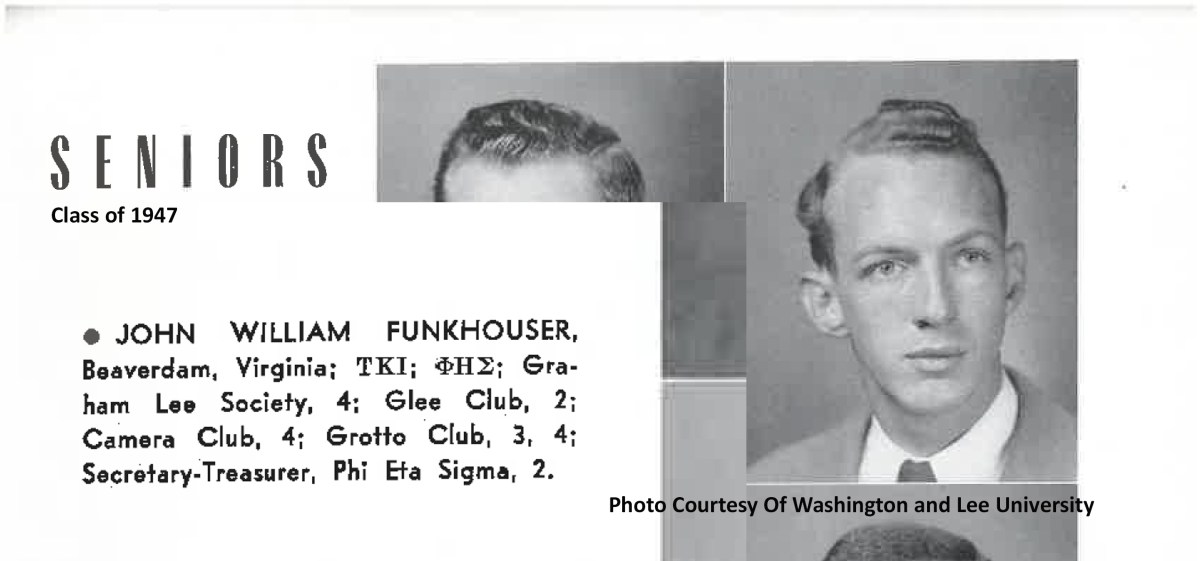
Photo from the Washington and Lee University yearbook, class of 1947. Taken when Dr. Funkhouser was 21 years old.

Who was he? What was his background? I searched the internet and found articles about Funkhouser and about his murder, including a copy of his death certificate.  I faced the fact that I had to set aside my fictional story.  I had to investigate the real one.  I printed out the death certificate.  Funkhouser was murdered in his home at the Chester Town House Apartments in Chesterfield, Virginia.  I searched online for Chester Town House Apartments but found nothing.  Since the murder was back in 1974, the apartment complex could have changed its name or may have been torn down.  That led me to contact the Chesterfield Planning Department and the Chesterfield Historical Society.  Indeed, the name of the apartment complex had changed.  I typed the new name into Google Maps. There it was.  I typed in John Tyler Community College. The apartments were about eight miles from the campus.  Professor Funkhouser was slowly becoming a real person.  This was where he lived. This was where he taught. This was where he died.  Each new discovery made me want to learn more.

Court Records

I’d never asked for court records before.  I’ve been on a jury but that was my only brush with the world of judges, prosecuting attorneys, and witnesses.  I had to do a bit of research even to know where to start. I wanted detail about the trial of Ray W. Cook, Jr.  Maybe trial transcripts would give me insight into why he shot Professor Funkhouser. I went to the Chesterfield County website and found what I needed.  I contacted the Clerk of Court, The Honorable Wendy S. Hughes, via email and quickly received a polite reply from Karla Viar, Criminal Division Supervisor/Pre-Court, Chesterfield Circuit Court Clerk’s Office. She told me that they’d pulled the files from the murder trial and had them available for me. I emailed Karla. I’d be there the next afternoon.

The drive from my home in Charlottesville to the Chesterfield Circuit Court took a bit over an hour.  I parked, grabbed my purse and notebook, and headed to the door. I didn’t know what to expect. Would they hand me a small file with one flimsy document? Would they have a thick file with stacks of evidence?  My plan was to take photos of each page with my cell phone. That seemed the easiest.  I stepped into the courthouse and was greeted by baggage scanners and armed guards.  “No cell phones. No cameras of any sort allowed in the court house.”  I returned to the car and dropped off my purse.  I returned with only my keys, my notebook, and a pen.  That’s all. This time, I made it through security.

Chesterfield County Court Building
Chesterfield Circuit Court

Ms. Viar was good to her word. The file was waiting for me.  I opened it and began writing.  I wrote down every word.  “Form No. 716 (REV) Virginia: In the Chesterfield General District Court January 29th, 1975, Commonwealth of Virginia V. Ray William Cook, Jr. Order This day came the Attorney for the Commonwealth, and ….” after writing a few full pages my hand began it cramp. The clerk assigned to sit with me while I had the file must have felt pity on me.  “Um, you know we can make copies for you,” she said.  “Fifty cents a page.”

“Do you take credit cards?”

“Yes.”

I ran back to my car for my wallet.  It took an hour or so for her to make and compile all the copies. She copied over fifty pages, most letter length but a few legal papers.  There was also a brown envelope taped closed in the file. “What’s that?” I asked.

“Sealed documents.”

“What do I have to do to get a look inside?”

“You need approval from the judge.”

“What judge?”

“Judge Hauler.”

I wrote down that name.  The information I had in my hands was already pretty incendiary. The copies I held contained details of the crime, a handwritten confession, and a photo; I could only imagine what the sealed documents might hold.  Looks like I had some more legal research ahead of me. How to request a judge to unseal court documents?  I’d work on that when I got home.

I still had a couple hours of daylight left so I drove over to the John Tyler Community College campus, where Professor Funkhouser had taught. It was winter break. I asked a guard where the geology building was and he sent me in the right direction.  I had researched enough about John W. Funkhouser to know he was a brilliant man.  Magna Cum Laude at Washington and Lee and a scholarship to Stanford University for his PhD where he was an Atomic Energy Fellow.  After graduation, he was hired by Carter Oil (part of Esso/Standard Oil) and was sent on expedition to South America where he revolutionized the field of paleopalynology.  In the mid 1960’s, he left big oil for small academia.  Peeking through the windows into the dark and empty classrooms I couldn’t help but be struck by the loss.

I still had one more stop before heading back to Charlottesville. I wanted to see the old Chester Townhouse Apartments. I wanted to see where Professor Funkhouser had lived and where he had died. At the very least, I wanted to drive the route he’d taken when he left work at John Tyler Community College and headed home on that final day in 1974.

The apartment complex was laid out like a tree with a road down the middle and cul-de-sacs branching out on either side. I drove down the first cul-de-sac.  Some of the two-story townhouses were larger than others, perhaps an extra bedroom.  I wanted to take a photo so I’d remember.  I didn’t want people or cars in the photo so I found a quiet townhouse and snapped my cell phone camera. I drove to the next cul-de-sac and saw a sign for the apartment complex’s office.

The young woman who greeted me wasn’t even born when Professor Funkhouser died. The office was a converted townhome, a showroom for potential renters to see before they sign.  I asked when the complex was built and she guessed in the 70’s or 80’s.  I asked if I could look around.  She encouraged it.  I wandered through the kitchen as if it were Professor Funkhouser’s, touching the surfaces as if he had touched them.  He was shot in his kitchen. I’d seen the photo in the court records.  He was killed at 4:30 in the afternoon, dressed in a white shirt and dark pants, his pocket protector neatly in his breast pocket, still filled with pencils and pens.  I returned to my car and drove to the next cul-de-sac and to the next one after that.  Up and down the streets, not knowing what I was looking for.  Clues to which townhouse was his, I guess. Something that looked different from the rest, something that would say a genius once lived here.

I was ready to set my GPS for home when it dawned on me that somewhere buried in the court records had to be his apartment number. Yes, the name of the apartment complex had changed and maybe the numbering had too, but I had to give it a try.  I found his address in the Virginia Uniform Traffic Summons, a report filled out by the detective who arrested Mr. Cook.  The number was there.  Five digits.  I started reading the townhouse addresses. They fit the same five digit pattern. I retraced my steps, winding back through the apartment complex, carefully reading the addresses until I returned to where I had begun at the very first cul-de-sac.   I looked at each number. Not that one.  Not that one.  Then I found it.  There it was. The address was on the front door. I rechecked the summons.  Yes, it was the same number.  Wait a minute.  I checked my cell phone. There was something familiar with that particular townhouse.  I opened up the photo gallery. I enlarged the photo I’d taken when I first arrived.  Could this be Dr. Funkhouser’s townhouse?  There must have been forty or fifty townhomes in the complex, how did I happen to take a photo of his? What were the odds? I reread the number on the front door and immediately felt a connection.  All the time I had spent searching for Dr. Funkhouser and he had found me.

20180119_135143
Photo taken from my car window.

Carolyn O’Neal is continuing her research on the life and death of Professor John W. Funkhouser.  She wrote Judge Hauler of Chesterfield County and did indeed receive permission to open the sealed files.  From those files, she was able to track down a witness and interview him face-to-face.  She has also interviewed (via phone) Dr. Funkhouser’s daughter and one of his John Tyler Community College students.  Carolyn would like to connect with anyone who had worked at the North Anna Power Plant when it was under construction or lived nearby.  She would also like to find anyone involved with the North Anna Environmental Coalition.  And of course, she would like to talk to anyone who knew Dr. John W. Funkhouser.  Contact Carolyn at carolynoneal@comcast.net


Categories
BACCA Writers

Finding yourself in new country


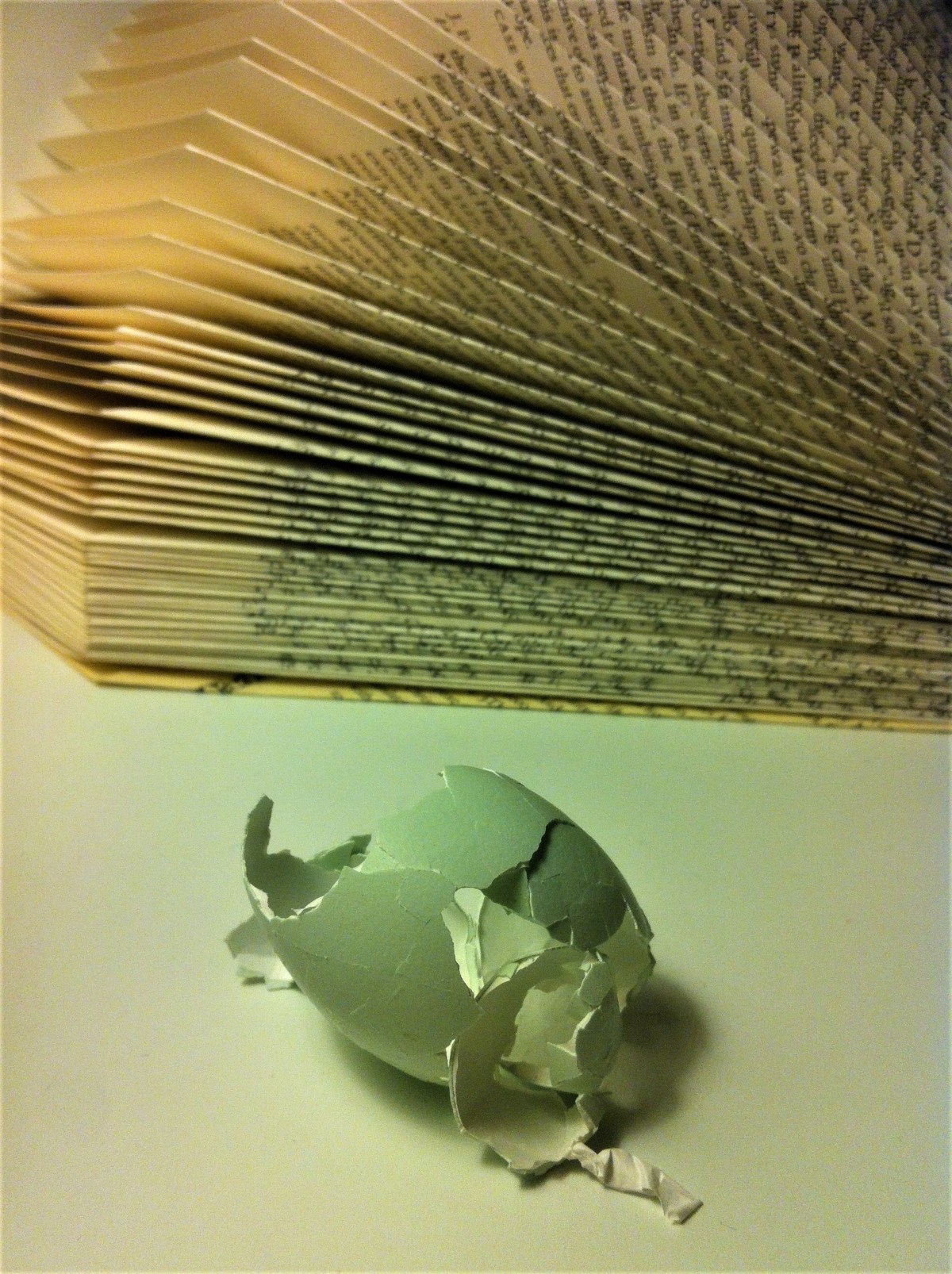
egg and book

It’s time to get serious about writing a second novel. Well past time.

I have been warned by other writers, and now I know it’s true: just because you’ve written one novel doesn’t mean the next one will be easy to write. Starting over is hard, especially at first. It’s much more comfortable to just keep tinkering—to keep honing and shaping that first world you have created.

It makes sense to finish before you start something new, but polishing for years, that’s a different story… a cautionary tale, in fact. In college, I remember hearing of a professor, who, after a brilliant start, frittered years of his career away rewriting that first book over and over, never declaring it finished. I can’t let this happen. I don’t want to wake up ten years from now and find I’ve written nothing new. Fortunately, a deadline looms. (I’ve learned to love deadlines in that way you love a person who tells you the truth, no matter how hard). In a few months time, the writers of BACCA will have finished reading what I’ve written. Soon, I’ll need to deliver something new.

I’ve known some artists and musicians that somehow always seem to have seven pots simmering on a four-burner stove, but that’s not me. I can only pour my full creative energies into one concoction at a time. I’m learning that both creative methods have merit and both have challenges. While idea wranglers never have to ask “what’s next?,” they might struggle with focus, follow through, and knowing where to begin. They might also have trouble ever finishing any one thing. Idea monogamists, on the other hand, might toil happily on and on, right up until they start to see that quiet dark at the end of the work, looming like the vast unknown of space. Then, watch us as we cling, lingering over what’s left to do.

Some compare the creative process to giving birth, but for me it’s more like allowing myself to be born into something new, reincarnating, or dropping myself into unknown territory. Leaving the comforts and familiar details of my first novel to explore something foreign feels a little like leaving a city I’ve loved and moving into a place that hasn’t made space for me yet.

I’ve packed up and moved over a dozen times: across towns, across states and across the short side of the country more than once. Allowing one’s self to be a stranger in a strange land is difficult medicine, a conditioning of a certain kind. My great-grandmother used to say—three moves equal a [house] fire, and I’ve puzzled over this bit of wisdom. I assume she was calculating losses: items broken, misplaced, or left behind. Before bubble wrap and packing tape, the potential for breakage during a move must have been great, and the consequences severe. Before moving vans, whatever possessions didn’t fit in the truck probably had to be given away. Perhaps it felt better to some people to just stay put.

After changing my scenery so many times, I’ve learned to pack well—things rarely break, and if I give stuff away, or leave it behind, I’m usually glad. Still, there are losses, intangible ones, that somehow always get left out of the equation: familiarity, job connections, roots, the ease of well-known routes and roads, and those casual, comfortable acquaintance-ships that make life feel just a little warmer and more welcoming. When determining what I’m leaving behind, I always forget to factor in the barista, who starts making my drink before I order, the neighbor across the street who always waves, or the cheese monger that I worked with once, who’s going to lead me straight to the wedge of triple-creme brie, which has just been freshly cut, but not a second before it had ripened. And none of this begins to cover the long-distance tax placed on real friendships, which inevitably erodes all but the strongest of connections. On the other side of a move, these losses don’t seem so intangible after all. Knowing and being known, being remembered—these are powerful elixirs that bolster hope, purpose, and connection.


Gifts come, too, from learning how to move: resilience, humility (being the new girl over and over is tough), map-reading skills, perspective, and, very often, some good stories.

After so many transitions, I should be an expert by now, and I do have some of it down: packing and lifting, finding a great space, and setting it up quickly. Learning how to feel at home, though, and knowing how to let go of what I’ve had to leave behind without a long mourning period—these challenges are sticky every time.

It shouldn’t surprise me, then, that instead of mapping out the unknown territory of a new novel, I’ve been hanging out in the first one—revisiting all my favorite spots one more time. I’m already nostalgic, even though I know that every book is a world that can be returned to over and over again.

For the second novel, I’m searching for an un-erodable center around which the rest can accumulate, manifest—a character, a plot, an image—that will not wear out. Something essential will come, something elemental from which I can forge more. While keeping an ear open for the call of the muse, I also find it helps to hang out often by the sacred pools where they congregate, so I’m writing every day. That way, wherever I wander, I’m never a stranger to the page.

It’s time, now. It’s time to get brave, to find myself in a new country, to learn the unfamiliar faces, and to memorize the names.

Noelle Beverly writes poetry and prose, promotes local writers in the surrounding community, and is a new member of the BACCA Literary group. Photo by the author.

Categories
BACCA Writers

Legwork

Legwork

My son is an aspiring actor and was complaining yesterday about having to make fifty copies of resumes and headshots for an upcoming “cattle call” audition. “The art is easy,” he said. “It’s all this crap I hate.” I felt the same way at his age. Submitting work to agents and journals, formatting manuscripts, and even “networking” require, it seems to me, very different parts of the brain from writing, and they are not parts to which I have easy access. Liam is a chip off the old block.  But I find that as I get older I become fonder of those sorts of actitvities.  No, they are not the wonderful rush and wallowing of the creative act, but I feel good when I have performed them.  For me, it’s like the experience of being a mother.  All sorts of formerly repulsive things, from changing diapers to filling out financial aid forms, become more welcome parts of life than one would have thought possible. Also, just as introspective mothers tend to form groups and socialize more when they have children, so I have found that a writing group is a wonderful way to connect with people who are, like me,  performing this difficult-to-describe balancing act, and who think it is worth doing.  “It’s like having a child,” I tried to explain to Liam, but of course he hasn’t had one, and it’s one of those things you really have to experience to understand. I hope he comes to appreciate the pleasures of legwork earlier than I did, but there’s no way I can really bring that about.  I’ll have to settle for trying to be a good example. So, off to get the novel manuscript ready to send of to a contest. Onward.

Categories
BACCA Writers

Happy New Writing Year

BACCA writers, like many writers, want to get our best work out of the shortest amount of time. How do we do that?

Planning

One way is to plan ahead. Like really ahead. A whole year’s worth of planning.

To mark the start of this new year, I worked on a new method to organize the time in a writer’s year. Then, with my colleague and fellow writing coach Ginger Moran, I co-facilitated a workshop on the subject, sponsored by SWAG Writers and hosted at the public library.  We met in Staunton, Virginia with a group of writers dedicated enough to attend our session despite subfreezing temperatures and bleak skies.

Staunton Graphic 180106
The poster for our Staunton writer event. Thanks, Maggie Duncan.

Ginger and I talked about how to embrace being a creative person; how to resolve to make changes in the face of our own hardwired fear of change; how to make realistic, doable lists, and how to consider the variety of tasks that make up writing, publishing, and marketing.

We introduced a hierarchy of first choosing one big step for the year and then working backward, identifying medium steps, and within those, tiny, doable steps.

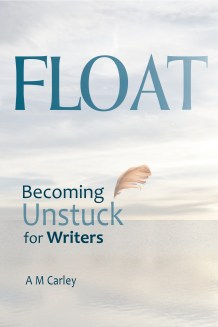
The cover of FLOAT • Becoming Unstuck for Writers
A M Carley’s handbook for writers, available at Central Virginia booksellers and online.

After Ginger’s excellent remarks on being a creative person, paradoxically both bold and sensitive, I began by quoting someone – was it Thomas Edison? – who said (more or less), “I haven’t failed. I’ve discovered ten thousand ways that didn’t work.” I love that attitude. It’s on us as creative people to remember the longer view of our projects, goals, and creative intentions. We can learn from all of it, not just the glowing successes. It gives us hope to get up in the morning and reminds us how much value there is in the things that went sideways, and can still be really useful.

The How-To’s

Drawing on some helpful ideas from my writer’s handbook, FLOAT • Becoming Unstuck for Writers, I expanded on a couple of FLOAT tools.

List Hygiene

Lists can be your friends, and they can torture you. The key is that for each item you put on a list, you’ll be able to know with absolute certainty when it’s complete. That means precision and compassion. Being specific with yourself, so that you know when you are done. When we’re looking ahead at the year, list hygiene can make all the difference.

Recap Routine

Remember, counterintuitively, always to look back at what you’ve done. We’re built not to appreciate our achievements, and we tend to forget them quickly. So we can complement our innate dismissals and stop to notice. “Oh, we did some good work there.” Or, “I didn’t get any good work done but I knocked three things off the list and cleared my head for tomorrow.” With a recap routine in place, it won’t feel like you need to flog yourself to keep going. Keep in touch with your basic vision, your channel, your source. Set aside time to appreciate what you’ve done. Then, once it becomes habit, the practice becomes so rewarding it reinforces itself.

I touched on a couple more FLOAT tools that haven’t made it (yet) into the book.

Getting Real

The purpose of our workshop was to encourage each person to develop a 12-month itinerary for their writing journey, beginning with the one big step that mattered most to them for the entire year. In that light, I wanted to say a few words about being realistic when setting goals. I suggested that writers meet in the middle, between grandiose and boringly doable. You want to come up with something that’s stretchy enough, so you hear yourself say, “I’m not sure I can do this,” and also grounded enough that you can say,”It’s possible.” If, instead, you know that even if everything went brilliantly, that goal would still not be possible, I recommend you don’t set yourself that goal. Doing so wouldn’t be fair, and might well stretch to the breaking point, snap, and leave you sad rather than exhilarated.

Clock It

Can you estimate your available time resources? Do you know how much time you actually have to devote to this year’s big step? Before you commit to a stretch goal, it’s useful to know how much time you’ll actually be able to devote to it. If you’re not aware of where your time goes, it’s a good exercise to keep track of everything you do for one week. Although it can feel like really annoying busywork, it’s really informative. Clocking the actual time we spend on all the different parts of our lives helps us see where the time goes. It also shows us what turns out to be important to us. For example, if I underestimate how much time I spend reading, or listening, to the news, I’m not being helpful to myself. And, by the way, I’m not doing this to go, “A-ha! That’s what I’m doing wrong!” It doesn’t need to be about self-criticism. Instead, it’s about getting a handle on what your time resources really are. Once you block out the time you know you don’t have, you’ll find out how much time is available for writing. And that’s part of being realistic.

After Ginger and I spoke, everyone got to work. Judging from the questions and comments from participants, progress was made. And, as Ginger was careful to point out, the next step after planning out the year’s big step, medium steps, and tiny steps is to enter them all into your working calendar. You know, so you’ll remember that big vision and do the incremental tasks that bring it to fruition. Hey, this could work!

Do you have a stretch goal for your writing in 2018? Happy New Writing Year!

— A M Carley writes fiction and nonfiction, and is a founding member of BACCA. Her company, Anne Carley Creative, provides creative coaching and manuscript development services to authors. Decks of 52 FLOAT Cards for Writers are available on Amazon. Anne’s writer handbook, FLOAT • Becoming Unstuck for Writers, is available for purchase at Central Virginia booksellers and on Amazon. #becomingunstuck 
Categories
BACCA Writers

Origin Stories and Anniversaries

IMG_3816
Photos courtesy of Gareth Phillips


The idea for my novel, Rook, was born out of a dream. I’m just grateful it arrived on my day off.

The dream came while I was living in the apartment my husband and I first shared after we got married, a place, I’m certain, which contained magical properties. Stretching over 1500+ square feet on the basement level of a Depression-era mansion, this space featured terracotta tiled floors, a three-season porch, steam heat, a room-sized butler’s pantry, a staircase to nowhere, one bathroom (covered in mismatched tiles—crazy-quilt style), as well as six separate exits to other parts of the house, including the boiler room. There was a forbidden fireplace and two non-functioning dumbwaiters. One of these became our liquor cabinet. A room-sized vault, with two sets of metal doors and a dial lock, served as our guest room. The previous tenant, a friend, had disabled the locking mechanism so that…well, you know. No one ever suffocated or got locked in while visiting us, but this apartment was so labyrinthine that guests often got lost trying to get back to the bathroom or kitchen.

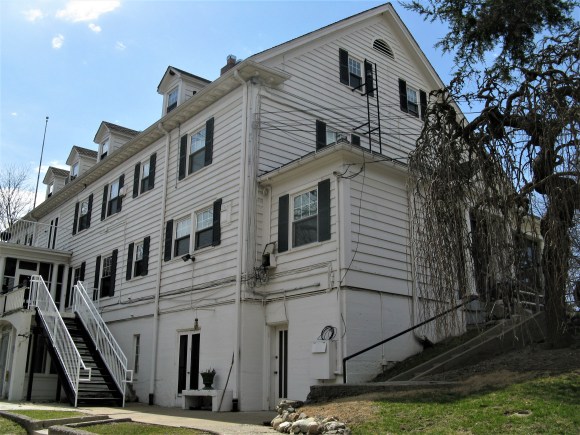
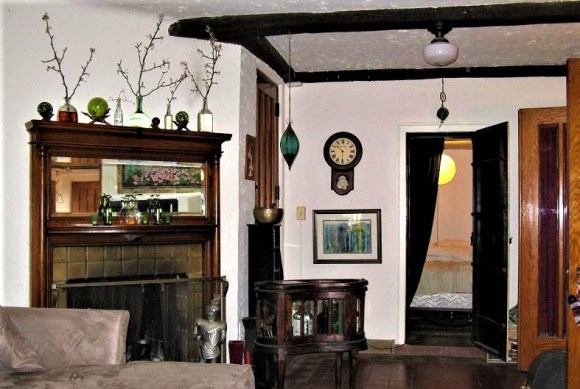
LR and vault
Living room and vault


Our bedroom opened onto the porch through french doors with beveled glass panes, and we slept under floor-to-ceiling, built-in wooden shelves filled with books. The books and the strange arrangement of space, I’m sure, helped usher in that Rook-dream of thieves, houses, and ghosts one late September morning.

Along with a thick, strange mood and a few images (which survived), I woke from the dream with a few words: stealing from the houses of the recently dead. I scribbled them into the notebook that I kept by my bed. The words bloomed into something more. I remember thinking: this is a good idea for a story, and an hour later, this is a good idea for a book. At some point, I switched to the computer, which I usually reserved for editing, because my hand just couldn’t keep up. Occasionally, I paused, thinking I had captured it all, and tried to do something else, but more ideas came. Eventually, my husband got curious. He’s a writer too, so when I said “I’m writing something, maybe a book,” he just smiled and left me alone.

By the end of that day, I knew my characters by name. I had mapped out a plot, written a beginning, and an ending. I knew the title and its significance. I had churned out six, single-spaced pages of text. (A big deal for a poet—I hadn’t seen that many of my own words together in one piece since my last research paper.) By the end of that week, the page count climbed to twenty. The rest of the novel, naturally, took much longer to develop. Still, the process elated me. It felt like watching something strange and intricate rise up out of deep water—the architecture of it incomprehensible, even chaotic at first, then unbelievably connected and orderly. Writing it was a pleasure and a gift.

IMG_3823
Bedroom and books


For a long time, I polished up this novel in solitude. With much anxiety, I finally let my husband read it. I researched the next steps—synopses, query letters, literary agents—and plodded on through the process. At this point, I’ve obliged several requests for my full manuscript and collected a significant pile of rejections. (My favorite is the elusive, non-response rejection—it’s made of pure silence!)

This process neither pleases nor elates.

Last October, I met with several members of BACCA and accepted an invitation to join their group. Since then, I have read their stories, and they have read mine. Slowly, chapter by chapter, story by story, we give each other our attention and time and consideration. After years of silence and solitude, walking through the rooms of Rook by myself (for the most part), I’ve finally allowed company in. Like the initial dream, this experience is another gift—one that I hadn’t known to ask for before.

While I continue seeking agent representation, our meetings seem even more necessary. Not only are these authors wise about all stages of the process, they are fierce and understanding—a rich paradoxical mix that creatives need to thrive and survive. Some say that one must grow a thick skin for this business. That might be easier. We need to be sound enough to weather the rejection that comes, but it’s through a thin skin that I see and feel. Without this sensitivity, what of worth will I have to write down?

During the brutal querying time, having a few careful readers, who know how to put books together, who care to look at the details—to sort out what’s working and what needs work—well, it means everything. Anniversaries are good moments to pause and say thank you. So, to the demigods of deadlines and leisure time, to the sender of provocative dreams, to the architects of the magic mansion, to my first reader and best champion, and to the thoughtful members of BACCA: most grateful thanks.

Noelle Beverly writes poetry and prose, promotes local authors in the surrounding community, and is new member of the BACCA Literary group.


Categories
BACCA Writers

Marketing My Self Published Book: A first-time author’s journey

First things first

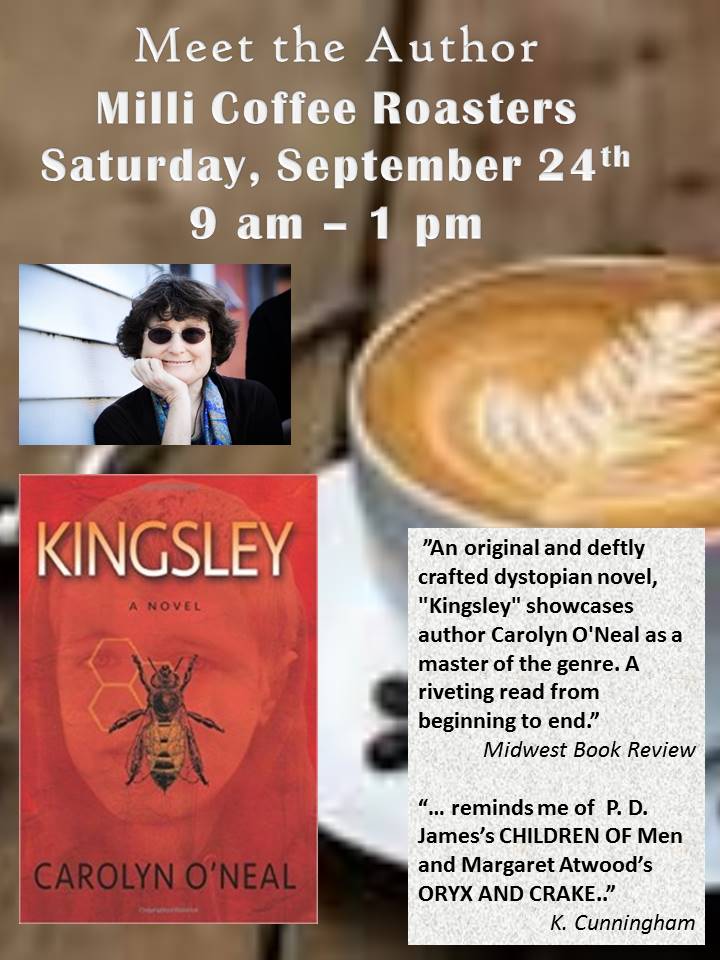
Before any public appearances, clarify your on-line/social media message.  Who are you? What is your book about? Is it funny? Romantic? Dramatic? Does your book reflect your passions? Your message should be in your on-line presence. I have a website, an author Facebook page, and a twitter account.  That’s where readers go to learn about me and my novel, KINGSLEY.

Getting Book Signings on the Calendar

Indie Bookstores are a great place for indie authors.  But, be forewarned, they sometimes have problems with selling self-published… and they have a good reason: Amazon is their biggest competitor.   This can be a problem is you are using Create Space to print your book.

ON THE OTHER HAND…. Independent coffeehouses that also sell books are very accommodating and lots of fun.  Owners and managers are always looking for events to bring people in.  And customers in coffeehouses are looking for reading material.  Even if customers don’t buy my book right away, I’ve told them about my novel and given them a flyer.

11410705_189079081435360_1220242793_n

Generally my take  from the book sales is split 80-20 (I get 80%, they get 20%), especially if they are processing credit cards. But keep in mind that the purpose of this book signing isn’t just about the money.  The real purpose is to get your name and book out there.  Expand your reach to different geographical areas if you can afford the time and cost of travel.

How to make contact

Stopping in the coffeehouse for a drink and a bite to eat is the best introduction!   See the set up and talk to the staff.  Perhaps even talk with the manager.  If you can’t talk face to face, most coffeehouses have websites. Send them an email!  Here is an example:

Hi Nick,

I am a local author- I live in Charlottesville-and I was wondering if Milli Joe’s is interested in hosting a book signing. I would take care of publicity and would bring everything needed.

My novel is set in Virginia – including Charlottesville- so there is lots of local interest.

I hope we can work out a date.

Thank you very much,
Carolyn O’Neal
Carolynoneal@comcast.net

Say you get something like this in response:

Hi Carolyn,

Glad to hear you’re interested in hosting your signing at Milli!  I’m definitely very interested, we’ve hosted a couple in the past & I really enjoy this kind of thing.  We do have to be somewhat selective in booking these events to make sure they send the kind message we can get behind as an organization.  Could you tell me a little about the book?  Thanks!
Nick
Now the ball is back in your court:
Hi Nick,
Thank you so much for getting back to me.  I am an environmentalist so I usually write ecologically-themed fiction.  KINGSLEY is the title of my novel.   It’s set in Virginia (including Charlottesville) and centers on a 14 year old boy (named Kingsley) facing an environmentally driven pandemic. Comparable titles would be Margaret Atwood’s MaddAddam Trilogy in that KINGSLEY starts in the present and ends around 40 years in the future.   I would recommend KINGSLEY to readers 14 years old or older.  I does have some complex science but no explicit sex or violence.
You can read more about KINGSLEY, including reviews, on Amazon at: http://amzn.to/28PfNhL
I’ve attached the flyer that I hand out at book signings.  You’ll notice that there’s a bee on the cover.  I tell people stopping by my table that in KINGSLEY,  I have taken the real world devastation of the honeybees and moved it up the food chain to humans.  This usually get their attention.  Everyone walks away with something from my table, whether it is a book, flyers from my favorite environmental groups, or insight into how they can help preserve the honeybees.
I’m flexible on date and time for the book signing.
Best regards,
Carolyn O’Neal
Set the Date and Time for this book signing and start the process again for your next book signing.

Note: This is where some prep work comes in handy.  I mentioned handing out flyers at book signings.  Flyers are also a good to give to the coffeehouse manager as an introduction to you and your book.  They should tell readers something about your book, including the cover, and contact information.

Single flyer

Drop off flyers at the coffeehouse a week before the book signing so customers will know you’re coming.  Be sure your social media is ready so customers can read about you and your book in advance.  Contact local newspapers and post your book signing on their events calendars.  Post the event on all your social media and ask friends and family to share.  Send emails about the event to everyone you know and tell everyone you see.

Finally, be prepared for whatever happens, whether you sell all the copies of your book or none at all.  You’ve spread the word and sharpened your pitch.   Pick yourself up and contact another coffeehouse and set another date.

Practice, practice, practice.

Prepping for your book signing….  Coming in my next blog post

Categories
BACCA Writers

A Few Things I’ve Learned About Writing

Reflecting on recent lessons learned, I made this list of highlights, all to do with being a writer.

If…

• If the passive voice were to be used along with conditional or subjunctive or some such mood, and if I were to be given material from a client that happened to include such longwinded and painstakingly constructed language, it might be possible that, as the person being compensated for simplifying the client’s material so that a stranger to the topic might be able to comprehend it, I found myself reducing a lengthy sentence into one declarative statement of few words.

How long?

• Varying the sentence lengths in a long-form piece rocks.

Teacher, teacher!

• My clients and the writers in my writer group are excellent at teaching me how to improve my writing.

• Also, the fictional Emily Starr, protagonist of Lucy Maud Montgomery‘s trilogy, reminds me to keep at it. Emily’s writing career can be a great example of persistence and doggedness, traits that can get the work done, done well, and out the door.

I noticed three copies of my book, FLOAT • Becoming Unstuck for Writers, at a local bookshop last week.

Bookstores

• As rewarding as writing is for its own sake, it is also cool to see a book you wrote on the shelf of a local bookstore. [Hazard of visiting my books at the bookstore: Now I want to read all the other books on the shelf….]

• It’s also even cooler to be paid for books that sold off that shelf.

Funny

• Humor comes in lots of flavors and strengths. It’s often just the ticket (even in nonfunny writing).

An invitation, or a rebuke?

Joy

• Writing can be a pleasure, and a blank page an invitation. When it isn’t, it can be worthwhile to explore why that is. Sometimes even a small change can switch it back into something that feels OK or even good.

Connection

• Writers have a lot to learn from their readers. Sending out the completed book or story or article doesn’t need to be the end of a writer’s (one-sided) connection with readers. Some readers want to know more about – even get acquainted with – the author of that thing they enjoyed reading. And in non-creepy ways.

For me?

Gifts

• Beta readers are generous. When someone volunteers to read your new work before it’s released or published, and then gives you structured, useful feedback about it – that’s pretty much the ideal gift. At least for a writer. Well, online reviews are pretty wonderful, too, now that you mention it.

Like water

• A writer group can make a wannabe writer into a legit one. So can a writing coach. It’s like water on a stone. Slowly, over time, edges are delineated, and rough surfaces polished.

• There’s always more to learn.

— A M Carley writes fiction and nonfiction, and is a founding member of BACCA. Her company, Anne Carley Creative, provides creative coaching and manuscript development services to authors. Her first nonfiction book, FLOAT • Becoming Unstuck for Writers, is available for purchase at Central Virginia booksellers and on Amazon. #becomingunstuck 
Categories
BACCA Writers

Moulting: A Writing Group Grows – and Grows Up

In June of 2011, four fiction classmates met at a local coffee shop to critique each other’s work. Fast-forward to June of 2017: six authors who cross genres will cross state lines to attend an annual writing retreat at a mountain getaway. There will have been roughly 70 monthly meetings in between these two Junes – plus anniversary dinners, blog posts and podcasts, classes attended and taught, contracts negotiated, books published, and writers’ conference appearances – some even paid! As I look back over all of this, I’m deeply moved.

King Penguin mid-moult, courtesy Sea World


However, this growing thing is not exactly easy. “Growing up” started a couple of years ago with shrinking down, actually. One of our founders got a great job 427 miles away. We kept up our monthly meetings via Skype when we could. But it became clear that if we regularly wanted to have at least four critiques on our work, BACCA would need another member.

Our interview process lasted about six months. Some folks were not the right fit because their writing was in areas we felt ill-equipped to critique (romance, theology, police drama). Others balked at our schedule – multiple critiques a month, a two-hour meeting, plus occasional retreats and appearances – a significant commitment. So we were pretty stoked when not one but two candidates really seemed like a match. We are thrilled to have two novelists accept our invitation to join BACCA this year: Noelle Beverly and Andrea Fisher Rowland. Welcome! So now BACCA is five on the regular, and six when we can.

Truth be told, however, this growth hasn’t been totally graceful. Yet. Five critiques is almost double three, and we are feeling the extra work. Is the right answer to clear out more time in our personal schedules during critique weeks? Spread out the submissions over two weeks? Rotate critiques? We haven’t quite found the rhythm yet. A little more math reveals that 20-minute critiques for 4 writers in two hours leaves some breathing room for general discussion. But six 20-minute critiques is 2 hours on the nose, leaving little room for tea and coffee and conversation. Is the right answer to trim the critiques down to 15 minutes? Extend our meetings by a half hour? We haven’t quite figured that one out yet, either. Plus, of course, there is the nature of the critiques themselves. We’ve been loosely following Luke Whisnant’s critiquing guidelines since the start of the fiction class where we met. Perhaps too loosely? We’re finding ourselves taking a fresh look at our process with the benefit of new eyes. It’s not quite clear yet what makeovers might take place. And, of course, Skype is not always cooperative!

I’m mostly fine (but occasionally self-conscious) about this awkward phase. It may be a bit itchy and scraggly, but it’s the moulting that’s the passage from the cygnet to the swan. Or, in this case – because I prefer their cute little faces – the chick to the penguin. I’m confident we’ll soon be navigating these new waters with the greatest of ease.

Bethany Joy Carlson is a founding member of BACCA and screenwriter.

Categories
BACCA Writers

Resist, persist, and “make good art:” or, why I still need to forgive Rainer Maria Rilke

spring one

The world is rich with encouraging words for writers. Some of my favorite right now come from Neil Gaiman, who in a commencement speech said: “Go and make interesting mistakes, make amazing mistakes, make glorious and fantastic mistakes. Break rules. Leave the world more interesting for your being here.” I’m pretty sure I can make some glorious mistakes.

The ether is also lousy with bad advice. Too often, this is what sticks. Once, just after college, I met a lauded children’s book author, who had been invited to speak to a group of smart, creative kids about his writing process. Afterwards, I confessed my own ambitions, and he said “you have to be experienced to be a writer; you have to really live in the world before you can do anything important.” Discouraging words. Presumptuous. Ironic. Moronic. Don’t even dare to make, create, do, or try until you’re older? I wanted to cover the ears of all children within a twenty mile radius. I wanted to cover my own ears too.

Even my most beloved poet, Rainer Maria Rilke, let me down a little when, in offering advice to a young poet, famously insisted that one ask the question “must I write?” And, if the answer is less than a resounding “yes,” he lamented that “to feel that one could live without writing is enough indication that, in fact, one should not.” I tested myself during a long hiatus from writing adventures while I recovered from graduate school. Nope—I did not have to write; I proved it by not writing. Or did I?

The page stayed blank, but my creative energy spewed over everything else. Intricately constructed cheese boards emerged. Surreal mantle displays surfaced, along with invented games, and shrines devoted to all variations of the color green. My living space transformed into a museum of I’m-not-writing art installations. Creativity is a natural state, it seems. Our imaginations may have been squelched by those who meant well, or didn’t, but we all have a spark of something.

clementine one

pepper


So, why are folks so eager to set up boundaries around the imagination? Why do we let them? The mantras of the gatekeepers have always been with us. You are an artist only if…you’re too young, you’re too old…you aren’t wise, smart, damaged, poor, rich, connected enough to make it as a writer, why even try? For those of us who consider artistic endeavor an important act of resistance in dark times, it’s even more necessary to ignore these and to persist right now. While bullies with power choose to destroy, others must dare to create. Young, old, solvent, broke, connected, friendless, all. The world can afford nothing less.

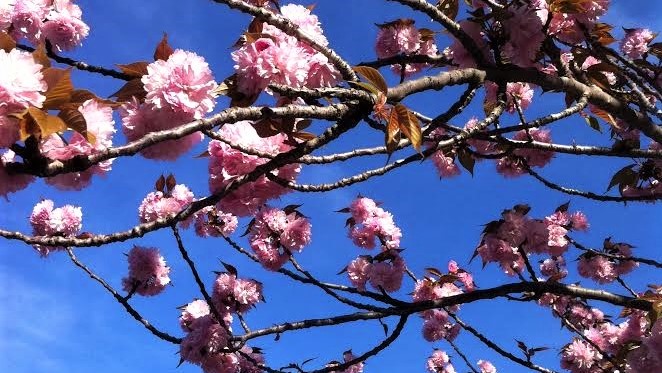
Here are some moves that help me press on. Find others who are also engaged in their own creative work. (Hello, BACCA. Thanks for having me.) Write nearly every day and lose yourself in it. Be brave enough to jump down the rabbit hole. I’m never sorry when I do. Discover beauty everywhere—spring is a great time for this. It’s hard to imagine a more audacious rebel than spring.

spring three


And…listen to the encouraging words. A few more from Neil Gaiman: “Life is sometimes hard. Things go wrong, in life and in love and in business and in friendship and in health and in all other ways that life can go wrong. And when things get tough, this is what you should do. Make good art.”


Noelle Beverly writes poetry and prose, promotes local authors in the surrounding community, and is new member of the BACCA Literary group. Photos by the author.

Categories
BACCA Writers

What Next? Celebrating Non-Celebrities

immigrant_workers

The recent election changed me.  Like thousands of others, I had always felt I was doing my duty by speaking my mind (mostly on facebook and with friends) and by voting.  Now I think of myself as a “baby activist.”  I am full of admiration for those who have been calling, writing, and showing up all along to communicate with their representatives and hold them accountable, and now I am trying to do the same.

But fundamentally, I am a writer, and it is my response as a writer that (I hope) could be most valuable.  I am just finishing up a novel on which I have worked for a very long time, and I find that the widening inequalities in our country have put a new idea into my head.  I want to celebrate our “non-celebrities.”  These are the people who will not appear on T.V. shows except perhaps for a few seconds, whose pay barely keeps them alive, and who do good in numberless ways.  The people who first come to mind are the CNAs–Certified Nursing Assistants– who take care of our elderly in assisted living and nursing homes.  Their jobs are very difficult and grossly underpaid, yet so many of them are remarkably patient, compassionate and effective.  They do a lot of good, and yet, they are undervalued and, to many, they are invisible.

I don’t know yet in what form I would like to write about these people–fiction, non-fiction, or a combination of the two.  And maybe this is one of those ideas that arise only to disappear. But it has that exciting, half-submerged feeling of an idea that won’t go away.  A perspective in which so many people are so underestimated is an unbalanced perspective.  I would like to add a little weight to the other side of the scale.

helth-service-img9