Categories
BACCA Writers

Deer vs Car on I-64

So there’s good news and bad news

The good news is that my letter to the editor was published in the Crozet Gazette.

The bad news is that it was originally a much longer essay and over half the essay had to be chopped.

The good news is that no one was seriously hurt.

The bad news is that our car was totaled when a deer ran into our car while we were driving 65 miles an hour in the rain.

The news out of Asheville and Blowing Rock was bleak. Scores of people were lost in rivers swollen by Hurricane Helena. In Albemarle County, days of rain had put every living thing on edge, both human and animal. Maybe that’s why the deer ran into rush hour traffic.
My husband and I had tickets to see a 7 pm show at the Alamo Theater. It was one of those free older movies costing $5 each, which goes to purchasing food. I needed a few items from Wegmans so we left home around 5 pm. We’re both in our upper 60s and always seem to have prescriptions to pick up from the Wegmans Pharmacy. I feared I would forget if we went after the movie.
Leaving early usually pays off. Not this time.
Usually it’s still light at 5:15 in September but that evening was dark and dreary as if it were the dead of winter. Cars and trucks were speeding by in the heavy rain. Our windshield wipers were going fast and everyone had their headlights on. My husband was driving our dark blue Subaru Outback in the right lane on I-64 East, going around 65 miles per hour, when I saw the deer in the median. It had antlers and was big and was running towards us. Somehow it must have crossed I-64 West. The deer disappeared down the slope and I hoped it would stay there or find another way across.
There must be some strange mechanism in the brain that makes life threatening situations happen both in a flash and in slow motion. Cars in front of us. Cars behind us. A tractor trailer truck sped on the left hand side. Then the deer appeared. It was like a scene from a war movie, when the navigator of a battleship sees the torpedo coming toward them and holds on tight, knowing the ship is about to be hit. I braced and my husband tensed. The deer cleared the left hand lane and jumped.
We were still going 65 miles an hour when the deer landed on our windshield. I don’t remember all the details. Maybe I was covering my face or clutching my seatbelt or watching the other cars. Somehow my husband was able to pull the car over and park inches from the guardrail. His side window was shattered. His side mirror was gone.
My husband had been hit. His face looked like he’d been punched by a prizefighter. Maybe a hoof had come through the shattered window. Maybe an antler. His jaw was swelling. Blood streaked down his face and dripped from the tip of his nose, like that scene from Carrie after the bucketful of blood is dropped on Sissy Spacek. I didn’t know if it was his blood or the deer’s blood or a mixture of both. His eyeglasses were knocked off. Perhaps they’d saved his vision. Crushed glass crusted the corner of his left eye. Fur and shattered glass was everywhere. On our faces, in our hair, all over the inside of our car.
Before asking if I was OK, before calling 911 or our insurance company, my husband asked me to contact the Alamo Theater. “Tell them we need a refund for the tickets,” he said. I was so scatterbrained at that moment that I messaged Alamo and told them about the accident and asked about their refund policy.
I called 911 and gave them as many details as I could. We were on I-64 East, between the Ivy exit and Route 29. We were parallel to the Ragged Mountain Reservoir when a deer jumped at our car.
“Are there any injuries? “
“Yes.”
“Do you need an ambulance?”
“Yes. My husband has blood all over his face.”
“OK, the police and ambulance are on the way.”
I tried to open my door but the car was too close to the guard rail. Neither of us wanted to get out on the driver’s side since it was still rush hour. Passing trucks caused the car to vibrate.
Moments later an ambulance, a police car, and a fire truck pulled up around us. The ambulance parked in front of us, and the police car and fire truck parked behind us, blocking the right lane. They placed cones to guide traffic away from us and helped my husband out of the car.
I grabbed my purse and phone and opened the glove compartment for the folder with the insurance information. I grabbed my sunglasses even though I didn’t need them. I grabbed my water battle and started to climb over to the driver’s seat when I spotted my husband’s eyeglasses on the floor near the pedals. They were bent and scratched. I picked them up and made my way out of the car.
The rain had slowed to a misty sputter. Traffic was loud and unnerving, even with our lane blocked. I asked what had happened to the deer. It was behind the firetruck, they said. I didn’t look. I’ve seen enough dead animals hit by cars. I didn’t need to see this one. The police said they’d arrange for a tow truck to take our car away.
The paramedics loaded my husband into the ambulance and strapped him onto a stretcher. I followed and found a seat that strapped me in like a roller coaster ride. The paramedics checked my husband’s blood pressure, took his medical history, and called the UVA emergency room to let them know we were on our way. I checked my phone. I couldn’t help but smile when I read the thoughtful reply from the Alamo Theater expressing concern for our safety and assuring us they would do whatever we wanted regarding refunding the tickets.
We arrived at UVA’s newly remodeled ER. My husband was wheeled in on a stretcher. We walked past medical staff and a couple of very serious looking guards with corrections officer on their lapels. I told them that we’d had a deer related accident and their faces soften. Everyone is sweet to old people, especially when one of them has blood running down his face. I had to hurry to catch up with the stretcher. They transferred my husband to a wheelchair and checked in at a service desk. I found my way to the waiting area. The TV was on behind me. A woman in a wheelchair surrounded by family was across from me. The ER was full of people, some in wheelchairs. I didn’t see anyone else with blood on their face.
I was still full of tension when my husband was wheeled past me and pushed through double doors. Someone came over and told me where they were taking him and what they were doing. They told me to wait. I tried to hold onto everything they said. I clutched the items I’d taken from the car like they were precious remnants of a previous life: notebook from the glove compartment, my water bottle, and his twisted and scratched eyeglasses.
By the time I updated relatives about the accident it was close to 7 pm. They wanted to come to the hospital but I told them to wait until I knew more. Then came the long, and I mean LONG, phone call with the insurance company. The person who answered was sympathetic and efficient but the ER was so noisy I often had to ask her to repeat herself. Still feeling scattered by the accident didn’t help. I couldn’t remember my car’s license number but I could remember its make and model. The insurance company had an old email address and old phone number for us in their records so they had to be updated. I told her about the deer and about the rain and about the blood on my husband’s face. Talking about the wreck calmed my nerves and helped me focus on getting the automobile and health insurance sorted out, giving both the insurance company and the hospital the necessary policy numbers, birthdates, and phone numbers.
I was so focused on the phone call that I didn’t realize my husband had been wheeled back to the waiting room. His face was still streaked with blood. I told him I had contacted relatives and the insurance company and he told me the doctor wanted to do a CT Scan of his head.
We had intended to order pizza and popcorn at the Alamo for dinner. Neither of us had eaten anything since breakfast. The vending machines were on the other side of the ER, beyond the security guards and metal detectors. Nothing in the machines looked appealing. Chips, candy, one type of Nature Valley granola bar. The drink machine was even worse. In truth I was too tense to eat. I skipped the vending machines and went to the bathroom to wash my face and hands and wash my water bottle. I found a water fountain and filled it up.
Back through the metal detectors and guards, I returned to the waiting room. My husband was gone. I asked the woman behind the desk if I could go see him and she gave me a visitor’s tag. She pushed a button and the mysterious double doors opened.
My husband shared a room with another patient, separated by a curtain. Listening to the doctors I learned that the other man had come to the ER because he feared he was having a heart attack. His daughter had accompanied him. She was around high school age and helped translate for him. My husband was already acquainted with them when I arrived. The girl told us that her younger brother was turning fifteen this year so my husband asked if boys have anything like a quinceanera. She perked with this question and said boys celebrate in other ways.
Someone came in and put an IV in my husband’s right arm. Someone else came to remove bits of glass from my husband’s wounds. Someone arrived with ibuprofen. The order for the CT Scan had finally been approved so someone wheeled my husband away. I updated relatives. My husband returned from his CT scan shortly before the test results came in for the other man. Good news. He wasn’t having a heart attack. The man was released. We said our goodbyes and wished each other well.
A series of people came in to look at my husband’s wounds and try to clean some of the blood off his face. The doctor asked if he knew when my husband had his last tetanus shot. The doctor was concerned about what the deer and the glass could have transmitted. A new tetanus shot was ordered. I hoped they could give it to him through his IV. He’d gone through so much already.
While we waited for the CT results and the tetanus shot, housekeeping came in and cleaned the room, taking way the trash and mopping the floor. It was close to 9 pm and I wanted to go home. My body was achy and I was getting a headache. I dug a couple of Tylenol from my purse and took them with water. I regretted not buying a granola bar from the vending machine. Another patient was brought in to take the place of the patient who had been discharged, a man with a thick Eastern European accent and his wife. Every time doctors visited the man I tried to catch their eye. I wanted to know what to expect. Would my husband be admitted? Would he be discharged? It was approaching 10 pm by the time we heard the results of the CT Scan. Nothing was broken. No indication of a concussion. Thank goodness. A nurse came to take out my husband’s IV. Next came the tetanus shot in the upper arm, the same arm that used to have the IV. Waiting for our discharge papers was possibly the worst part of the whole ordeal. We were both exhausted and overwhelmed. We needed showers, food, and rest, in that order.
Uber is a great resource but weighing time against money at 11:30 pm is tough. Six minutes wait for $45. Twenty minutes wait for $25. We opted to wait the twenty minutes. On our way home in the backseat of the Uber we passed several cars stranded on the side of the road. Firetrucks and ambulances screeched by us on I-64 West. At a time of night when there should have been no traffic at all, I-64 slowed to a crawl. It was raining again. Somewhere in the woods deer were still trying to cross the interstate.
The next morning my husband called highway patrol to find out where our car had been towed. By some miracle it wasn’t raining. Our Outback didn’t look too bad except for the banged up front left side, missing driver side mirror and window, and softball size hole in the front windshield. Inside was a different matter. Not only were the front seats, dashboard, and gear control covered with shattered glass and deer hair, the interior was also soaked. Our insurance company wasn’t happy to hear that. “They were supposed to wrap the car,” they said. We speculated that the water damage would total the car even if the deer didn’t, but we still had to find a shop to take a look at it and give us and the insurance company their estimate.
The first car repair shop suggested by our insurance company was fully booked and wouldn’t have an opening for three weeks. We ended up telling the insurance agent to find a shop and arrange for towing. The agent took care of finding a shop, towing the car, and getting a repair estimate. We discovered that the reason so many shops were fully booked for weeks was because of deer related accidents. Hearing this was maddening. Why weren’t all interstates protected from deer? Where were the deer fences and wildlife corridors for deer to move under the interstate? My anger prompted me to write my Albemarle County Supervisor Jim Andrews and tell him about our accident. He responded immediately with concern for our health and questions about where exactly the accident took place so he could let VDOT know.
As expected, a few days later we received a phone call that our car was totaled. We started looking for a good replacement on the CarMax website and found what we wanted. We picked up our Honda CRV exactly two weeks after the deer crashed into our Subaru Outback. I specifically requested a white car, hoping it would be easier for deer to see at night. The insurance company gave us the blue book value for our Outback, but not replacement value, not by a long shot. I’m not bitter. In many ways we were lucky. It could have cost us much more.

Categories
BACCA Writers

What Spooks a Writer?

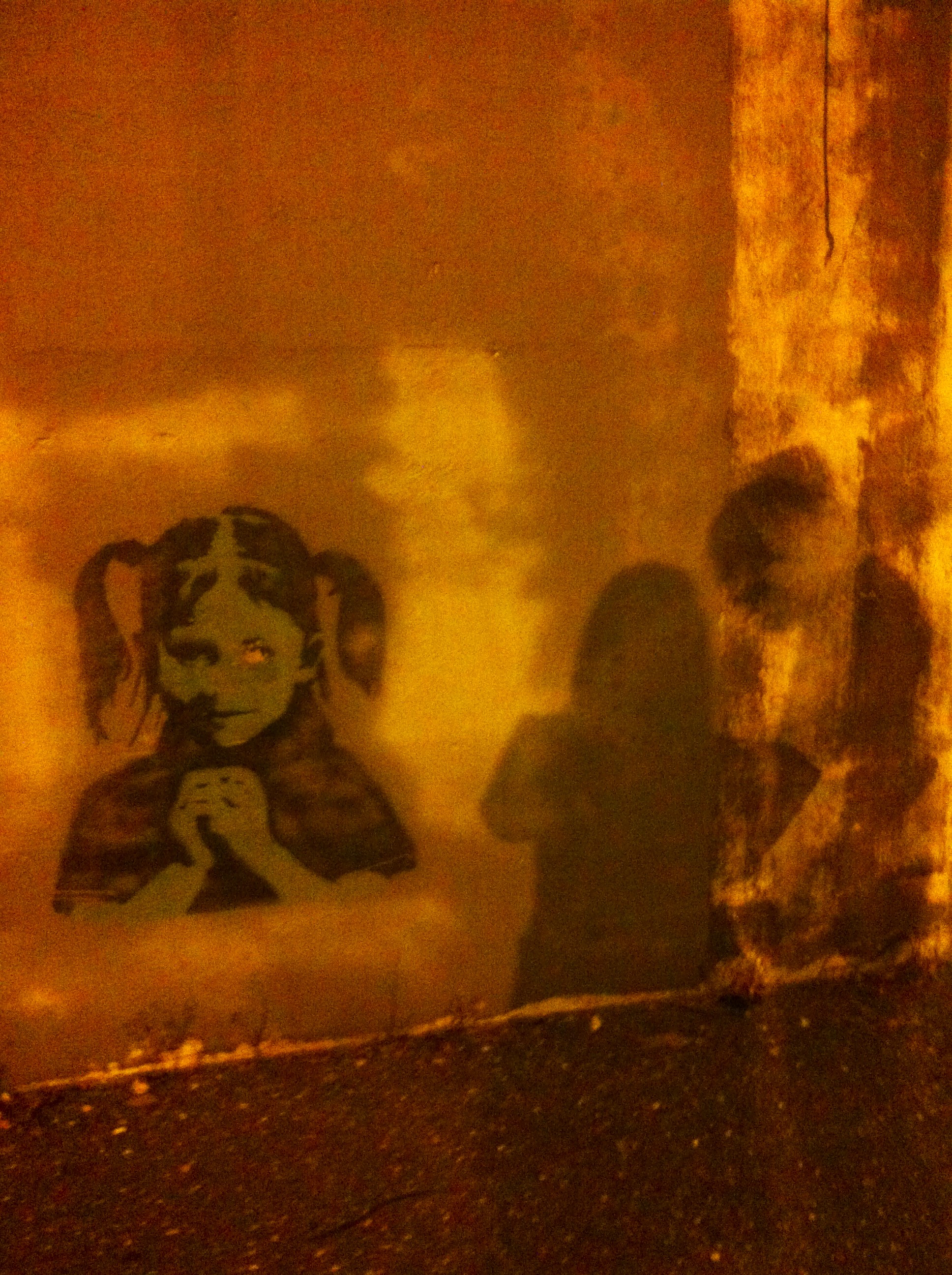
shadows and graffiti of a spooky girl with pigtails
Graffiti, shadows; Downtown Lynchburg; ca. 2018

It’s time to face my fears. There’s something about this time of year that inspires me to confront them—those monsters that are nipping at my ankles and threatening to tear apart my creative work.

When I think of the traditional fears that haunt and beleaguer writers, a few boogeymen jump to mind:

Fear of rejection. Fear of deadlines. Fear of the blank page.

Though formidable, for me these phenomena have lost their boo—not because I have extraordinary courage, but because I’ve had time to study them more closely.

At this point, after submitting my work and searching for agents for the last two decades, rejection is an old (annoying) acquaintance. It used to derail me, but now I find I’m inoculated to the word “no.” Rejection is unpleasant, but it can’t paralyze me anymore. After facing dozens and dozens of deadlines, I’ve learned that they’re tools for making progress. As I’ve explored here, even the ultimate deadline, death, can drive us to finish what we’ve started and meet our goals. As for the blank page, well, that’s where all my ideas are born. Anything can happen on a blank page, so now when I stare at a fresh sheet of paper I just feel excited.

Even though I’ve faced some fears, there are still a few things that scare me. It’s time to get out the flashlight and have a look at what’s lurking beneath the bed.

doorknocker with a face

Fear of The Knock at the Door

Time is the most contested of my resources. In this era of my life, interruptions, even emergencies, are a constant reality. If I want to produce anything, creative time has to be prioritized, pried out, and protected with ferocity. When I’m chasing down an elusive idea or image, any interruption, even a friendly one, can derail this somewhat fragile process. So, when I’m in my studio enjoying one of those rare hours that I’ve set aside for creative work, I find myself bracing for the knock at the door.

Fear of Godzilla’s little brother

I bet you know him, that kid on the playground that came along and kicked your tower down before you’d even finished building it. Writers are prone to this little monster, too. Sharing work before it’s ready is dangerous business. Feedback, if carefully crafted and delivered, is essential for writers. However, thoughtful critique is a very different creature from carelessly formed criticism. Godzilla’s little brother has no interest in helping you make your writing better, he just wants to topple your work mid-progress, flog your ideas before they’ve fully taken shape, and tear your project apart without taking any time to understand it.

Fear of Creativity Vampires

These folk can be hard to spot sometimes; they are very good with disguises. They might take the form of a family member, a friend, a coworker. But, there is a foolproof way to know if you have one in your life—after you spend time with a creativity vampire, you feel depleted and devoid of ideas. Your time, your energy, are spent fixing their problems, jumping to their aid, maybe even propping up their fragile egos. This time and energy (which could have been channeled into your creative work) flows in one direction only—straight to the vampire. If you need help or encouragement, you won’t get it from one of them.

a ripped sticker of two faces
Found art; Asheville; ca. 2022

Fear of The Poacher

Finding inspiration in another writer’s work is natural. Imitation can be a wonderful learning tool, but on occasion, I’ve encountered a person who takes it a step too far. This person is The Poacher—a person who lets someone else do the heavy lifting of creation and then reaps some of the rewards. They recognize a good idea, steal it, then make a quick replica and pass it off as their own. I identified my first Poacher in eighth grade art class after she ripped off the central governing idea of an image I’d been working on in my sketchbook. Looking at her “version” of my idea, I felt disappointed and deflated. Good ideas require time, energy, and often a unique point of view. Sure, there may be nothing new under the sun, but if you manage to generate something that feels fresh, seeing it immediately duplicated by someone else feels like a sucker punch or a theft.

Why Look for Monsters?

Well, now I can see what I’m fighting. Monsters that lurk in the dark often seem bigger than they really are. Shining a light on them brings clarity and definition. When I look over the list I’ve created, it’s clear that my fears all point back to the same problem—I need stronger boundaries around my creative work. I need to find ways to protect my time. I need to make sure that the people in my inner circle are trustworthy and respectful. Easy to say…much harder to do. Still, it feels better to know than to sit, afraid, in the dark.

Dangers to creative expression hunker in every corner. I might be vulnerable to some that others are not. Have you looked at what lurks in the shadows lately? What haunts you and your creative work?


Noelle Beverly writes poetry and prose, interprets local history at the Lynchburg Museum, and is a member of the BACCA Literary groupPhotos by author.

Categories
BACCA Writers

Keeping the bits and pieces

Every beekeeper has experienced opening up their hives and finding their honeybees have built honeycomb in the wrong place. Some beekeepers call this burr comb.

Image provided by Carolyn O’Neal


Beekeepers want even and smooth comb built on the frames we provide for the bees.

Image provided by Carolyn O’Neal

Building comb is hard work for honeybees. It requires tremendous resources and efforts to produce wax. Then they have to festoon together to mold the wax into the hexagon shape of beautiful honeycomb. Honeybees literally work themselves to death building comb and filling it with nectar and pollen.

What do beekeepers do with wax found in the wrong places? Clean, fresh beeswax is valuable! We keep it! We use it to coat honeybee frames for the following spring, or make candles, or polish furniture. There are so many uses for beeswax.

It’s a little like that great paragraph you wrote that just doesn’t fit. Maybe it belongs elsewhere in the story. Maybe it belongs in a different story.

Keep it! Don’t throw away your hard work. Just like building comb for honeybees, writing a good paragraph requires effort and is worth saving.

AI Generated image.
Categories
BACCA Writers

Meaning Mining

Pens
houstonwritersguild.org

Well, the school year is about to start, and I now have two unfinished writing projects instead of the usual one.  Three, if you count my ambition to arrange my poetry into a collection.  Now, as I turn my attention to preparing classes, and as I, like the rest of Charlottesville, reel from the recent invasion of the alt-right, I am more grateful than ever for the support and patience of my fellow BACCA members. I hope to publish, and to reach a wider audience, but meanwhile, as always, it is writing and friendship that keep me sane. I don’t think it’s an overstatement to say that BACCA is a place where we support each other in the struggle for meaning.  I spoke with a friend today who teaches at Piedmont Community College, and, when asked to address one of the many meetings held to prepare for teaching in these troubled times, she surprised herself by bursting out crying. We talked about the scariness of this allegedly “post-truth” era.  I think that each writer is like a miner, digging for the truth of his or her own experience.  I told her that, in crying, she probably did her colleagues good, because she was expressing what many of them longed to but couldn’t. I hope that in BACCA we can continue to devote ourselves to such expression, whether in joy, sadness, or the more common in-between territory, and to support each other in this devotion.  Thanks to you all.  Onward.

writer-fist
mountainouswords.com

Categories
BACCA Writers

Mind-Expanding Writing Strategies

One thing that I love about “writing in community” is the accountability. Expanding the group of people who can give constructive feedback about our writing makes it a less lonely activity. Writing groups, partners, or teams help cheer us on when we’re stuck. And deadlines for those groups help us keep going even when – like at the end of Daylight Savings Time – we’d like to curl up on the couch instead of sticking to our writing goals. Here are some other mind-expanding* strategies that keep me writing.

1. Writing is an opportunity to be mindful

angkor_thom_image
The author captured this peaceful face beyond the doorways on an October 2013 visit to Angkor Thom, Cambodia

I recently learned the term productive procrastination, which means doing something that seems productive, to avoid doing The Thing that you should be doing – in this case, writing. Ever notice that when you sit down for your daily dose of writing, the dirty dishes or laundry start calling to you? Or for some reason it’s a good time to do your banking?

Even chores can seem compelling if you’ve been out of the writing habit for a while. So: next time this happens, expand your awareness to include this tendency. In other words, simply try to notice, to consciously register, when your mind tries to convince you that something else is more important than your writing. At first, you may still end up avoiding your writing. But after a while of noticing, you can change that habit (your brain is actually re-wiring itself). Now when I catch myself beginning to productively procrastinate, I’m usually able to override the impulse and keep on writing. Sometimes it helps to write down the item on a to-do list so I don’t forget. I just say to myself “You’re writing now, you can do that later.” And it’s true!

2.  Think outside the screen

In this age of electronic devices, sometimes I forget about writing strategies beyond my laptop screen. But interacting with a paper draft is different than on a computer or tablet. I find reading and editing on paper an especially important strategy when I’m working on chapters – or really, anything longer than a couple of pages. When I read on the page, I notice more easily if a sentence needs to be moved up or down, or I can see a whole section that can be edited out. Do you find it difficult to order the action in a novel or short story? Consider cutting up pieces of text and moving things around.

You can also use outlines however they work for you. For example, try outlining after you start writing, or make an outline of what you’ve written. This will show you the entire story and things that are out of place might pop.

3. Writing is part of the learning process

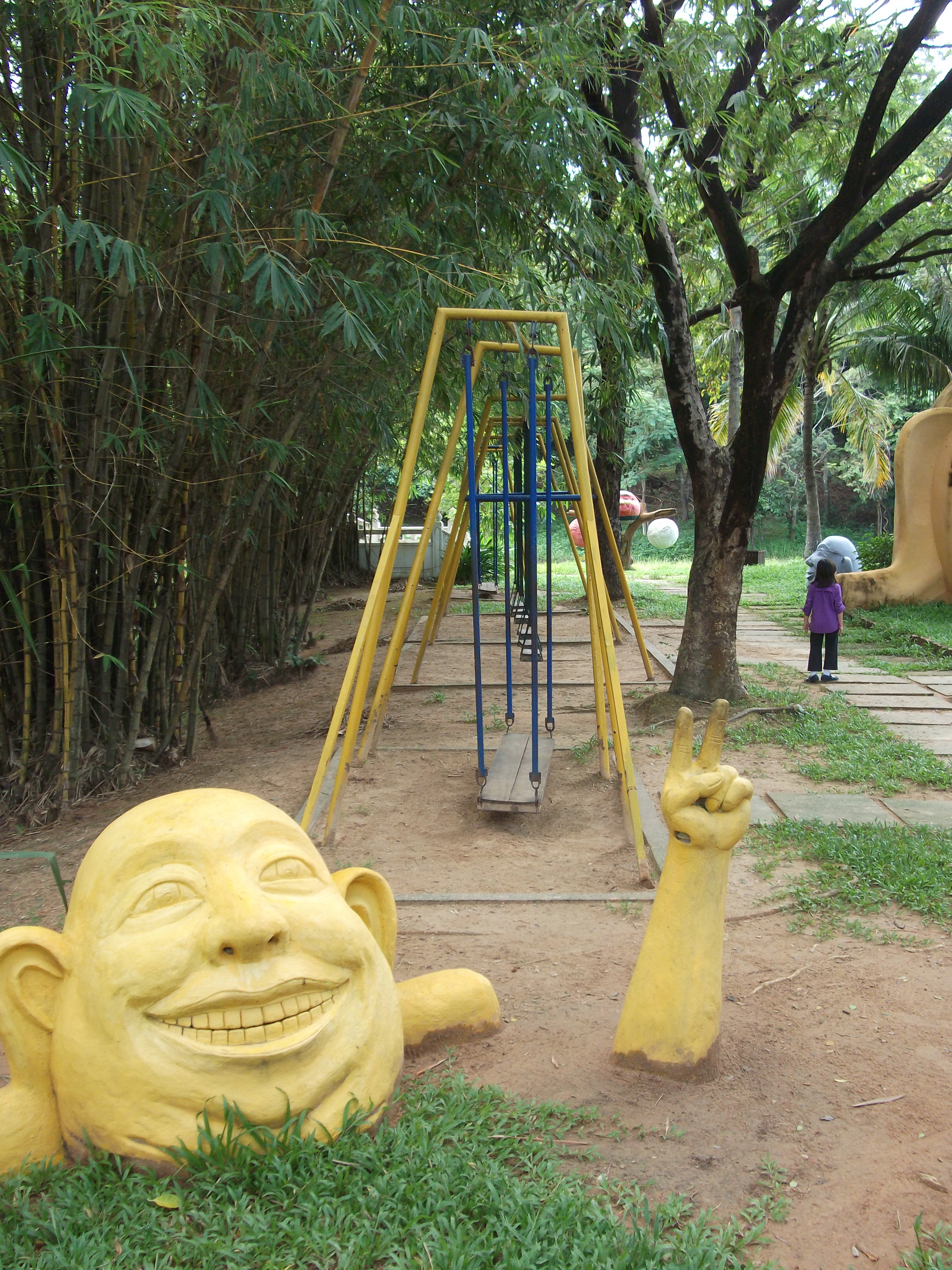
DSCF2278
One of many colorful Buddhas in a park in the Cambodian Cultural Village of Siem Reap. He might be saying “Don’t worry. Be happy. Just write. Then edit.”

I used to have a concept that I would understand something fully and then write it down. But I’ve learned that for me, writing is how I figure things out. In other words, I’ve broadened my definition of “writing” to include “writing to learn,” in addition to “writing to teach” (or explain, describe, or entertain). I’m not so hesitant anymore to start writing even if I don’t know where it might lead.

4. Expect to edit

Learning is a process. We are all in that process. Even experts write “crappy drafts.” Which is why another thing that’s just part of writing is editing. And to truly open a piece up to its possibilities, some parts of yourself may need to be uninvited from the editing part of the process. For example, the “that’s not good enough yet” voice and the “everything I do is perfect” voice do not belong in the editing room with you. Banish those voices and you will have more room to think.

*Credit to the great wordsmith, A M Carley.

— CE Cameron

Categories
BACCA Writers

Critiques in the Classroom

I want my students to feel our writing critiques have launched their work to the next level. At its best, competition in the classroom raises everyone’s game.  But it’s easy to cross the line from healthy challenge to catty, snarky, and mean. When I teach a workshop, channeling that energy in a positive direction is one of my top priorities.

Matt Groening’s Simpsons courtesy of simpsons.wikia.com

Instructor Mantras for Great Classroom Critiques

As the teacher, I set the tone.  I want a positive, honest, challenging, listening environment with firm boundaries.   These are my instructor mantras.

  • I believe in each work.” I may imagine a long road between a current draft and publication.  But if I treat a student’s work like it’s hopeless, the whole class will pick up on that vibe and amplify it. The goal is not perfection, but getting the current draft to the next level. The fact is, every work can improve.
  • I say what I mean.”  Balancing the previous mantra, I don’t do my students any favors if the workshop turns into a mutual back patting session.  I don’t beat around the bush.  I call out the things I see that are working and the things that need work.
  • I ask questions about what I don’t understand.” Assumption is the mother of all, ahem, screw-ups.  Just because I’m the instructor, I don’t need to pretend I know it all.  When presented with something unfamiliar or unclear, I ask questions.
  • I listen carefully.” I should probably move this mantra to the number one spot, because as the teacher, I want to TALK.  Boring.  Belittling.  Discouraging.  I need to listen to my students first, and talk last.  I listen attentively so that I can return to emphasize students’ important contributions by name, and only then fill in any gaps that haven’t already covered.
  • I stop behavior that doesn’t belong in my class.” Especially with adult students, it’s tempting to cop out and think ‘we’re all grown ups here’, and let the class devolve into Lord of the Flies. Instead, when one of my students starts in with destructive criticism or wanders into a ranting monologue, I politely interrupt with, “Interesting point, Sally, but we’re getting off track. Let’s you and I talk about that offline after class.”

Classroom Rules for Great Critiques

Luke Whisnant’s ‘Responding to Other People’s Fiction’ is my handbook for setting critique ground rules, whether the writing is strictly fiction or not.  I repeat the headlines before each critique session.  Most people need to hear something three times to register it and ten times to memorize it, so it is not overkill to provide gentle reminders at the start of each workshop.

  • Start with what’s working.  Every piece has something that’s working for it.  We start there to encourage one another.
  • Continue with what needs work.  We’re not here to congratulate each other.  We’re here to improve.  Let’s get specific about what needs work.
  • Phrase with “I think”.  Our critiques are opinions, not facts.  We offer them thoughtfully, we listen to them carefully. In the end, it is up to the writer to decide what to do with our opinions.
  • Avoid “I liked…” or “I didn’t like…” This isn’t about tastes in reading material.  We are here to help each other with the craft, not share what we read in our free time.
  • The critiquers talk firstThe writer benefits most from unfiltered critiques.  The writer gets time at the end to respond.

I have found variations on these ground rules to be helpful in other creative and collaborative environments: Brainstorming about starting a business. Rehearsing for a play.  Setting strategic goals for an organization.  Co-writing a manuscript.  But for me they are particularly rewarding when I get that enthusiastic email from a student, thankful for the rekindled energy they have for their work, excited about how much it has improved, and ready to tackle the job of taking their draft to the next level.

If you are interested in more information on constructive critiques in the classroom, please contact bethanyjoycarlson at hotmail dot com.

Bethany Carlson

Categories
BACCA Writers

2011 – 2024

  • the BACCA Literary logo
  • The four members of BACCA
  • Bethany Joy Carlson
  • Claire Cameron headshot
  • AM Carley
  • BACCA logo with Virginia Festival of the Book and WriterHouse logos
  • BACCA writers at Festival of the Book
  • BACCA group portrait
  • Carolyn, Bethany, Anne, Claire
  • Bethany's hands at work
  • Anne writing
  • Carolyn at her desk
  • Claire looks up
  • A M Carley in WVTF Public Radio studio
  • Virginia Festival of the Book 2015
  • The members of BACCA Literary
  • The cover of FLOAT • Becoming Unstuck for Writers
  • photo of Andrea
  • Photo of Andrea
  • Front cover of High Tide
  • front cover of Family Album

Categories
BACCA Writers

On Writing the Truth

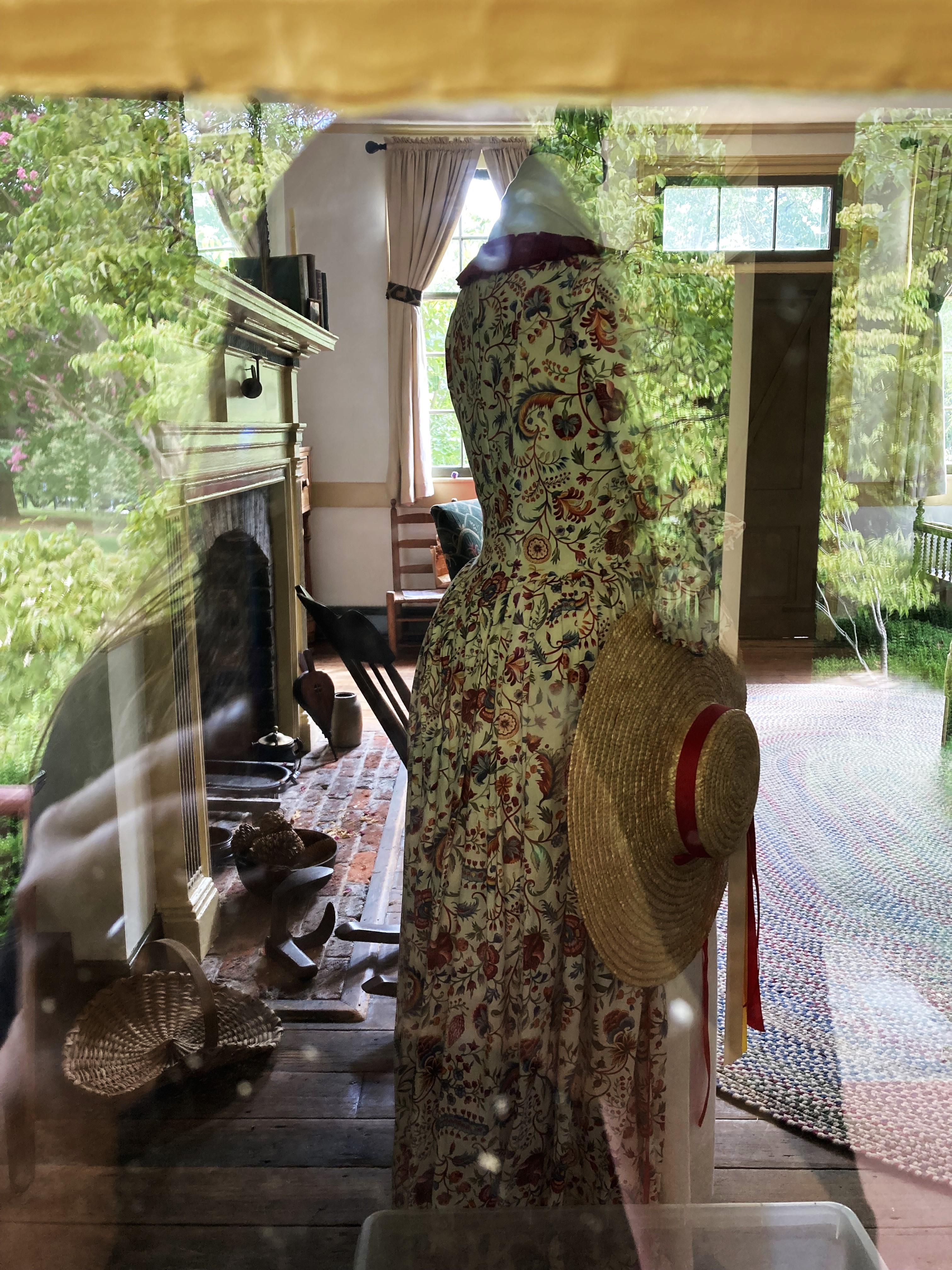
A layered image, looking through the window into the interior of a house built in the 1790s. Image shows interior view, reflection of outside, and silhouette of the photographer.
Creating layers… through the window of the Miller-Claytor House, the oldest surviving house in Lynchburg, built ca. 1790.

I never thought I’d enjoy being forced to write the truth. Fiction is my first love, and even within that genre, I especially love exploring the blurred edge between the real and the mythic. But I’ve been working for a museum and as part of that work, writing and telling true stories about people that lived, places that exist, events that unfolded. Even though there are limitations that come with sticking to the truth, I’m finding history writing to be a powerful way to communicate some of the themes I care about.

I’ve written here about the creative potential of form—how limits can push or propel a writer into a greater set of ideas, a more rigorous or intense result that full freedom might not have prompted. Writing to share history is something like writing within a form. There are parameters and a set of facts that cannot be embroidered or mislaid. But within those boundaries, and using some of the same skills I employ in my creative projects, I find so much potential.

Every story, true or not, is more effective if it achieves an arc: a provocative beginning, an intense middle, and a satisfying or stunning end. Interpreting history seems to be about finding the perfect arrangement of truths to achieve this shape. Without a shape holding them together, facts can be difficult to hold onto. In this process of arrangement, my perspective is essential. Every interpretation conveyed through a different storyteller is unique. Even while tethered to the truth, as I frame anecdotes, layer details, find connections, and create subtle shifts in focus, I make a story my own.

Finally, working with true stories is satisfying because I see it making a tangible difference. At the museum, we are committed to finding narratives that have been forgotten or written over, stories of the marginalized that, until lately, have remained untold. I’m seeing these stories reach an audience in real time as I give guided walking tours, or put together themed exhibits.

As much as I’ve enjoyed this experience, I’m not abandoning my first love. In fact, I’m longing to dive back into my own invented worlds now more than ever. While sharing history, I’m allowed to provoke but not predict. I can make connections between people or objects or places in the past, but I can’t leap forward and apply those connections to the precarious future.

To warn, to predict, to leap intuitively to what might come next—this is the purview of the poet, the inventor of worlds. There will always be a need to look at and learn from the past, but there is also the need for a different kind of storyteller, too, a need for those writers on the frontier, looking forward, bringing powerful truths back from what they foresee.


Noelle Beverly writes poetry and prose, interprets local history at the Lynchburg Museum, and is a member of the BACCA Literary groupPhoto by author.

Categories
BACCA Writers

How Do We Know if it’s Time to Shelve a Writing Project?

I have a difficult relationship with completion.

I can spot about six different half-finished crochet projects from my desk. It took me nearly ten years to complete my bachelor’s degree because I kept changing majors—and schools. And, for the past many years, I’ve been wrestling with a memoir.

Recently, I’ve been considering shelving that writing project.

A close up of a burgundy ball of yarn with two crochet hooks stuck through it.

Is it time to unravel that “sweater” or just set down the hooks for awhile? Image by Olliss via Unsplash

There are several reasons I’m contemplating letting that project go. Much of the story deals with trauma, and it’s tricky to sit in that energy while trying to also enjoy and balance the demands of my current life. Also, one of the primary reasons I was writing was to try to understand why a family tragedy occurred, and in the process of regular old living, it became clearer to me. And, in the past few years, I found an alternate way of creating resources that might be of service to people who’ve experienced sibling loss, which was one of my initial motivators to complete this memoir. Last but not least, I’ve been writing about this topic for decades. I’m curious to see what else might bubble up on the page.  

But what about completion? What about the countless hours I spent writing and revising? What about stick-to-itiveness?

One thing I love about crocheting is that the stakes are low. If I mess up partway through a project, or get bored with it, it doesn’t really matter if I rip the stitches out or start a new project. As a recovering perfectionist, there aren’t very many places in my life where I let myself off the hook (pun intended) so easily, but crochet is one of them. The meditative state I enter when my hands are busy making something with the yarn and hook is a worthy pursuit, regardless of whether it results in a blanket.

Writing is an art, but I choose to not see it only as a commodity. Writing has been a survival tool for me. It’s how I attempt to make order from the chaos. It’s often how I learn what I’m feeling. Writing helps me frame and understand parts of my life that otherwise seem disparate.

Besides, one of the best parts of writing, to me, is the magic that happens when we show up to the page and we tap into something outside of our own minds.

From that perspective, all those hours I spent on that memoir weren’t wasted.

In the time I spent on my memoir, I grieved. I remembered. I made sense of. I tinkered.

I’ve also been doing a whole lot of living in between. I’ve been raising two kids and nurturing an almost 20-year marriage. I was able to be present and helpful through my dad’s illness and death. We have a dog and a mortgage, and I exercise on the regular. From this little list, perhaps I’m not actually a quitter.  

Completion isn’t the same as commitment.

Maybe writing doesn’t need to be that different from crochet—it’s not the end of the world when I have to rip out stitches or trash the sweater project because it ends up looking more like an oven mitt. Maybe there’s freedom there. Curiosity. Openness.  

But. There’s still one thread of the memoir that I can’t quite let go of. It’s about the amazing women who shepherded me through losing my brother, and how they basically taught me how to connect, get through the tough stuff and live a rich life. I’d like to find a way to tell it, though I’m not yet sure what that might look like. I’m looking forward to giving the story some space, letting go of the vision I had of it in my head, and seeing what might take shape.


Lynn Shattuck grew up in a Southeast Alaskan rainforest and is now a Maine-based writer. She’s a columnist at Elephant Journal, where she writes about grief, parenting and wellness. Her essays have been featured in Human Parts, Al JazeeraP.S. I Love YouThe FixViceFabric, and Mind Body Green

Categories
BACCA Writers

How Do I Love Thee? (To Books)

How Do I Love Thee? (Sonnet 43)

How do I love thee? Let me count the ways.
I love thee to the depth and breadth and height
My soul can reach, when feeling out of sight
For the ends of being and ideal grace.
I love thee to the level of every day’s
Most quiet need, by sun and candle-light.
I love thee freely, as men strive for right.
I love thee purely, as they turn from praise.
I love thee with the passion put to use
In my old griefs, and with my childhood’s faith.
I love thee with a love I seemed to lose
With my lost saints. I love thee with the breath,
Smiles, tears, of all my life; and, if God choose,
I shall but love thee better after death.

Elizabeth Barrett Browning 1806 –1861

This may seem dangerously weird of me to say, but I could almost direct that entire poem to my relationship with books. (The ‘after death’ part might be overdoing it, and I’m not really into lost saints.)

Books are among the loves of my life. When I was little, they were a super-significant source of entertainment and escape. We were late to acquire a TV, and even once we had one, its use was seriously rationed, its location itself – in the former coal storage room – discouraging. My sibs were a lot older, and had their own lives. The street we lived on had more babies and infants than kids around my age. So I took advantage of the public library, just a few blocks away, along with the contents of the many shelves in our house, and occasional gifts from my grandmothers and parents. I could hole up under a lightbulb and read the hours away. I’d hide under the covers with a book and a flashlight after bedtime. The stories I was reading and the information I was gathering enlivened my waking and dreaming hours, every day. I read voraciously, unquestioningly, thirstily, with little thought to the authors or their circumstances, much less how their books came to be published and distributed. Those levels of awareness developed over time.

Lots and lots of books
Image by Nino Carè from Pixabay

Once the classroom teachers expected us to regurgitate book reports on a regular basis, my unthinking enjoyment had to change. Now I had to introduce new analytical processes, alongside my love of character and setting and narrative. My fifth-grade teacher memorably demanded ‘the gist’ of each book’s story, requiring more of an overview than I had thought necessary. I adjusted – and savored even more the books that I read strictly for pleasure. The magic of words on a page, transporting me to someone else’s imagined or reported world, in another time, place, and culture – that was the best thing ever. I didn’t need to remember all the details for later reference. What mattered most was the immersion: dissociation at its best. I was uncritically indulging in showers and rivers and oceans of words.

High school brought longer-form papers, based on multiple books, and the dreaded outlines. (I’m a pantser to this day.) Footnotes. Index cards. Through it all, I sustained a love of reading, sighing with relief each time the heavy lifting of term-paper generation had ended and I could return to the uncritical inhalation of books.

Life sped up with college. Thereafter, my love affair with books alternated with other kinds of love affairs – plus work and assorted adult responsibilities.

Fast forward to my life now. Working less, with fewer responsibilities and the love life of an immune-compromised old person during a pandemic, books and I are hot and heavy once more. I binge without shame.

And when I write my own sentences, I breathe a prayer of gratitude to all the writers of all the books. Couldn’t do this without you. Mwahhh!

Happy Valentine’s Day
Image by un-perfekt from Pixabay

— A M Carley writes fiction and nonfiction, and is a founding member of BACCA. Through Anne Carley Creative she provides creative coaching and full-service editing to writers and other creative people. Decks of her 52 FLOAT Cards for Writers are available on Amazon. Anne’s writer handbook, FLOAT • Becoming Unstuck for Writers, is available for purchase from central Virginia booksellers, at Bookshop.org, and on Amazon. She’s querying her first novel, and writing her second.