See you in January
 BACCA Literary
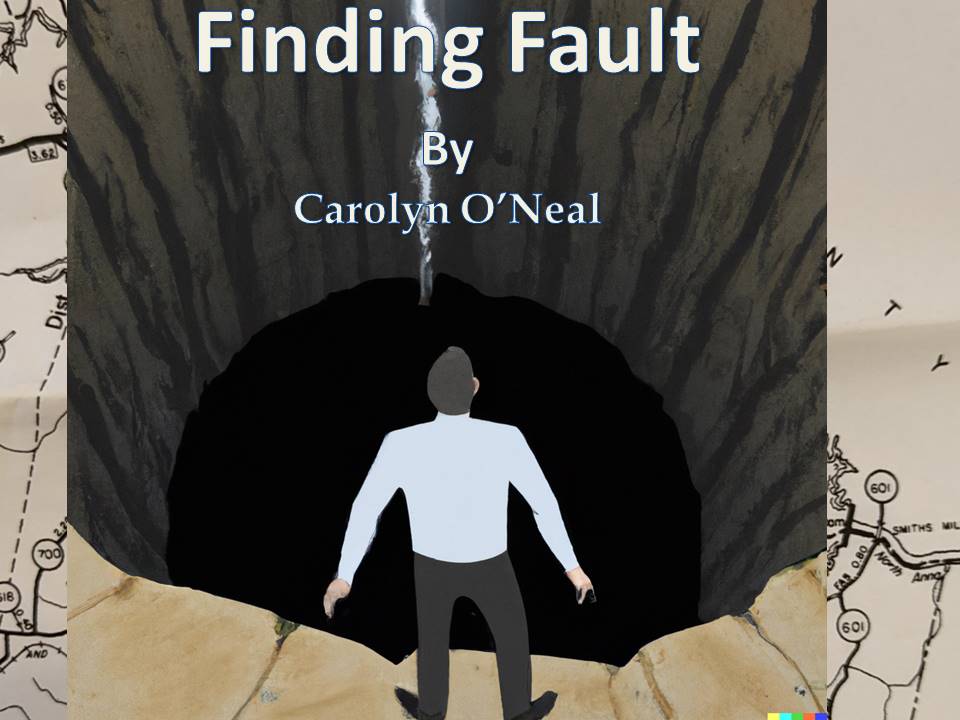
Researching history of earthquake fault under the North Anna Nuclear Power Station in Louisa County and the people most affected by it, including Professor John W. Funkhouser, H. Spurgeon Moss, and June Allen. Please leave message on https://baccaliterary.com/carolyn-oneal/ if you have any information on this topic or these people. Thank you very much.

See you in January
Of the many roadblocks I face as a writer nothing kills my creativity quicker than conflict with beloved family members and friends. The very same sensitivity that gives me my writing voice also makes me keenly vulnerable to harsh words and deeds. Angry confrontations are as debilitating as physical trauma, a metaphorical car wreck that incapacitates me for days or even weeks.

Has this happened to you?
You’re humming along, ideas are flowing then BAM, an argument, a conflict, an unkind word. You feel disrespected and unheard. You’re angry and hurt. You run the conflict over and over in your head. You can’t sleep. Your introspection kicks in and overrides your sense of self. Were you at fault? Should you apologize? Humble yourself? You try to rationalize your point of view. You work to find potholes in theirs. You consider never speaking to them again. You consider demanding an apology. You consider a hundred different things that all prevent you from returning to your writing.
With family holidays looming there are many possible points of contention. But how do you stop obsessing over hurt feelings? How to do you stop replaying the conflict over and over in your head? How do you put that aside and return to your muse?
Putting the conflict aside.
I recently had a conflict that consumed me for weeks. It was in my head when I went to sleep at night and when I woke up. I replayed my part in the conflict over and over and replayed theirs over and over, trying to figure out who was right and who was wrong. I was angry and hurt and afraid. Not only to confront the other party but also to lose them in my life. It became an emotional tug of war that I couldn’t put aside. I spoke to a trusted ally about my struggle, and they suggested a couple of action plans:
ONE: Write down what happened and write down how it made me feel. Give it a chance to breathe and dissipate.
TWO: Write a letter to the other party with no intention of sending it. Tell them all of my anger and outrage and disappointment but keep the letter locked up on my computer.

What if writing isn’t enough? What if the only way to find resolution is to confront the other party? How can you address what happened and how it made you feel?
Consider using Situation-Behavior-Impact, or (SBI)™ to address how your feel.
The Center for Creative Leadership website describes SBI as
clarifying the Situation,
describing the Behavior,
and sharing the Impact.
Then, if you like, you can explore intentions vs. impact with the other party.
Here’s a simple example:
Me: “At our recent gathering I wanted to leave early.” (Situation)
Them: “I remember.”
Me: “You insisted I stay longer.”
Them: “Yes, I know.”
Me: “You raised your voice to me” (Behavior) “and that hurt my feelings” (Impact)
Them: “I didn’t realize I’d hurt your feelings, but I felt you were being… …..” (Explore intentions vs impact)
Learn more about using the Situation-Behavior-Impact approach at the Center for Creative Leadership Website: https://www.ccl.org/articles/leading-effectively-articles/closing-the-gap-between-intent-vs-impact-sbii/
And find your muse again!

I received a message recently asking whether a nonfiction book I’m working on had found a publisher. To be honest, I’ve finished the manuscript but have stalled in my efforts to secure a literary agents or publishers. I’ve received some nibbles, some great feedback, and some flat-out rejections but that’s not what has stalled my efforts. It’s this constant rain.
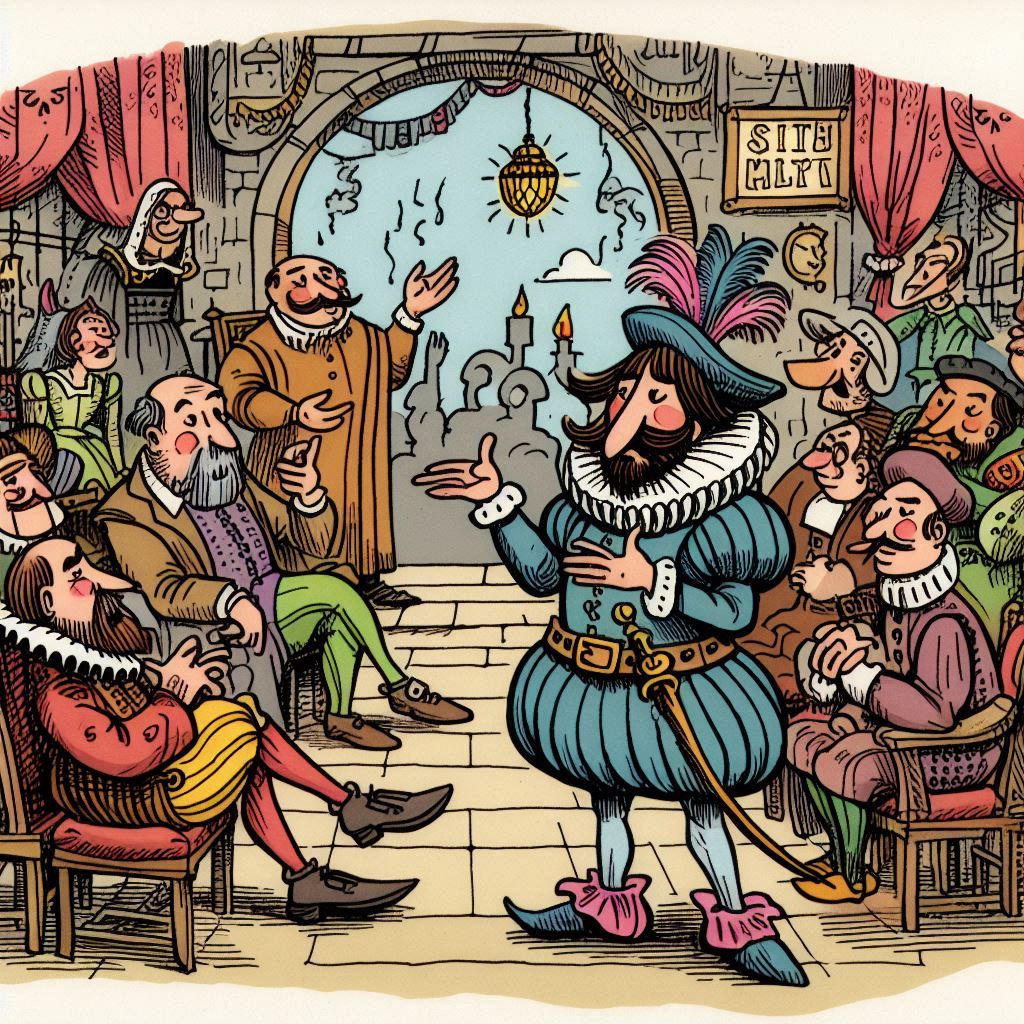
This summer in central Virginia has been insufferable. If this summer were a literary character it would be Malvolio from Shakespeare’s Twelfth Night. The Riverside Shakespeare describes Malvolio as “the pompous Comptroller of the Royal Household.” Like the constant rain, Malvolio destroys happiness everywhere he goes.
“At a party where everyone is joyously drunk, Malvolio is the guest who insists on remaining cold sober, who reads long lectures on temperance to everyone else, and threatens to summon the police.“
How can I be creative with such a villain constantly getting me down?
It’s not just my writing that has suffered from the constant rain. By this time last year I’d harvested over a hundred pounds of honey. I didn’t even bother cleaning my honey extractor this year.

My poor bees. They’ve been stuck inside their hives almost every day because of the rain – with disastrous results. Much of the nectar and pollen they rely on has been washed away by the constant rain. If this rain continues I’ll have to feed them sugar water to survive the winter.
Compared to others in America and across the globe I’m lucky. The James River hasn’t flooded my apiary. My hives haven’t been swept away. My family and friends, both human and animal, are safe.
But the constant rain is depressing. I want to visit my apiary and listen to the humming of the bees. I long for the focus and energy the sunshine brings. I need to return to my writing.
I better log off my computer now. Sounds like another storm is heading this way.
Images created using Bing Image Creator
I don’t understand memoir. How do people remember enough details about their childhoods to write a book.

How do memoirists know their memories aren’t lying to them?
Unlike much of nonfiction, most of our personal memories can’t be fact checked. I can look up what day in 1968 the construction of the North Anna Nuclear Power Plant was announced. I can fact check that date against regional newspapers from that era. I can explore the life of local hero Spurgeon Moss by talking to people who knew him. I can fact check these memories by visiting the Louisa County Historical Society.
But memoir is different.
Let’s say I wanted to write about my childhood. Let’s say I wanted to write about my experiences playing the flute in my elementary school band. I clearly remember that I chose the flute because “flute” and “drums” were the only two instruments I knew how to spell.
Clarinet? Saxophone? Sixty years later and I still have to spell check them.
I was a terrible musician.
My recollections are that I had a decidedly negative impact on my elementary school band. The only part I really liked was the uniform. I have a vague memory of being part of a marching parade.

I wore my uniform and played my flute. I only knew how to play one song: The Marine’s Hymn.
“From the Halls of Montezuma
To the shores of Tripoli;
We fight our country’s battles
In the air, on land, and sea…”
Have you ever heard a flute played horribly? It sounds like a rusty car door squeaking open and closed. I most certainly had no idea where the Halls of Montezuma or the shores of Tripoli were or why the US Marine Corp was fighting in either location.
Both, in fact, are fascination historical events worth a well-researched narrative nonfiction!

I’m not citing the way many of us procrastinate by cleaning. For most writers, there will come a time when many of the groups and activities that helped you get started will get in your way. Balance will be key. Focus on the writing itself.

First, what you already know…
Helping new writers get a start is big business. Once you end up on a mailing list, you’ll hear from marketers encouraging you to invest in various classes, platforms, and software. You’ll also be courted by established writers who supplement or make their living by editing, teaching classes, and speaking events. Recommendations on books to help you with your writing will be abundant. As a discerning consumer, find the groups and products you need in this moment and let them go when the moment has passed.
As your skills and confidence grow, the very groups which gave you an inspiring start can block your path forward. As an example, the mixed genre writing group you loved and learned from early on may be holding you back as you home in on your creative style. Find a group with more established writers that know your genre well. Assess and find what you need for the stage you’re in. The right support at the right moment will keep you inspired and help grow your craft.

Joining groups to learn and network is useful, but over time, the focus needs to be on your work. Put other activities aside. At least for a time, unless you are a hobbyist, and your interest lies in comradery more than the actual writing. There’s nothing wrong with making that choice, but it is a choice you could be making unwittingly.
If you’re serious about writing, don’t be shy about leaving a group which no longer works for you, even if it was helpful at the start. Those connections may become helpful again, especially if you were a strong contributor to the group. Leave or take a leave of absence on good terms. Thanks so much, but my time is limited, and I need to use it to write. Any writer will understand. If they don’t, they aren’t there to support you. Your time and focus are precious.

Networking is important, but not more important than developing your craft. Book promotion is important, but it comes after you have a book to promote. Many writers rush to query before their work is ready or worry about marketing before they have a product to sell. There’s always time for networking and marketing after the writing is done. In today’s viral world, it’s easy to put the cart before the horse. The best way to become and author is to write, as often as possible. The rest will fall into place.
Take stock and clear away anything impeding your writing.
Unsubscribe! Are you deleting emails from organizations you once dealt with, but now you don’t even read their emails or posts? Stop wasting time and cluttering your mind and inbox.
Turn off notifications for email and social media. Check in on your terms. Don’t let these businesses break your focus when writing.
Leave groups which no longer feed your creativity. You can always join again.
If chores distract you at home, write somewhere else—a library or a coffee shop.
A couple hours of thoughtful cleaning will reward you with new-found writing time!

By Pamela Evans
Pamela Evans is an author and award-winning educator, early childhood specialist, and director of educational programs. As a consultant for preschools and music programs, Pamela specializes in curricula for young families. A life-long learner, Pamela enjoys sharing and fostering a love for the natural world, the educational benefits of story-telling, and an appreciation of music and the arts with students, parents, teachers, and fellow authors.

So there’s good news and bad news
The good news is that my letter to the editor was published in the Crozet Gazette.
The bad news is that it was originally a much longer essay and over half the essay had to be chopped.
The good news is that no one was seriously hurt.
The bad news is that our car was totaled when a deer ran into our car while we were driving 65 miles an hour in the rain.

The good news is that this accident was my call to action.
Deer shouldn’t have access to run onto any interstate. I wrote my local representative, Albemarle County Supervisor Jim Andrews, about the accident as well as the letter to the Crozet Gazette, in hopes that more would be done to protect both people and wildlife. Deer fences and wildlife corridors are just two ways to prevent deer from jumping into rushing traffic.
You can read my letter to the editor of the Crozet Gazette by going to: https://www.crozetgazette.com/2024/12/07/to-the-editor-deer-vs-car-on-i-64/
Below is my complete essay on the accident.
The news out of Asheville and Blowing Rock was bleak. Scores of people were lost in rivers swollen by Hurricane Helena. In Albemarle County, days of rain had put every living thing on edge, both human and animal. Maybe that’s why the deer ran into rush hour traffic.
My husband and I had tickets to see a 7 pm show at the Alamo Theater. It was one of those free older movies costing $5 each, which goes to purchasing food. I needed a few items from Wegmans so we left home around 5 pm. We’re both in our upper 60s and always seem to have prescriptions to pick up from the Wegmans Pharmacy. I feared I would forget if we went after the movie.
Leaving early usually pays off. Not this time.
Usually it’s still light at 5:15 in September but that evening was dark and dreary as if it were the dead of winter. Cars and trucks were speeding by in the heavy rain. Our windshield wipers were going fast and everyone had their headlights on. My husband was driving our dark blue Subaru Outback in the right lane on I-64 East, going around 65 miles per hour, when I saw the deer in the median. It had antlers and was big and was running towards us. Somehow it must have crossed I-64 West. The deer disappeared down the slope and I hoped it would stay there or find another way across.
There must be some strange mechanism in the brain that makes life threatening situations happen both in a flash and in slow motion. Cars in front of us. Cars behind us. A tractor trailer truck sped on the left hand side. Then the deer appeared. It was like a scene from a war movie, when the navigator of a battleship sees the torpedo coming toward them and holds on tight, knowing the ship is about to be hit. I braced and my husband tensed. The deer cleared the left hand lane and jumped.
We were still going 65 miles an hour when the deer landed on our windshield. I don’t remember all the details. Maybe I was covering my face or clutching my seatbelt or watching the other cars. Somehow my husband was able to pull the car over and park inches from the guardrail. His side window was shattered. His side mirror was gone.
My husband had been hit. His face looked like he’d been punched by a prizefighter. Maybe a hoof had come through the shattered window. Maybe an antler. His jaw was swelling. Blood streaked down his face and dripped from the tip of his nose, like that scene from Carrie after the bucketful of blood is dropped on Sissy Spacek. I didn’t know if it was his blood or the deer’s blood or a mixture of both. His eyeglasses were knocked off. Perhaps they’d saved his vision. Crushed glass crusted the corner of his left eye. Fur and shattered glass was everywhere. On our faces, in our hair, all over the inside of our car.
Before asking if I was OK, before calling 911 or our insurance company, my husband asked me to contact the Alamo Theater. “Tell them we need a refund for the tickets,” he said. I was so scatterbrained at that moment that I messaged Alamo and told them about the accident and asked about their refund policy.
I called 911 and gave them as many details as I could. We were on I-64 East, between the Ivy exit and Route 29. We were parallel to the Ragged Mountain Reservoir when a deer jumped at our car.
“Are there any injuries? “
“Yes.”
“Do you need an ambulance?”
“Yes. My husband has blood all over his face.”
“OK, the police and ambulance are on the way.”
I tried to open my door but the car was too close to the guard rail. Neither of us wanted to get out on the driver’s side since it was still rush hour. Passing trucks caused the car to vibrate.
Moments later an ambulance, a police car, and a fire truck pulled up around us. The ambulance parked in front of us, and the police car and fire truck parked behind us, blocking the right lane. They placed cones to guide traffic away from us and helped my husband out of the car.
I grabbed my purse and phone and opened the glove compartment for the folder with the insurance information. I grabbed my sunglasses even though I didn’t need them. I grabbed my water battle and started to climb over to the driver’s seat when I spotted my husband’s eyeglasses on the floor near the pedals. They were bent and scratched. I picked them up and made my way out of the car.
The rain had slowed to a misty sputter. Traffic was loud and unnerving, even with our lane blocked. I asked what had happened to the deer. It was behind the firetruck, they said. I didn’t look. I’ve seen enough dead animals hit by cars. I didn’t need to see this one. The police said they’d arrange for a tow truck to take our car away.
The paramedics loaded my husband into the ambulance and strapped him onto a stretcher. I followed and found a seat that strapped me in like a roller coaster ride. The paramedics checked my husband’s blood pressure, took his medical history, and called the UVA emergency room to let them know we were on our way. I checked my phone. I couldn’t help but smile when I read the thoughtful reply from the Alamo Theater expressing concern for our safety and assuring us they would do whatever we wanted regarding refunding the tickets.
We arrived at UVA’s newly remodeled ER. My husband was wheeled in on a stretcher. We walked past medical staff and a couple of very serious looking guards with corrections officer on their lapels. I told them that we’d had a deer related accident and their faces soften. Everyone is sweet to old people, especially when one of them has blood running down his face. I had to hurry to catch up with the stretcher. They transferred my husband to a wheelchair and checked in at a service desk. I found my way to the waiting area. The TV was on behind me. A woman in a wheelchair surrounded by family was across from me. The ER was full of people, some in wheelchairs. I didn’t see anyone else with blood on their face.
I was still full of tension when my husband was wheeled past me and pushed through double doors. Someone came over and told me where they were taking him and what they were doing. They told me to wait. I tried to hold onto everything they said. I clutched the items I’d taken from the car like they were precious remnants of a previous life: notebook from the glove compartment, my water bottle, and his twisted and scratched eyeglasses.
By the time I updated relatives about the accident it was close to 7 pm. They wanted to come to the hospital but I told them to wait until I knew more. Then came the long, and I mean LONG, phone call with the insurance company. The person who answered was sympathetic and efficient but the ER was so noisy I often had to ask her to repeat herself. Still feeling scattered by the accident didn’t help. I couldn’t remember my car’s license number but I could remember its make and model. The insurance company had an old email address and old phone number for us in their records so they had to be updated. I told her about the deer and about the rain and about the blood on my husband’s face. Talking about the wreck calmed my nerves and helped me focus on getting the automobile and health insurance sorted out, giving both the insurance company and the hospital the necessary policy numbers, birthdates, and phone numbers.
I was so focused on the phone call that I didn’t realize my husband had been wheeled back to the waiting room. His face was still streaked with blood. I told him I had contacted relatives and the insurance company and he told me the doctor wanted to do a CT Scan of his head.
We had intended to order pizza and popcorn at the Alamo for dinner. Neither of us had eaten anything since breakfast. The vending machines were on the other side of the ER, beyond the security guards and metal detectors. Nothing in the machines looked appealing. Chips, candy, one type of Nature Valley granola bar. The drink machine was even worse. In truth I was too tense to eat. I skipped the vending machines and went to the bathroom to wash my face and hands and wash my water bottle. I found a water fountain and filled it up.
Back through the metal detectors and guards, I returned to the waiting room. My husband was gone. I asked the woman behind the desk if I could go see him and she gave me a visitor’s tag. She pushed a button and the mysterious double doors opened.
My husband shared a room with another patient, separated by a curtain. Listening to the doctors I learned that the other man had come to the ER because he feared he was having a heart attack. His daughter had accompanied him. She was around high school age and helped translate for him. My husband was already acquainted with them when I arrived. The girl told us that her younger brother was turning fifteen this year so my husband asked if boys have anything like a quinceanera. She perked with this question and said boys celebrate in other ways.
Someone came in and put an IV in my husband’s right arm. Someone else came to remove bits of glass from my husband’s wounds. Someone arrived with ibuprofen. The order for the CT Scan had finally been approved so someone wheeled my husband away. I updated relatives. My husband returned from his CT scan shortly before the test results came in for the other man. Good news. He wasn’t having a heart attack. The man was released. We said our goodbyes and wished each other well.
A series of people came in to look at my husband’s wounds and try to clean some of the blood off his face. The doctor asked if he knew when my husband had his last tetanus shot. The doctor was concerned about what the deer and the glass could have transmitted. A new tetanus shot was ordered. I hoped they could give it to him through his IV. He’d gone through so much already.
While we waited for the CT results and the tetanus shot, housekeeping came in and cleaned the room, taking way the trash and mopping the floor. It was close to 9 pm and I wanted to go home. My body was achy and I was getting a headache. I dug a couple of Tylenol from my purse and took them with water. I regretted not buying a granola bar from the vending machine. Another patient was brought in to take the place of the patient who had been discharged, a man with a thick Eastern European accent and his wife. Every time doctors visited the man I tried to catch their eye. I wanted to know what to expect. Would my husband be admitted? Would he be discharged? It was approaching 10 pm by the time we heard the results of the CT Scan. Nothing was broken. No indication of a concussion. Thank goodness. A nurse came to take out my husband’s IV. Next came the tetanus shot in the upper arm, the same arm that used to have the IV. Waiting for our discharge papers was possibly the worst part of the whole ordeal. We were both exhausted and overwhelmed. We needed showers, food, and rest, in that order.
Uber is a great resource but weighing time against money at 11:30 pm is tough. Six minutes wait for $45. Twenty minutes wait for $25. We opted to wait the twenty minutes. On our way home in the backseat of the Uber we passed several cars stranded on the side of the road. Firetrucks and ambulances screeched by us on I-64 West. At a time of night when there should have been no traffic at all, I-64 slowed to a crawl. It was raining again. Somewhere in the woods deer were still trying to cross the interstate.
The next morning my husband called highway patrol to find out where our car had been towed. By some miracle it wasn’t raining. Our Outback didn’t look too bad except for the banged up front left side, missing driver side mirror and window, and softball size hole in the front windshield. Inside was a different matter. Not only were the front seats, dashboard, and gear control covered with shattered glass and deer hair, the interior was also soaked. Our insurance company wasn’t happy to hear that. “They were supposed to wrap the car,” they said. We speculated that the water damage would total the car even if the deer didn’t, but we still had to find a shop to take a look at it and give us and the insurance company their estimate.
The first car repair shop suggested by our insurance company was fully booked and wouldn’t have an opening for three weeks. We ended up telling the insurance agent to find a shop and arrange for towing. The agent took care of finding a shop, towing the car, and getting a repair estimate. We discovered that the reason so many shops were fully booked for weeks was because of deer related accidents. Hearing this was maddening. Why weren’t all interstates protected from deer? Where were the deer fences and wildlife corridors for deer to move under the interstate? My anger prompted me to write my Albemarle County Supervisor Jim Andrews and tell him about our accident. He responded immediately with concern for our health and questions about where exactly the accident took place so he could let VDOT know.
As expected, a few days later we received a phone call that our car was totaled. We started looking for a good replacement on the CarMax website and found what we wanted. We picked up our Honda CRV exactly two weeks after the deer crashed into our Subaru Outback. I specifically requested a white car, hoping it would be easier for deer to see at night. The insurance company gave us the blue book value for our Outback, but not replacement value, not by a long shot. I’m not bitter. In many ways we were lucky. It could have cost us much more.

Happy Thanksgiving from the writers of BACCA Literary.


Every beekeeper has experienced opening up their hives and finding their honeybees have built honeycomb in the wrong place. Some beekeepers call this burr comb.

Beekeepers want even and smooth comb built on the frames we provide for the bees.

Building comb is hard work for honeybees. It requires tremendous resources and efforts to produce wax. Then they have to festoon together to mold the wax into the hexagon shape of beautiful honeycomb. Honeybees literally work themselves to death building comb and filling it with nectar and pollen.
What do beekeepers do with wax found in the wrong places? Clean, fresh beeswax is valuable! We keep it! We use it to coat honeybee frames for the following spring, or make candles, or polish furniture. There are so many uses for beeswax.
It’s a little like that great paragraph you wrote that just doesn’t fit. Maybe it belongs elsewhere in the story. Maybe it belongs in a different story.
Keep it! Don’t throw away your hard work. Just like building comb for honeybees, writing a good paragraph requires effort and is worth saving.


2023 was my year to explore nonfiction. I didn’t follow any particular map to my exploration – I just read whatever struck my fancy. Since I’ve been working on a nonfiction book about the discovery of an earthquake fault under a nuclear power plant, I was curious to see how other authors tackled scientific, historical, and emotional subjects. Some of the authors were objective and presented only the facts. By not injecting their opinions, they let readers draw their own conclusions. Others included their opinions and even their morality into their prose, swaying readers to see the author’s point of view. Some authors wrote about their methodology of research while others left those details to the footnotes. Here are some of the nonfiction books I enjoyed and a few thoughts about their stories and how they were presented. I highly recommend all of them:
Ron Chernow’s biography, Alexander Hamilton, should be required reading for all Americans, especially for those who saw Hamilton: An American Musical by Lin-Manuel Miranda. I saw the musical on the Disney Channel and found it enlightening, albeit a tad one-sided. While George Washington is praised for his insight and leadership, Jefferson and Madison are slightly shortchanged. After reading Chernow’s in-depth examination, the wonder isn’t that Alexander Hamilton was shot by Aaron Burr, but rather that he ever existed at all. To rise from the lowest of births to the right-hand man of George Washington while still in his twenties is a rags-to-riches story beyond anything Hans Christian Andersen could dream up. Chernow injects little of himself into this biography, letting the book sway readers and form their own opinions about Alexander Hamilton.
The Bomber Mafia by Malcolm Gladwell: It’s difficult to be objective about the bombing of civilians, and Gladwell doesn’t try to shield readers from the horrors. In The Bomber Mafia, Gladwell takes a close look at the small band of geniuses and moralists who challenged the Allied military strategy of mass bombing in World War II. Labeled the “Bomber Mafia,” they invented and proposed precision bombing techniques to save civilian lives. Sadly, their ideas were too farfetched (too ahead of their time) to be used in the 1940s. The deadliest night of World War II wasn’t the atomic bombing of Hiroshima or Nagasaki; it was the mass aerial bombing of Tokyo. Had the Bomber Mafia proposals been used, many lives in Tokyo might have been saved. Malcolm Gladwell is always a lively and relatable author who brings you right into his research and opinions. He doesn’t hold back on his feelings. He definitely gives his take on the 20th century tragedy of mass bombing.
The Soul of an Octopus by Sy Montgomery: This beautiful and spellbinding book should come with a warning to anyone who enjoys eating octopus because after reading Sy Montgomery’s “biography” of some of her octopus friends, you’ll never be able to eat these brilliant invertebrates again. For me, after reading The Soul of an Octopus, eating octopus or even squid feels akin to cannibalism. They have personalities, dreams, and hopes. They remember friends and can even warn their human companion of impending illness just by touch. Montgomery is the lifeblood of the narrative as she describes what it’s like to be touched and befriended by an octopus. She is an advocate for environmentalism and especially for marine life. There’s no objectivity here, and the results are perfect.
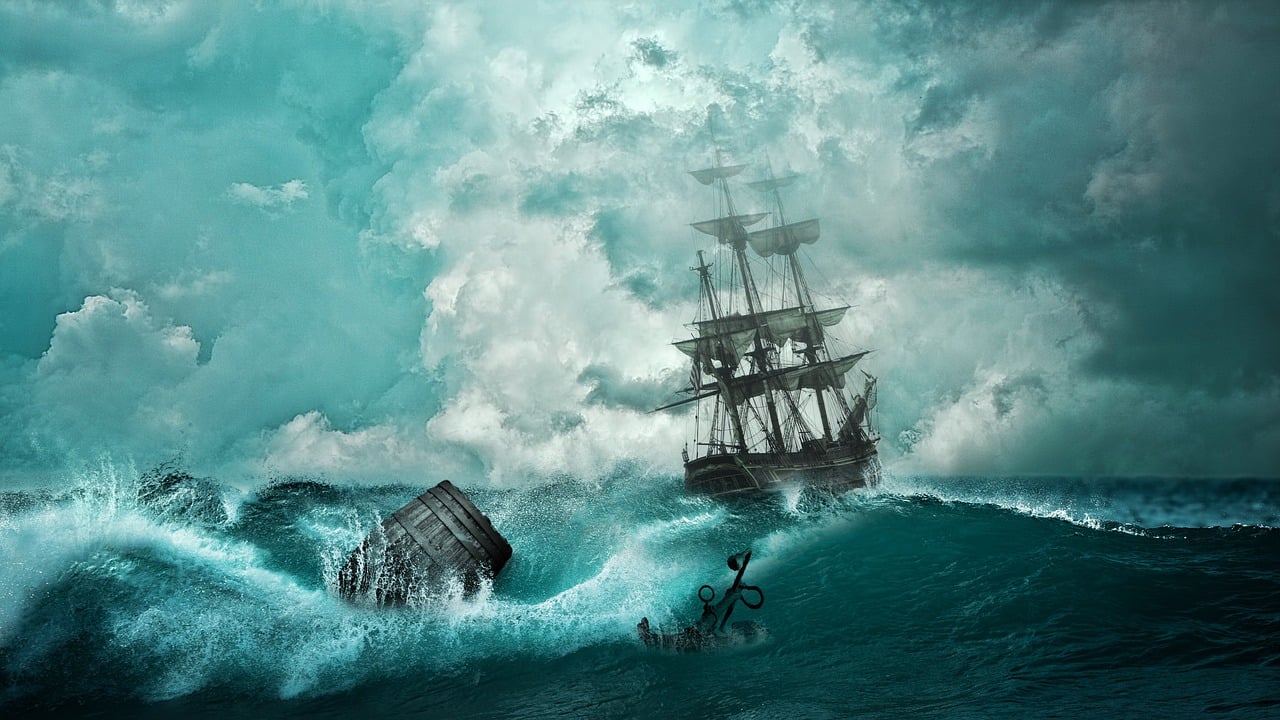
The Wager by David Grann is another book that should come with a warning. About halfway into the nonfiction, there is a visceral description of the disease scurvy. I promptly put oranges on my shopping list and took an extra Vitamin C. The story of the shipwreck of the British warship Wager not only tells of the bravery and foolishness of world exploration during the age of sails and wooden ships, but it also goes into how the shipwreck affected the British Royal Navy. Grann’s previous nonfiction is arguably my favorite book, Killers of the Flower Moon, which I read several years ago. As with Killers of the Flower Moon, Grann added a chapter or two about how he came upon the story of The Wager and about his research.
Avast yet matey!
Before ye sail any further let me warn ye!
There Be SPOILERS ahead!
Skip ahead if ye haven’t read Killers of the Flower Moon
With overly high hopes, I went to see the movie version of Killers of the Flower Moon directed by Martin Scorsese and starring Leonardo DiCaprio and Robert DeNiro. Every reader knows the excitement of watching their favorite book on screen. I looked forward to watching the members of the Osage community reckon with the murder of their members and the heartbreaking betrayal when they discover the culprits were married to Osage daughters. I know movies seldom live up to expectations, and unfortunately, the movie version of my favorite book was particularly disappointing. In the book, the narrative centered on the distraught Osage women, but the movie chose to focus on the male killers. In doing so, my beloved book was turned into a sick love story. Even more frustrating was that the audience immediately learns the identity of the killers, so the mystery that propelled the book was lost.
End of the spoilers
Ye can come back aboard
As if the universe wanted to give me a reversal of my disappointment in with Killers of the Flower Moon, my favorite movie in 2023 prompted me to read the book it was based on. I went to see the movie Oppenheimer (twice) before reading American Prometheus, The Triumph and Tragedy of J. Robert Oppenheimer, written by Kai Bird and Martin J. Sherwin. The book is the perfect companion to the movie Oppenheimer directed by Christopher Noland and staring Cillian Murphy and Robert Downey, Jr. The book fleshes out some details without veering away from the basic theme of the movie. Oppenheimer was a moral genius. Any other time in history his genius might have been used to create safe renewable energy but in the era of Hitler, it was used for destruction. He was both the hero and villain of his own story, and the details in the book only enrich the time, place, and people. The authors keep their voices low as they tell the story of Dr. Oppenheimer, allowing the reader to decide how history should regard him.
The biography of J. Robert Oppenheimer as well as my own research into the nearby North Anna Nuclear Power Plant directed me to my next nonfiction: Chernobyl, The History of A Nuclear Catastrophe, by Serhii Plokhy. The author dives deep into the cultural as well as the engineering failures that created the Chernobyl disaster. Chernobyl wasn’t a widget factory in which if a line employee noticed something amiss and just shrugged it off there was no harm done. With an industrial site as complex and dangerous as a nuclear power plant, transparency and communication are essential, but neither existed at the Chernobyl power plant near Kiev, Ukraine. In the inflexible hierarchy created by the Soviet Union, no one dared point out a mistake for fear that drawing attention would land him in prison or worse. “Keep your head down” was the motto of the Soviet Union in April 1986. Say nothing. The Chernobyl nuclear disaster occurred in 1986, shortly after Mikhail Gorbachev became leader of the Soviet Union. The disaster had a direct impact on faith in the government and accelerated the collapse of the Soviet Union and Ukraine’s understandable mistrust of Moscow.
The newspapers in 2023 were full of articles about the war in Ukraine. The Chernobyl book brought home why Ukraine has felt betrayed by Moscow in the waning years of the Soviet Union but I wanted to learn more about the history of Russia and the Soviet Union. What better place to start than with the man who ruled the Soviet Union for half of its existence?
My journey into Soviet history began with Stalin, Volume One, Paradoxes of Power, 1878 – 1928, by Stephen Kotkin. What a fascinating enigma. A dark-haired Georgian born in obscurity, Ioseb Besarionis dze Jughashvili (he’d change his name to Joseph Vissarionovich Stalin) had to agree to study for the priesthood (Russian Orthodox) to receive any advanced education at all. He was a soft-spoken, relatively small man with a pockmarked face who walked with a limp. The brutality of the Tsar seemed to leave all Russians callous to the suffering of others and eager to make their lives minutely better. Lenin arrived on the doorstep of World War One and gave Russians a glimpse of life without the Tsar. His stirring speeches gave Russians a taste of delicious idealism. Lenin read Karl Marx the way Thomas Jefferson read John Locke – as true believers. Lenin’s death sent the nascent Soviet Union into the famous power struggle between Stalin and Trotsky. So famous, in fact, that it was satirized in the George Orwell classic Animal Farm with brutish Napoleon representing Stalin and thoughtful Snowball representing Trotsky. But Orwell fails to capture the political acumen of Stalin. He failed to capture Stalin’s initial openness and his devotion to Lenin and fellow communists. He failed to capture Stalin, the adroit politician who remembered names and birthdays and gathered loyal followers.
It took a full month for me to read the first volume of Stephen Kotkin’s Stalin biography but my interest in Soviet history wasn’t satiated. I was delighted when I learned that Kotkin had written a sequel. Like all my favorite nonfiction authors. Kotkin balanced the human story with historical detail.
Stalin, Volume 2, Waiting for Hitler, 1929-1941, also by Stephen Kotkin is the Stalin era that most of the world knows: the purges, the paranoia, and the mass graves. In his detailed biography, Kotkin gives the reader insight into Stalin’s rise to dictator and the chilling impact of his decisions on Russia and the world. Only Adolf Hitler could take the world’s eyes off the horrors of Stalin. While Hitler aimed his death camps at specific groups, Stalin was an equal opportunity murderer. Men and women from the highest levels of the Communist Party all the way down to the starving beggars of Ukraine and Georgia would fall into his mass graves. His insistence on the destruction of the peasant economy and replacing it with collectivization pitted neighbors against neighbors as poor peasants saw opportunities to take the wealth of slightly less poverty-stricken peasants. The standard byproduct of dictatorship is paranoia, and Stalin’s paranoia created the Great Terror that murdered millions and purged the Soviet Union of its most educated and experienced. The Great Terror came about largely because of Stalin’s cold and ruthless contempt for everything in Russia that existed before he ascended to power. The youth left alive were easier to mold into Stalin’s image.
Stephen Kotkin hasn’t completed Stalin Volume 3 but I look forward to its publication. He offers a complete and complex biography of Stalin and of the times he lived. Volume 2 devotes considerable time to the rise of Hitler and Stalin’s finagling to split Poland and stay out of World War Two. As I wait for Volume 3, I can’t help but compare the Russian Revolution to the American Revolution. What if Stalin hadn’t become a dictator? What might have the Soviet Union become? America flirted with monarchy when George Washington was elected President, with the army at his command. Washington could have easily become King of the United States. He didn’t. He resisted what so many others couldn’t – the siren call of power. Instead, Washington was the first to usher in the peaceful transfer of power in the United States. Stalin had to die for there to be a transfer of power in the Soviet Union and by then the precedent of cruel dictatorship was set. Considering what could have been in the Soviet Union is almost as heartbreaking as learning about what was.
I checked out one of the many Great Courses audiobooks from the local library, this one entitled From Yao to Mao: 5000 Years of Chinese History, presented by Professor Kenneth J. Hammond of New Mexico State University. Dr. Hammond’s lecture briefly touched on pre-history of China, including Peking Man (Homo erectus pekinensis) but the majority of the lectures were devoted to the eons of dynasties. The final lectures illuminated the western and Japanese mistreatment of China and the subsequent rise of Mao. Between Stalin, Hitler, and Mao, it’s amazing humanity survived.
Anyone who had read Ron Chernow’s biography of Alexander Hamilton should also read Thomas Jefferson, The Art of Power by Jon Meacham. Jefferson and Hamilton were two sides of the same coin. Both were completely devoted to the creation and defense of the United States, although their ideas on governing were vastly different. Both men devoured books, but while Hamilton was a famously flashy orator, Jefferson was a shy speaker. Jefferson saw Hamilton as dangerously enamored of the British system and public debt, while Hamilton saw Jefferson as an advocate of states’ rights at the expense of the federal government. Neither turned out to be true. Hamilton would never betray America to the British, and Jefferson expanded the national boundaries more than any other president in American history. Compared to Hamilton, Jefferson was born with a silver spoon in his mouth, but his life wasn’t without heartache. On her deathbed, his young wife asked him never to remarry, and he never did. Other than his wife, his most famous and perhaps his constant love interest was his wife’s enslaved half-sister, Sally Hemings. And by all accounts (including those of John and Abigail Adams), Hemings was both brilliant and beautiful. According to Mr. Meacham, when Jefferson went to Paris as the US Ambassador of France, he brought Hemings’ older brother James with him as his personal chef. A few years later, sixteen-year-old Hemings accompanied Jefferson’s daughter to Paris. Hemings lived with Jefferson in Paris for several years, and under French law, both Sally and her brother James could have petitioned for their freedom. Why didn’t they? That begs the question: what would they have done had they stayed in France? Their mother and siblings were in Virginia. They had no one to turn to in France, nowhere to live. Moreover, the French Revolution was beginning. The guillotines were chopping, and death filled the streets. Hemings took this opportunity to negotiate a deal with Jefferson. She would return with him to the United States if he promised to free her children when they turned 21.
There was more to Thomas Jefferson than his complicated relationship with Sally Hemings just as there was more to Alexander Hamilton than his tragic duel with Aaron Burr. I encourage everyone to take the time to read about both of these remarkable men.

I came away from my year of nonfiction with a new depth of knowledge and a renewed admiration for the authors who tackled these riveting subjects. I discovered there are many ways authors communicate their intentions as they write. In The Soul of an Octopus, Sy Montgomery’s journey of discovery let readers come close to this magician of the sea. The strong opinions held by Ukrainian Serhil Plokhy, the author of Chernobyl, The History of A Nuclear Catastrophe, ring loud and clear even though he is barely mentioned in the book. In the biographies of the famous and infamous – Hamilton, Jefferson, Oppenheimer, and Stalin – most readers already have strong opinions about these men before opening the books. 1
Ultimately, whether the authors include themselves in the narrative seems to depend on the subject matter. Unfamiliar subjects need more guidance from the author to provide the reader with a full understanding and satisfying reading experience.



























 BACCA Literary