Categories
BACCA Writers

How Do I Love Thee? (To Books)

How Do I Love Thee? (Sonnet 43)

How do I love thee? Let me count the ways.
I love thee to the depth and breadth and height
My soul can reach, when feeling out of sight
For the ends of being and ideal grace.
I love thee to the level of every day’s
Most quiet need, by sun and candle-light.
I love thee freely, as men strive for right.
I love thee purely, as they turn from praise.
I love thee with the passion put to use
In my old griefs, and with my childhood’s faith.
I love thee with a love I seemed to lose
With my lost saints. I love thee with the breath,
Smiles, tears, of all my life; and, if God choose,
I shall but love thee better after death.

Elizabeth Barrett Browning 1806 –1861

This may seem dangerously weird of me to say, but I could almost direct that entire poem to my relationship with books. (The ‘after death’ part might be overdoing it, and I’m not really into lost saints.)

Books are among the loves of my life. When I was little, they were a super-significant source of entertainment and escape. We were late to acquire a TV, and even once we had one, its use was seriously rationed, its location itself – in the former coal storage room – discouraging. My sibs were a lot older, and had their own lives. The street we lived on had more babies and infants than kids around my age. So I took advantage of the public library, just a few blocks away, along with the contents of the many shelves in our house, and occasional gifts from my grandmothers and parents. I could hole up under a lightbulb and read the hours away. I’d hide under the covers with a book and a flashlight after bedtime. The stories I was reading and the information I was gathering enlivened my waking and dreaming hours, every day. I read voraciously, unquestioningly, thirstily, with little thought to the authors or their circumstances, much less how their books came to be published and distributed. Those levels of awareness developed over time.

Lots and lots of books
Image by Nino Carè from Pixabay

Once the classroom teachers expected us to regurgitate book reports on a regular basis, my unthinking enjoyment had to change. Now I had to introduce new analytical processes, alongside my love of character and setting and narrative. My fifth-grade teacher memorably demanded ‘the gist’ of each book’s story, requiring more of an overview than I had thought necessary. I adjusted – and savored even more the books that I read strictly for pleasure. The magic of words on a page, transporting me to someone else’s imagined or reported world, in another time, place, and culture – that was the best thing ever. I didn’t need to remember all the details for later reference. What mattered most was the immersion: dissociation at its best. I was uncritically indulging in showers and rivers and oceans of words.

High school brought longer-form papers, based on multiple books, and the dreaded outlines. (I’m a pantser to this day.) Footnotes. Index cards. Through it all, I sustained a love of reading, sighing with relief each time the heavy lifting of term-paper generation had ended and I could return to the uncritical inhalation of books.

Life sped up with college. Thereafter, my love affair with books alternated with other kinds of love affairs – plus work and assorted adult responsibilities.

Fast forward to my life now. Working less, with fewer responsibilities and the love life of an immune-compromised old person during a pandemic, books and I are hot and heavy once more. I binge without shame.

And when I write my own sentences, I breathe a prayer of gratitude to all the writers of all the books. Couldn’t do this without you. Mwahhh!

Happy Valentine’s Day
Image by un-perfekt from Pixabay

— A M Carley writes fiction and nonfiction, and is a founding member of BACCA. Through Anne Carley Creative she provides creative coaching and full-service editing to writers and other creative people. Decks of her 52 FLOAT Cards for Writers are available on Amazon. Anne’s writer handbook, FLOAT • Becoming Unstuck for Writers, is available for purchase from central Virginia booksellers, at Bookshop.org, and on Amazon. She’s querying her first novel, and writing her second.

Categories
BACCA Writers

When Rejection Is Good

image of a rubber-stamped all-caps NO THANKS in red ink.

Image by Gerd Altmann from Pixabay

Last time I blogged here, I described the process of querying my first novel. Now, a few months later, I have news. Has an agent requested the full manuscript? Even better, did the agent love the ms and make me an offer of representation? Even better, was the agent a good fit for me and my work? Even better, did we contract to work together? Even better, did the agent find a publisher who wanted my manuscript? Do we have a publishing contract and a launch date?

Nope. None of those happened. Not yet. Maybe not ever.

But querying has gotten a little bit easier for me.

Why? Two reasons.

Practice, Practice, Practice

Just like doing laundry or playing cards or building flat-pack furniture, our skills and facility improve over time when we keep repeating the process. The first queries I sent out were overwhelmingly difficult for me. Everything about them was hard.

Getting a decent draft of the query letter, for starters, was a long-term project. I have since revised and rewritten it countless times, but just getting it to minimally presentable status took a ton of work. Describing / selling your full-length novel with 150 words? Finding comp titles recently published in the same genre? And, by the way, what is the genre? Literary fiction? Don’t you need an MFA to be eligible to write lit fic? Book club fiction? I worry that I’m not plotty enough for that. Upmarket fiction? Maybe that’s the sweet spot. Then there’s the sentence or two of author bio – where you say enough, not too much, about yourself to sound confident, not meek, and also not arrogant. Also competent and collegial, not supplicating. Also respectful, not sycophantic.

Then there’s the ongoing search for the agents who might entertain receiving your query. On their schedule. Using their preferred document formats. In the genres they declare themselves interested in. Erf. It’s enough to make a person not want to query their novel.

Image by Leopictures from Pixabay

Point is, these skills do get easier with practice. Querying still takes longer than I think it will. I can’t just expect to set aside ten minutes and knock one out (although that’s been possible once or twice). Many of the agents I’m approaching use the online QueryManager portal. In addition to supplying places to paste in (and then reformat) or upload the requisite number of pages or chapters, the bio, comps, sometimes synopsis, and other chunks of text, QueryManager allows its agents to ask questions.

So far, I am finding that no two agents’ QM forms are alike. One agent wanted a profile of the readers I think will be drawn to my book. Another wanted to know how many copies my self-published book sold in its first year. Another wanted my Twitter handle. Another – well, you get the idea. Some of those questions can take a while to answer, and you never know until you’re already mid-query what the surprise questions are going to be, or how challenging they’ll be to answer. I have learned to allow an hour, and never to query when the clock is ticking away before an upcoming appointment.

The Nice Rejection

The second reason why querying has become a little easier is that one of the agents didn’t just ghost-reject me or send a standard no-thanks message. She actually wrote to me, and said that, while my novel wasn’t the right book for her, she’d like to take a look at my next project when it’s ready.

I knew this agent’s response was different, and yet I was acutely aware of my neophyte status in the whole world of querying. Uncertain what to make of it, and cautious about celebrating something I wasn’t sure I understood, I quoted it to a friend who’s farther along in the querying / agenting / publishing journey. I asked her, “On the spectrum of rejections, that’s somewhere in the middle, I think, yes? It definitely feels better than the ghost rejections 12 weeks post-query.”

My friend sent back congratulations, saying, “This is a really good rejection! It means that even though she’s not interested in this book, she likes your writing, and if you had an idea that spoke to her, she’d likely sign you. Print this one out and use it as inspiration.”

Getting that reinforcement from a friend and colleague helped me frame the nice rejection in a way that feels validating. The agent thinks my writing is legit!

The queries I’ve sent out since receiving that nice rejection have felt lighter, easier, more straightforward.

Funny how that works: I gained confidence from being rejected. Who knew?

— A M Carley writes fiction and nonfiction, and is a founding member of BACCA. Through Anne Carley Creative she provides creative coaching and full-service editing to writers and other creative people. Decks of her 52 FLOAT Cards for Writers are available from Amazon. Anne’s writer handbook, FLOAT • Becoming Unstuck for Writers, is available for purchase from central Virginia booksellers, at Bookshop.org, and on Amazon. She’s querying her first novel, and writing her second.

Categories
BACCA Writers

Querying

Although asking literary agents and book publishers to pick your work is a huge part of the writing life, I avoided it for a long time. Over the years, publishers accepted articles I’ve written. Blog hosts published my guest posts. I have published books that other people have written, as well as one that I wrote. I have helped other authors set up their books via their own indie publishing enterprise. I have contributed chapters to published books edited by others. Until recently, though, I hadn’t asked someone else to publish a book that I wrote.

It’s a whole new adventure. Do people enjoy asking strangers to stop, look, read, and love their manuscript? Perhaps. I’m not aware of anyone who reports a fondness for the activity. The conventional wisdom is that querying, as this process is called, is a necessary slog. It can take years of querying one manuscript before an opening appears, and more years – if everything goes well – before that manuscript emerges in print as a new book. Writers swap stories of the long road from query to publication. They curse the agents who turn them down, and then they sometimes curse the agent(s) who work with them.

Agents

Agents also struggle. There’s never enough time. They work on commission, earning money from a manuscript only after they’ve managed to sell it to a publisher. They earn more money when that book becomes successful in the marketplace. This provides incentive to pick winners, not just projects of which they are fond. There’s also the dream of picking the unknown project that becomes the next big thing. But that’s much riskier.

Agents’ time needs to be allocated to growing and strengthening their network of connections to the acquisitions editors at every publishing house and imprint that might one day be a fit for one of their clients. (If you already know them, you have a much greater chance of getting them to agree to take a look at a new project.) But agents’ time also needs to be allocated to working alongside their existing writer clients, negotiating film rights, working with the audiobook narrator, conferring on – if not always able to approve – the cover design of their clients’ next books. But their time also needs to be allocated to reading the new stuff that’s perpetually coming in via new queries from new authors. Most literary agents got into the business because they love reading. From what I hear, though, a busy agent barely has time to think, let alone sit down with a new manuscript from an unknown author.

The lottery

Why do unknown novelists like me even bother? If the system is rigged against the new writer, what’s the reason for slogging away, against the odds, hoping to be the exception? Because deep down we each believe our work is special. Because it’s a rite of passage. Because if you don’t buy the ticket you can’t win the lottery.

photo of a Mexican lottery kiosk, with a handpainted sign, on a city sidewalk

You gotta be in it to win it.
Photo by José Pablo Domínguez on Unsplash

Sometimes it feels as though querying is like buying a ticket and then paying interest on the ticket price. Your carefully polished query letter is the price of the ticket. Rejections are the interest. Stories abound of writers who papered the walls of their room with rejection letters – back when correspondence happened on paper. For a while, I’m told, agents sent replies to querying authors via email, usually in a standard rejection that a lowly office assistant or automated process could issue, occasionally with a more carefully worded note. (I have celebrated heartily with friends who exclaimed, “I got a personalized rejection!”.) Nowadays, many agents explain in their submission guidelines that not hearing from them after a period of time means the query has been rejected.

I knew of one unpublished novelist who didn’t go with the subservient flow. She was an experienced radio journalist, who knew her way around a sentence, and had name recognition among the NPR cognoscenti. When it came time to query her novel, she donned the mantel of a professional, not a supplicant. It worked! She treated the agents as peers, and they responded in kind. She got a modest book deal, and her novel was published to some critical acclaim. This was several years ago now, and the querying process has only gotten more difficult since, but her example still shines for me like a beacon.

Andie Jordan

What am I querying? A novel – my first – about Andie Jordan, a young woman finding her way in the New York City art world of the early 1980s.

Who am I querying? Some agents and some small publishers. From what I can tell, books like mine are slightly more welcome at certain small presses than they’d be at the big corporate publishing houses. As the PRH / Simon & Schuster news last fall indicated, the big five are publicly traded companies responsible to shareholders for profiting from books and other intellectual property. They prefer proven winners – in the form of (already) best-selling authors, popular tropes, celebrities, pop-culture heroes, and themes ripped from the headlines. “Quiet” novels like mine – and I mean that as a compliment – aren’t likely to be their cup of tea. So whether I look for an agent or a publisher, the publisher that would bet on my book is almost certain to be a smaller one.

How am I querying? I write (and rewrite) a query letter. This is a one-page term paper / marketing document that must obey certain guidelines. Some of these guidelines, available online, are specific to each agent or publisher. For example, the periods of time when they are, or will next be, open to queries; the form in which they accept queries – in the body of the email, or attached to an email in 12-point Times New Roman with one-inch margins – or the kinds of projects they want. Others are generally accepted industry standards, like including your book’s title, word count, genre and category, plot, and author bio. Writing and rewriting your query letter is a part-time job, as is updating your research on agents’ and publishers’ open dates, submission rules, schedules, wishlists, and more.

Want to see my “plot paragraph” – the heart of the query letter? Here you go:

Andie Jordan is a talented painter and aspiring writer in 1980s Manhattan. A manager at the cutting-edge New Art Center, she tirelessly supports the arcane artistic visions of a select group of middle-aged white guys – until the job completely takes over her life and she stops painting. Even after she resigns, the Center pulls her in. While she struggles to recover from workaholic burnout, a federal prosecutor questions her in his case against the Center for mishandling public funds. A work friend has a debilitating breakdown; looking into its cause embroils Andie further in Center business. Desperate to leave arts administration behind, she enters journalism grad school, with plans to investigate the intersections of art and money. Her thesis advisor, with secret ties to the Center, criticizes Andie’s tactics. The prosecutor discourages her research, which might jeopardize his case against the Center. Then, out of town to exhibit some new paintings, Andie learns that her ex-boss, who can blackball her from New York galleries, wants her added as a defendant in the criminal case. She despairs of ever breaking free from the Center’s long reach to clear an independent creative path.

#amquerying

I maintain a spreadsheet of agents and small publishers whose expressed interests intersect with what my novel can offer them. So far, everyone I’ve contacted has either said no or has said nothing.

My novel’s working title is Andie Jordan Needs a Life. Why “working title”? Because in the unlikely event Andie gets picked up, a lot will be subject to change, including the title. When it comes to book marketing, everyone knows that we DO judge a book by its cover, as well as by its title (a significant element of said cover). And the publisher of a first-time novelist will have a lot of power and influence – earned over years of experience and marketplace clout – over the debut author. So titles often change. I’ve already changed Andie’s title several times, on my own, and remain open to better ideas.

Will I stop the madness? Very likely. But not yet. I feel as though playing this out is teaching me things I need to understand. I’m learning by doing. I have joined the immense community of writers who dedicate themselves to the process of querying. On a good day, I can feel us cheering one another on. Go, fellow queriers!

— A M Carley writes fiction and nonfiction, and is a founding member of BACCA. Through Anne Carley Creative she provides creative coaching and full-service editing to writers and other creative people. Decks of her 52 FLOAT Cards for Writers are available from Amazon. Anne’s writer handbook, FLOAT • Becoming Unstuck for Writers, is available for purchase from central Virginia booksellers, at Bookshop.org, and on Amazon. She’s querying her first novel, and writing her second.

Categories
BACCA Writers

The Borg and Me: Inadvertently Learning to Organize my Thoughts

I sometimes tell people that my experience of law school was one of irreversible brain surgery, which inadvertently helped me write better. As much as I resisted, the Borg won out over the course of those three intensive years, and my brain, and life, were permanently changed.

Resistance was futile.
Image from Pixabay.

The process began before I even got accepted. The standardized LSAT (Law School Admission Test) was created to correlate with grades in the first year of law school, to assist school admissions staff in picking likely candidates. The test was heavily skewed toward sequential reasoning, and included two sections of “logical reasoning” tests – sneaky multiple-choice analysis of intricately worded facts and arguments – and another section in “logic games.” You know, when Ruth and Zafir and Consuela and Kelly sit around the table and lie to each other – or do they?

Of the four exam sections, one tested reading comprehension, which I understood. The other three? All about the logic. I crashed and burned when I took a sample test. The intuitive leaps, flights of fancy, and room-reading abilities I had relied on up until that moment failed me.

Brain image from Unsplash

What changed my brain and saved my chances was the random good fortune of getting a teacher in an LSAT prep course who was able somehow to get through to my resistant neurons. That teacher’s skill got my brain to go places it had never visited in its thirty-plus years. As a result I did well on the test, and got into a good school. (Bonus: it was within walking distance from my home.) It took me a few years to admit it, but long before I paid off the loans, I had to acknowledge: I was able to write more and better as a direct product of immersing in all that logic. And there was no going back. My brain was permanently altered.

I do not suggest law school as a method for honing your craft as a writer. For me, the writing benefits were a happy byproduct of a difficult and fraught time. I was surrounded by shark wannabes who seemed to feel right at home snapping at one another and competing for favor. I still remember the smiling young woman in the library who asked if she could “see” a reference book that my study partner and I were using for an assignment. We said sure, assuming she’d bring it right back. We never saw it again. Last I heard, the book poacher had made partner at a big firm.

I think the lesson here, if there is one, is that the skill of sequential thinking can be valuable. If you come by that skill naturally, then you have a tactical advantage. If, like me, you learned early in life how to skate past the need for logic and only later chose to tackle its rigors, then perhaps you share with me an appreciation for something you once dissed or dismissed.

Has this made me into a hardcore outliner, refusing to start writing until I know the architecture of the entire edifice, down to the size, shape, and materials of the cabinet door pulls? Nope. I’m still mostly a pantser, although I did approach #Nano2022 with a general idea of the shape of the manuscript. Planning out extensive writing projects does not come easily to me. I realize, however, that for complex undertakings like books, courses, and big presentations, the ability to plan a logical sequence of ideas, processes, or plot points is nearly essential.

In an odd way, I’m grateful for the events that led me to grasp at least a rudimentary sense of how it is done. Did the Borg win? I like to think we came to terms.

— A M Carley writes fiction and nonfiction, and is a founding member of BACCA. Through Anne Carley Creative she provides creative coaching and full-service editing to writers and other creative people. Decks of her 52 FLOAT Cards for Writers are available from Amazon. Anne’s writer handbook, FLOAT • Becoming Unstuck for Writers, is available for purchase from central Virginia booksellers, at Bookshop.org, and on Amazon

Categories
BACCA Writers

Resources: Architecture, Purpose, and Commitment

Here are three books that I keep handy. I notice that they come up in conversation, and maybe they’ll be useful to you. See what you think. (And let us know with a comment.)

Architecture with Jane Alison

Image by Reto Scheiwiller from Pixabay

As a writer of fiction, I’m more of a pantser / discovery writer than a plotter, but I think most of us on the looser side of the plotting spectrum do possess a kind of architectural sense. Bigger-picture than plotting, I mean by architecture the overall sense of where a story will begin and end. Or what kind of pursuit – of adventure, understanding, or change – will lead the way, if the end isn’t yet foreseeable.

Author and professor of creative writing Jane Alison has written a book, Meander Spiral Explode: Design and Pattern in Narrative, about sophisticated kinds of architecture and structural design. At first look, the book intimidated me. I believed myself incapable of understanding her analysis. Now I feel I have been able to comprehend at least some of it. And I admire tremendously her celebration of alternatives to the overwhelmingly favorite structure out in the wild, the “dramatic arc” known to everyone who’s taken an intro to [conventional, western] fiction class.

For those writers whose brains, unlike mine, tend toward the 3-D chess-playing end of the continuum, this is a book you may want to treasure. Alison provides excerpts from many authors’ work to illustrate the ways – beyond Aristotle’s formula for tragic drama – that words can work for a purpose. She calls this collection a “museum of specimens,” drawing on the natural patterns of spirals, meanders, and branches to find them in literature.

“We invoke these patterns to invoke these patterns in our minds…: someone spirals into despair or compartmentalizes emotions, thoughts meander, heartbreak can be so great we feel we’ll explode. … Those natural patterns have inspired visual artists and architects for centuries. Why wouldn’t they form our narratives too?”

~ Jane Alison

Purpose with Brenda Ueland

Image by Chen from Pixabay

BACCA’s own Noelle Beverly has already celebrated Brenda Ueland and her book, If You Want To Write: A Book About Art, Independence, and Spirit (1939). I’m back with more! I find myself citing and quoting Ueland regularly when talking with other writers, including friends, colleagues, and coaching clients.

For one thing, she confidently embraces pantsing.

“You write [the book] and plan it afterwards. … If this is done the book will be alive. I don’t mean that it will be successful. It may be alive to only ten people. But to those ten at least it will be alive. It will speak to them. It will help to free them.” Later in that chapter she adds, “Say it. If it is true to you, it is true. Another truth may take its place later…. If you find what you wrote isn’t true, accept the new truth. Consistency is the horror of the world.”

~ Brenda Ueland

Throughout, Ueland reminds her reader to trust herself. When writing, Ueland says,

“do not try to make somebody believe that you are smarter than you are. What’s the use? You can never be smarter than you are. You try to be and everybody sees through it like glass, and on top of that knows you are lying and putting on airs. (Though remember this:  while your writing can never be brighter, greater than you are, you can hide a shining personality and gift in a cloud of dry, timid writing.)”

~ Brenda Ueland

Brenda Ueland had the confidence to urge her students and readers to build theirs. I find her book a reassuring source of support.


Commitment with Twyla Tharp

Image by Prawny from Pixabay

The Creative Habit: Learn It and Use It for Life is Twyla Tharp’s handbook for all kinds of creative endeavors. The dancer-choreographer-author intersperses her anecdotes and life lessons with exercises, 32 in total, which appear throughout the book. Each chapter in this conspicuously typeset book is complex and weighty enough to be a book in itself. This is a book to pick up and set down, not to blitz through in one sitting.

In the fourth chapter, called “Harness Your Memory,” Tharp begins by talking about her ongoing efforts to keep her memory sharp, using mental exercises.

“Metaphor is our vocabulary for connecting what we’re experiencing now with what we have experienced before. It’s not only how we express what we remember, it’s how we interpret it – for ourselves and others.”

~ Twyla Tharp

Wow. Tharp then proceeds to discuss kinds of memory, declaring that we remember much more than we think we do – in muscle memory, sensual memory, institutional memory, and ancient memory. The chapter next spins from a pottery fragment of dancers holding hands into the story of how she came to make the 14-minute dance “Westerly Round.”

The Creative Habit is exhausting, if read all at once. Savored and explored, bit by bit, the book is a potent resource. Tharp’s writing is direct, confident, and slightly impatient, as I imagine a conversation with her would feel.

NOTE: This post contains affiliate links to books sold at Bookshop.org, which exists to support independent bookstores throughout the US by selling their books online.

— A M Carley writes fiction and nonfiction, and is a founding member of BACCA. Through Anne Carley Creative she provides creative coaching and full-service editing to writers and other creative people. Decks of her 52 FLOAT Cards for Writers are available from Amazon. Anne’s writer handbook, FLOAT • Becoming Unstuck for Writers, is available for purchase from central Virginia booksellers, at Bookshop.org, and on Amazon

Categories
BACCA Writers

Resources: Critiquing, Simplifying, and Ending ~ Plus Some Hope

Here are some of the best pieces of advice I’ve seen, bundled together as summer bounty for writers in the Northern Hemisphere. Are you planning on taking time off? Hard at work? Both? See what works for you here:

Beginners Mind

Start simple.
Image by Arek Socha from Pixabay

BACCA’s own Noelle Beverly put this evergreen blog post together a while ago for our website, after working on an internal document for our critique group. I notice that I keep sharing the link with other writers! Noelle’s apparently simple approach to critiquing the written work of another is powerful.

I begin with this: everything is intentional. I assume the writer has something in mind and figuring that out is my first job.
~ Noelle Beverly

Noelle has given us invaluable, humility-inducing advice and I recommend it to your attention. Take in this state of mind first, before starting to think critically about the pages you’ve received from a fellow writer.

Is This Necessary?

single flower blossom on a white background

Less is more.
Image by Glenn A Lucas from Pixabay

Are you overwhelmed? Desperate for ways to pare down the obligations, shoulds, lists, expectations, and self-flogging? Creativity coach LA Bourgeois (here’s her guest blog about Kaizen Muse for my website) in a recent newsletter advises us to “Chop wood, carry water. This phrase means to focus on simple acts and perform them to the best of your ability. Do NOTHING extra.”

Before you take any action, ask yourself if it is necessary to complete to maintain your body, spirit, heart, and work commitments. If the answer is yes, move forward. If no, move on to the next task.
~ LA Bourgeois

LA’s guidance may ring true for you as it does for me. I’m even considering – gasp – abandoning to-do lists during my time off next month.

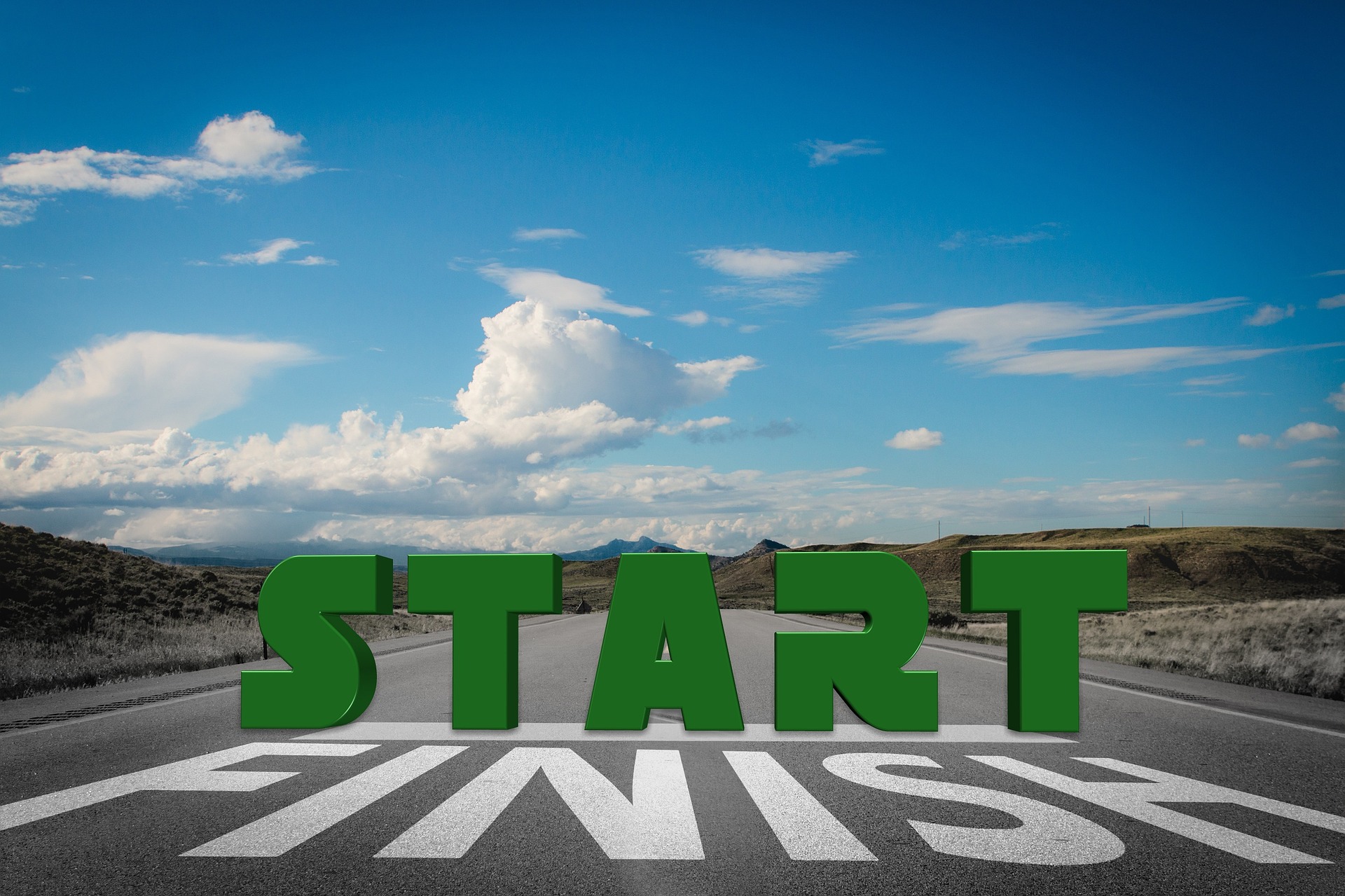
Is This the End, My Friend?

empty road in the mountains, with the words "FINISH" painted on the road surface and "START" superimposed above it.

Which is it?
Image by Gerd Altmann from Pixabay

Are you struggling with the ending to a piece of writing? George Saunders in one of his first public “Office Hours” essays provides ten ways to think about endings. While he’s speaking to short stories, I can see many of these ideas applying in other creative contexts as well.

Consider that, if you’re having trouble with your ending – you’re not.  Your issue is actually the beginning and/or middle of the story.
~ George Saunders

Saunders tells of a class he taught when non-writing-major undergrads all knew which elements of a Vonnegut story needed to be addressed to achieve a satisfactory conclusion. This gives me hope.

Not Made for These Times?

To wrap up, for those readers who, like me, are feeling swamped, struggling to move forward in the wake of so many cruel, baffling, unconscionable decisions from the US Supreme Court and elsewhere: Buddhist psychologist Tara Brach provided a podcast episode for us. “Navigating the Dark Ages” acknowledges the current environment and offers ways to keep going, finding and making meaning along the way with a sense of connectedness to others and participation in the long arc of human history. Give it a listen.

— A M Carley writes fiction and nonfiction, and is a founding member of BACCA. Through Anne Carley Creative she provides creative coaching and full-service editing to writers and other creative people. Decks of her 52 FLOAT Cards for Writers are available from Amazon. Anne’s writer handbook, FLOAT • Becoming Unstuck for Writers, is available for purchase from central Virginia booksellers, at Bookshop.org, and on Amazon

Categories
BACCA Writers

Keeping a Journal Isn’t Virtuous

“Oh, I could never do that. I don’t have the discipline.”

I’ve been thinking about the benefits of keeping a journal, which got me thinking about walking. I lived in New York City for many years, and I walked a lot. Not to “go for a walk” but to get from here to there. Especially during the years I lived in Manhattan, walking was usually my preferred mode of transport – from home to work to entertainment / friends and back home at night.

Before.
Photo by JESHOOTS.com on Pexels

Then, when I moved out of New York City, I stopped walking. My method for arriving at most of my customary destinations no longer worked. I had to use a car or bus or train or combinations thereof to get anywhere at all. First came years of disbelief. “People get in a car to go somewhere just to go for a walk. That’s insane!” Eventually I accepted my new non-walking reality. Years went by, and I reluctantly grew accustomed to driving everywhere.

After.
Photo by Jonathan Petersson on Pexels

During the pandemic I began to make plans with friends to meet up outdoors, where we could chat safely while getting in some steps. As the months went by, I began to form a new habit of going for walks. Still, though, each time I go for a long walk, I confess to feeling virtuous. I expect I’ll get over myself, but at this point the habit is new enough that I remain self-conscious about it. In the early stages of a new habit, it can be a short distance between awkward self-congratulation and slamming on the brakes. “Oh, I tried it for a while, but it didn’t work out.”

Lately, several people, discussing why they don’t keep a journal, said similar things like: “Yeah, I never got into the routine. Good for you, though, for having the self-discipline.”

“Sometimes I wish I had developed the habit years ago. It’s too late to start now.”

“I never found the time for a journal. I’d start one and abandon it after a few days.”

I guess I can understand why people make remarks like that. I imagine it has to do with unfamiliarity, the way I had come to feel about walking distances.

Now.
Photo by Marta Wave on Pexels

My rediscovered and morphed version of “going for a walk” rather than just walking as transportation is still new, not automatic the way journaling has become for me. I need to give myself a little boost to stand up from what I’m working on, get the right shoes on my feet, maybe even drive somewhere, and walk around outdoors. I imagine that a similar hesitancy is at play when people distance themselves from the possibility of starting a journaling practice. To establish either habit takes some time and determination.

Journaling isn’t a panacea. It won’t appeal to everyone. I suspect, though, that a journaling practice can benefit people who assume it’s not for them. Yes, it requires a commitment. Yes, it rewards some regularity of routine. Beyond those constraints, however, it’s incredibly flexible. Like a good friend, it’s there when you need it, even after you’ve been apart. Like a trusted mentor, it provides perspective and guidance. Like a spring day, it’s refreshing and energizing. Like an inner sanctum, it’s private and safe.

Nothing at all to do with virtue. Like going for walks, journaling is its own reward.

— A M Carley writes fiction and nonfiction, and is a founding member of BACCA. Through Anne Carley Creative she provides creative coaching and full-service editing to writers and other creative people. Decks of her 52 FLOAT Cards for Writers are available from Amazon. Anne’s writer handbook, FLOAT • Becoming Unstuck for Writers, is available for purchase from central Virginia booksellers, at Bookshop.org, and on Amazon

Categories
BACCA Writers

Gotta-Gotta Has Its Uses

It’s snowing as I write this on a Sunday afternoon in January. The white stuff has been coming down in central Virginia steadily and relentlessly for more than five hours. It’s expected to continue for quite a while, after which it might shift to freezing rain tonight.

When it snowed here two weeks ago, my neighborhood lost power. Living in a completely electric-powered dwelling, I was left without heat, light, and internet, and did not have the use of kitchen appliances. Lucky for me, the power came back on later that evening. (For some people in the area, the power was out for as long as a full week. The public utility – cough – Dominion Energy – cough – has a lot to answer for.)

When the weather predictions about this snowfall began several days ago, reports differed from one source to another. The chatty woman at the UPS store told me to expect over a foot of snow. NOAA’s forecast predicted half of that. Two apps on my phone disagreed – because it’s impossible to predict the future. Even for weather experts.

I noticed I was feeling keyed up and udgy this weekend, and I knew why. Those cold, dark hours earlier this month, when the public utility gave us no projected time the power might be restored, were uncomfortable and full of uncertainty. Were a lot more of those hours heading my way? Thoughts – planning, list-making, trading bits of advice with friends – occupied my attention as I went through the steps. Do the laundry. Whiz up extra nutrition-packed blender drinks and keep them outdoors in a thermal carrier. Doublecheck that the shelf-stable food supplies are plenteous and accessible. Fill the thermos with boiling water. Go for a long walk the day before the storm was due, even in cold weather, because there may not be any walking possible for a while. Complete all the next several days’ essential desk tasks, just in case I won’t have the use of a computer. Make contingency plans with friends who have 4-wheel drive and/or a spare room, if my power goes out and theirs stays on. Sad to say, I’m developing a bad-weather routine. It did not include creative writing – not even this blog post.

a metal thermos bottle with the cap off
Fill the thermos. Image from PIxabay.

My usual weekend sort-of routine has been disrupted. I’ll admit that I enjoy a certain amount of routine in my weekends, especially during the past 20-odd pandemic months. If it’s Sunday, it’s time for a long walk in the woods, followed by a laundry or two. If it’s Saturday, I get to read a book. I might do more in the kitchen than during the week, fixing something for dinner that requires longer prep time, or baking. Typically, in an aspect of my weekends that I treasure, these activities all happen without deadlines or timetables. I mosey from one thing to another, taking breaks as they happen.

It felt like all those relaxed weekend possibilities went – poof – once it was clear this snowstorm was coming. The “gotta-gotta” engine was running things. That engine used to run my life a lot, and am grateful that it doesn’t so much, these days. My body remembers how, though. The elevated heart rate, shorter breaths, easily distracted thinking – oh yeah. Like riding a bicycle. As I explain in the “Come to Mama” tool in my book, FLOAT, “A self-defeating, buzzing energy I’ve come to call ‘gotta-gotta’ takes over when I’ve been in the land of windowless light, filtered air, and hard surfaces for too long. Gotta-gotta is the welcome mat for workaholism, compulsion, and further depletion. In the throes of gotta-gotta, proportion and balance don’t have a chance to be taken seriously.”

I noticed gotta-gotta taking over this weekend. While I understood the wisdom of making plans to take care of myself and my short-term obligations, I didn’t want to see my hard-won equanimity buried in a snowdrift until springtime. I wanted to use the gotta-gotta when it was called for, and then drop back down into something that works better long term – something calmer and deeper. There’s good news on that front.

I’m glad to report that, although it’s still snowing, I’m getting to the end of this blog post. This wasn’t possible to write while in the throes of gotta-gotta. So, although there are now several inches of snow outside my front door, and they’ll need to be dealt with before I can venture out, it’s also true that indoors the lights are still on, my heartbeat is back to normal, and I plan to fix another cup of tea as soon as I wrap up this post.

Another cup of tea. Photo by Ayla Palermo

Stay safe and sound, everyone. Here’s to calming down enough to write.

— A M Carley writes fiction and nonfiction, and is a founding member of BACCA. Through Anne Carley Creative she provides creative coaching and full-service editing to writers and other creative people. Decks of her 52 FLOAT Cards for Writers are available from Amazon. Anne’s writer handbook, FLOAT • Becoming Unstuck for Writers, is available for purchase from central Virginia booksellers, at Bookshop.org, and on Amazon

Categories
BACCA Writers

Time for the Heavy Lifting

A coaching client of mine emailed the other day to ask why I hadn’t yet begun the “heavy lifting editing” on their book manuscript in progress. Turns out that previous experience with an editor had taught my client to expect cutting and pasting — or slashing and burning — from the start. My behavior wasn’t measuring up to the client’s expectations.

I got to thinking. I saw that, especially with this project, there are multiple kinds of heavy lifting involved in the collaboration between writer and coach, and they each have their own timing.

I reflected on where we were with the project and what had happened so far. They’d sent me 80 or so pages, and asked for an edit of the first portion of those. I did a line edit on those pages, with marginal comments and questions about structure and context. We met a couple of times to discuss these things, and to plan a working outline for the book. After those coaching sessions, the client requested time to think through some new ideas we’d brainstormed about the architecture of this book-length project, and the basic design of each section and chapter within it.

It wasn’t yet time for me to get into any heavy lifting. We were still defining what we were building. With several hundred more pages to write, the client was doing plenty of heavy lifting already.

Along those lines, my client also said: “I think after we get through this first chapter we will have a better idea of how to proceed in the future.”

With that thoughtful sentence, the client was exploring our working process. Makes sense, since they’ve never done this before. And we’ve never done this together before. They’re right about the “heavy lifting,” too — and there’s more than one kind involved for this project. It’s a good metaphor.

After reflecting on these things, I wrote back to the client: Yes, you’re right. I wait to move blocks of text around until I feel we both have a strong sense of the way we’re going to structure the book. For me, that kind of editing makes sense only when the overall architecture — the plan for the book — is clear. Once we have that in place, I’ll be glad to dig in and sling paragraphs around.

Another kind of heavy lifting

The paragraph-slinging I’ll be undertaking is one kind of heavy lifting. There’s another important aspect to this project. It’s the client’s first full-length book — a complex braid of memoir, the science of trauma, and wisdom — and it contains sensitive subject matter. So not only do they need to find the words and make the sentences, and organize them into chapters and sections with an overall arc, flow, and momentum — they also need to find the inner resources to develop and sustain an arms-length stance to the entire enterprise.

Writing about difficult topics from their own life, particularly those that are likely to trigger some members of the intended reading audience, this author has the extra challenge of distancing enough from their own past trauma and growth to be a clear communicator with a consistent perspective. Doing that involves building some strong muscles, and allowing for plenty of recovery time.

The inner work my client has already done — to be capable of this kind of writing — is impressive. That preparation has made it possible now to immerse in deep and painful memories, then surface enough to express in language things that have become possible to articulate, and then climb all the way out, shake it off, go to work, feed the cats, have supper with the spouse, etc. It’s a kind of heavy lifting that takes all the time it requires. From the pages I’ve seen, it’s already apparent that the client’s voice is clear. Their purpose is well defined. People will benefit from this work.

And another kind

Also, it’s the first time they’ve worked with a writing coach. As with any relationship, trust builds over time. We first met a few years ago, when they came to me for a quick creative boost. They had a short deadline for a presentation that needed some finishing touches. So initial trust was there, but now we’re developing a deeper working relationship. Things are going well, and we’re already making real progress defining the book and its architecture.

But last time I contributed the equivalent of a car wash and detailing for a vehicle that the client had already built and road tested. Compared to our prior work together, our process this time is more like designing and assembling an airplane. It makes sense for us to do this work on the ground, not mid-flight.

In short, a project like this requires several kinds of heavy lifting. The author has to bear the most weight, and for the longest time. You might say they’ve been carrying a lot of it their entire life. In fact, this writing project has the potential to lighten their load, if we proceed deliberately and with care. I’m really looking forward to doing my part.

— A M Carley writes fiction and nonfiction, and is a founding member of BACCA. Through Anne Carley Creative she provides creative coaching and full-service editing to writers and other creative people. Decks of her 52 FLOAT Cards for Writers are available from Amazon. Anne’s writer handbook, FLOAT • Becoming Unstuck for Writers, is available for purchase from Central Virginia booksellers, at Bookshop.org, and on Amazon

Categories
BACCA Writers

Critiques and the US Constitution

BACCA’s Origin Story

As described in another page in more detail, the writer group BACCA formed after four of us met in a fiction class at WriterHouse in Charlottesville Virginia.

After the final class session, the four of us wanted to meet again for one more critique session. Then we realized that we all wanted to create an ongoing writer group.

That was ten years ago. Wow – it almost seems impossible that it’s been ten years, but there it is in my 2011 calendar – “writer critique swap” at noon on Saturday the 25th.

Evidence! Proto-BACCA’s first meeting in the author’s 2011 calendar.

We immediately adopted the critique guidelines that had served us well in our writing class. Later, when we created a website for our group – by then we had named ourselves BACCA – we asked permission from Prof. Luke Whisnant, whose guidelines we’d been using, to reproduce them on the website as a resource for other writers. He graciously consented.

At our (pre-pandemic) workshops and in personal emails, we often referred other writers to these guidelines – along with a bundle of other writer group resources.

Changes over Time

Our membership has changed over the years. We now include two founding BACCA writers, another who’s been with us for many years, and one who is a guest member for the duration of her book manuscript. Three other writers were with us for a time, over the years.

Naturally, because of the variety of writers and the passage of time, our critique process has evolved.

A few months ago, we decided to take extra time at our monthly critique session to focus on the guidelines, and see where they might need expanding or refocusing.

Why the Guidelines are Like the US Constitution

I was shocked, when I looked a few months ago at the Whisnant critique guidelines, to see how much I’d added on to them – in my mind. Turns out, the actual guidelines only addressed works of fiction intended for adults, for one thing. Our group has produced, read, and critiqued in many more categories than that.

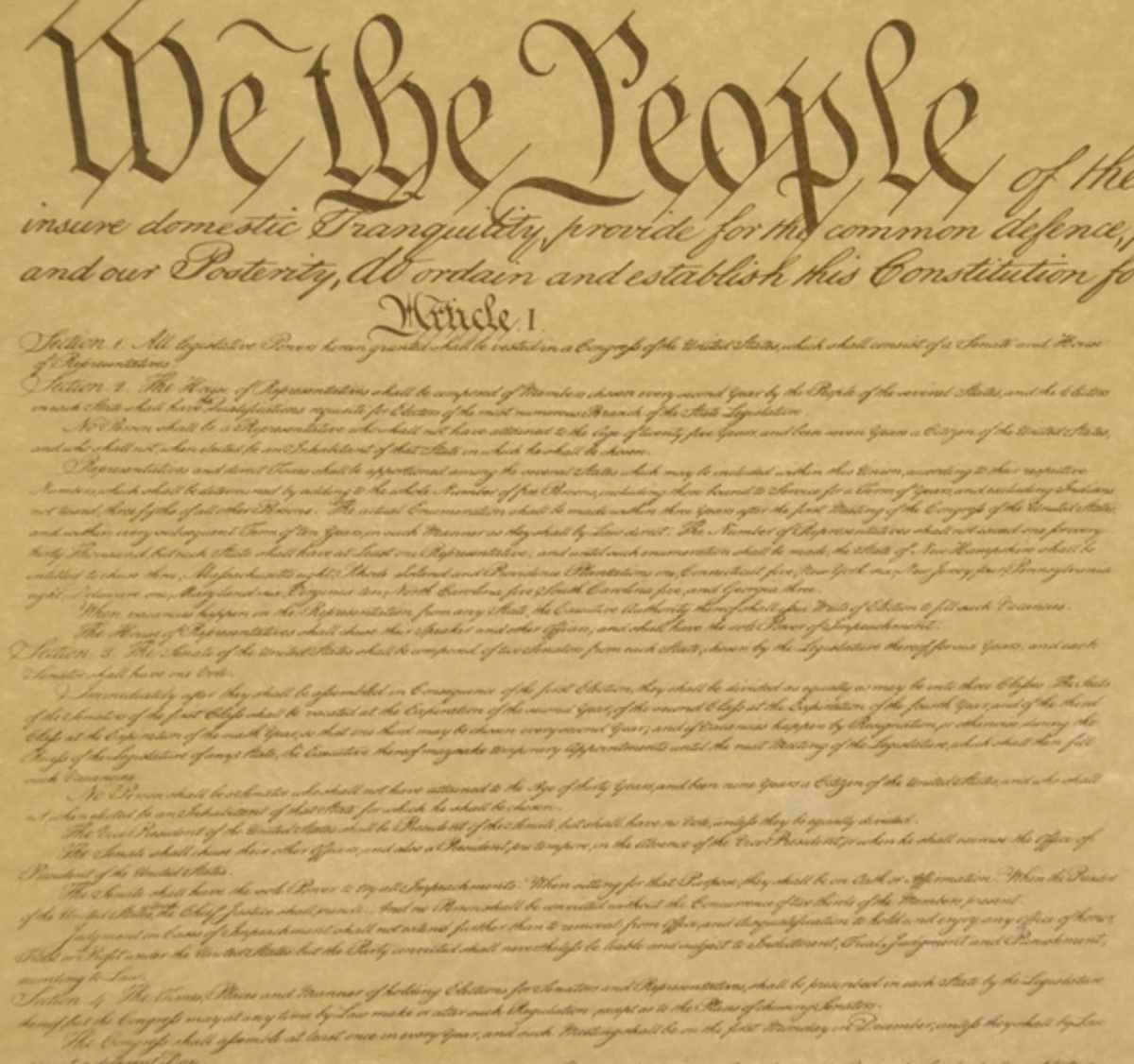
Kind of the like US Constitution, the underlying document had accrued a lot of additional meaning to over the years. But when I casually suggested to a new writer that a look at the guidelines on the BACCA website was all they needed to get up to speed, I had forgotten that none of that extra stuff is actually written down.

A reproduction of the beginning of the US Constitution

The US Constitution is written down.

So we went to work and came up with modifications to address not just adult fiction but also narrative nonfiction (from Carolyn O’Neal), children’s fiction (from Pam Evans), and self-help / instructional manuscripts (from me, A M Carley).

In addition, we now have a wonderful preamble by Noelle Beverly who gives every writer a high-altitude view of the critique process. Her suggestions are thorough, generous, and deeply insightful. You may recall seeing Noelle’s blog post here about this recently, as well.

Amendments Take Time

Also like the US Constitution, making changes to the underlying document requires deliberation and careful thought. Our process is not as glacial as, say, passing the Equal Rights Amendment – waiting since 1972 – but it has taken us several months.

We’ve posted our ratified expanded critique guidelines to the BACCA website. [updated after original blog post]

We really hope that writers find them useful. As Noelle points out in her preamble, preparing critiques benefits the critiquer as well as the critiqued. It’s already been a great experience and opportunity for us to reflect on the key features of an excellent critique.

PS For a brilliant hour all about the importance of the US Constitution, I recommend What the Constitution Means to Me, written and performed by Heidi Schreck.

— A M Carley writes fiction and nonfiction, and is a founding member of BACCA. Through Anne Carley Creative she provides creative coaching and full-service editing to writers and other creative people. Decks of her 52 FLOAT Cards for Writers are available from Amazon. Anne’s writer handbook, FLOAT • Becoming Unstuck for Writers, is available for purchase from central Virginia booksellers, at Bookshop.org, and on Amazon