
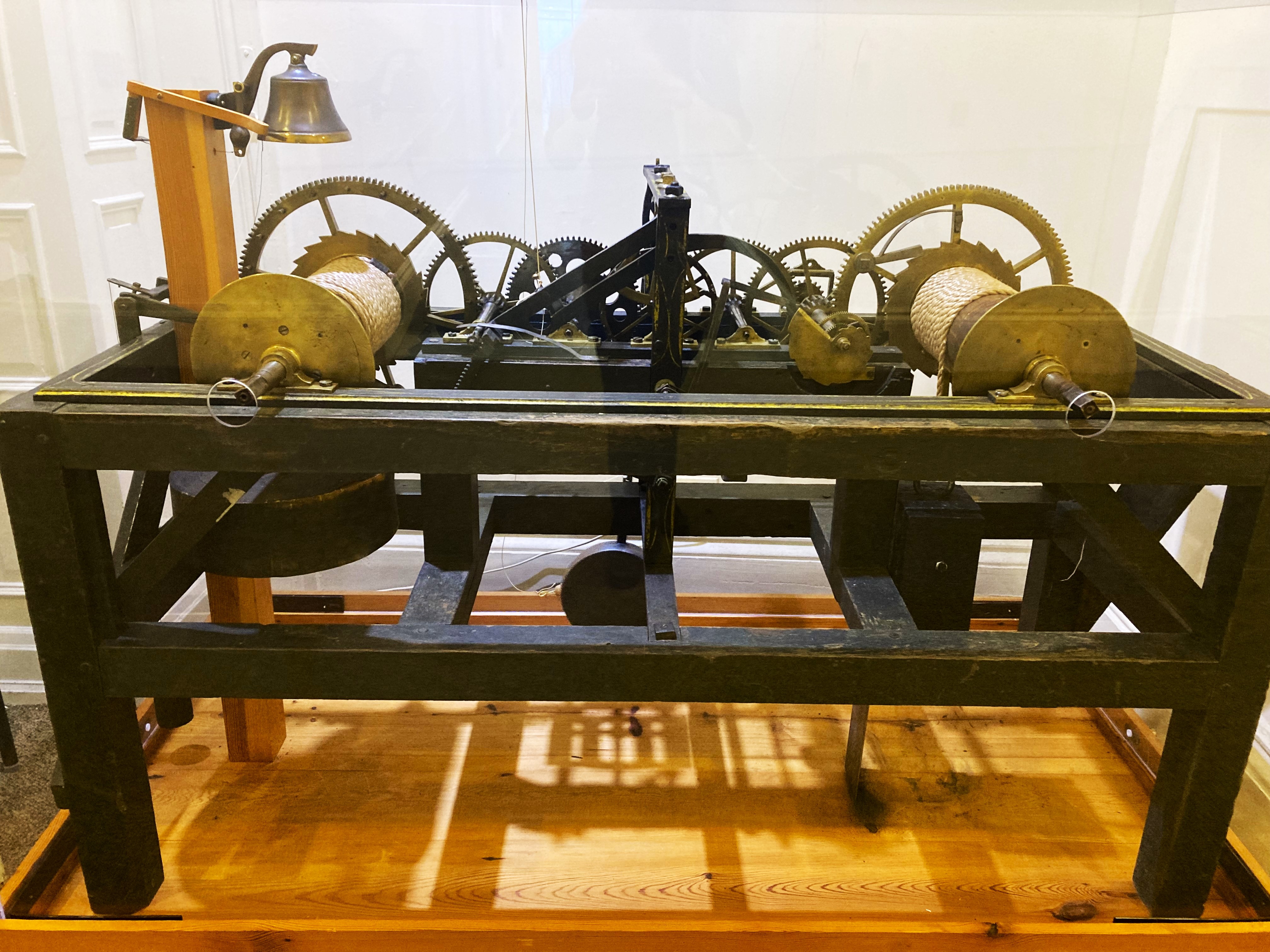
Two tools have rescued me over and over this year: a timer and a notebook. Sometimes the simplest, most humble tools are also the most powerful.
Like just about everyone else, I’m taking inventory. 2023 is winding down; 2024 is about to start ticking away. Whether or not you subscribe to human constructs like calendars and clock time, late December is as good a time as any to assess and track what happened.
When I look back over the last year, especially with regard to my writing practice, I realize that the real challenge has been time. Balancing all the facets of my life—relationships, work, rest, exercise, and creative projects—has been much more difficult over the last 12 to 18 months. I’ve met most of my deadlines (eventually). I’ve created successful content for work, written important chapters for the end of my novel, and I even tried a few new things, like writing in a new genre. But there have also been flops and failures. Ideas that never got off the ground. Lackluster paragraphs and plot lines. Instances of neglect, when I didn’t live up to my promises. These are the moments that return to mind most often—especially in the wee hours.
I know that moving forward, however slowly, is the best recovery. Keep going and hone in on what’s working. It didn’t surprise me at all when I realized that the best creative tools I used this year also helped me to make good use of my time.
What can you do in an hour?
The first tool is very straightforward: set a timer and write for an hour. I learned this strategy from Jerry Seinfeld in his interview with Tim Ferriss. It sounds too simple—even inadequate. Creative work is made through dramatic power moves, right? Eureka moments and feverish all-nighters. Not necessarily. I was shocked to realize how many paragraphs and pages accumulated in just one hour of writing. If I could manage one hour of writing for three days in a row, or five, meeting a deadline suddenly became easy. Ideally, this hour would consist of sixty consecutive, uninterrupted minutes, but my life doesn’t work that way right now. So, if internal or external forces interrupted my work, I simply stopped the timer and then resumed as soon as I could.
I think that the time constraint is one reason this works. It introduces a sense of urgency, an energy, that can be very powerful. If I have all the time in the world (by some miracle), I will take all the time in the world, meandering through the writing process. Knowing I have only one hour helps me focus and get more done quickly.
I also used the timed-hour tool to set limits for certain projects: favors and side jobs, last-minute requests to rescue someone else from their procrastination-induced emergencies. I could easily lose oceans of time in situations like this. But if I limited this kind of work to an hour, I found that I met an obligation adequately enough without sacrificing too much of my own time.
A safe place for now…
The other powerful tool I used this year is an old friend: morning pages (from Julia Cameron’s The Artist’s Way). Cameron’s prescription is to start every day with three, handwritten pages, scribbled as quickly as possible. This practice is meant to flush out useless mind detritus and limber up language skills before the real writing begins. The writing that results from this has no expectations attached to it—it doesn’t need to be polished or brilliant. An added advantage: the notebook is always ready to receive (no warming up or turning on required), and it travels easily.
I’ve used the morning pages strategy for years and found it to be very effective—and versatile. It’s not just a trash pile for me, although I use it to still circular thoughts and sequester worries or guilt-inducing feelings. These notebooks have also become a sanctuary for wild exploration, brain storms, idea generation. Sometimes, I ask a question and keep writing until the answer inevitably comes. I record dreams in them and track changes in my mood, my health, my relationships. For my writing projects, I can use morning pages to work out narrative arcs, flesh out characters, identify themes and record bits of dialog that I’ll incorporate into chapters later. So, the morning pages notebook is a safe place to get a few things down quickly. A place where ideas can live—for now—until I find the time to polish and position them to the best advantage.
Finally, morning pages are a place where, without interruption or correction, I can fully express a thought, following it to full completion. How often do we have the chance to speak without being diverted, distracted, or otherwise cut off? How many good ideas, great lines, or amazing new projects have perished in that moment of interruption? Maybe we all need to create a safe space for those thoughts to grow and develop.
Are you looking back over 2023 and making plans for 2024? Have you tried something new in your creative practice that worked? Do you have strategies or tools that never let you down? In the final moments of this year and in the first moments of the next, I hope that we all find good tools and make time for our creative work. Cheers, and Happy New Year!
Noelle Beverly writes poetry and prose, supports local writers in the surrounding community, and is a member of the BACCA Literary group. Photo by the author.
 BACCA Literary