
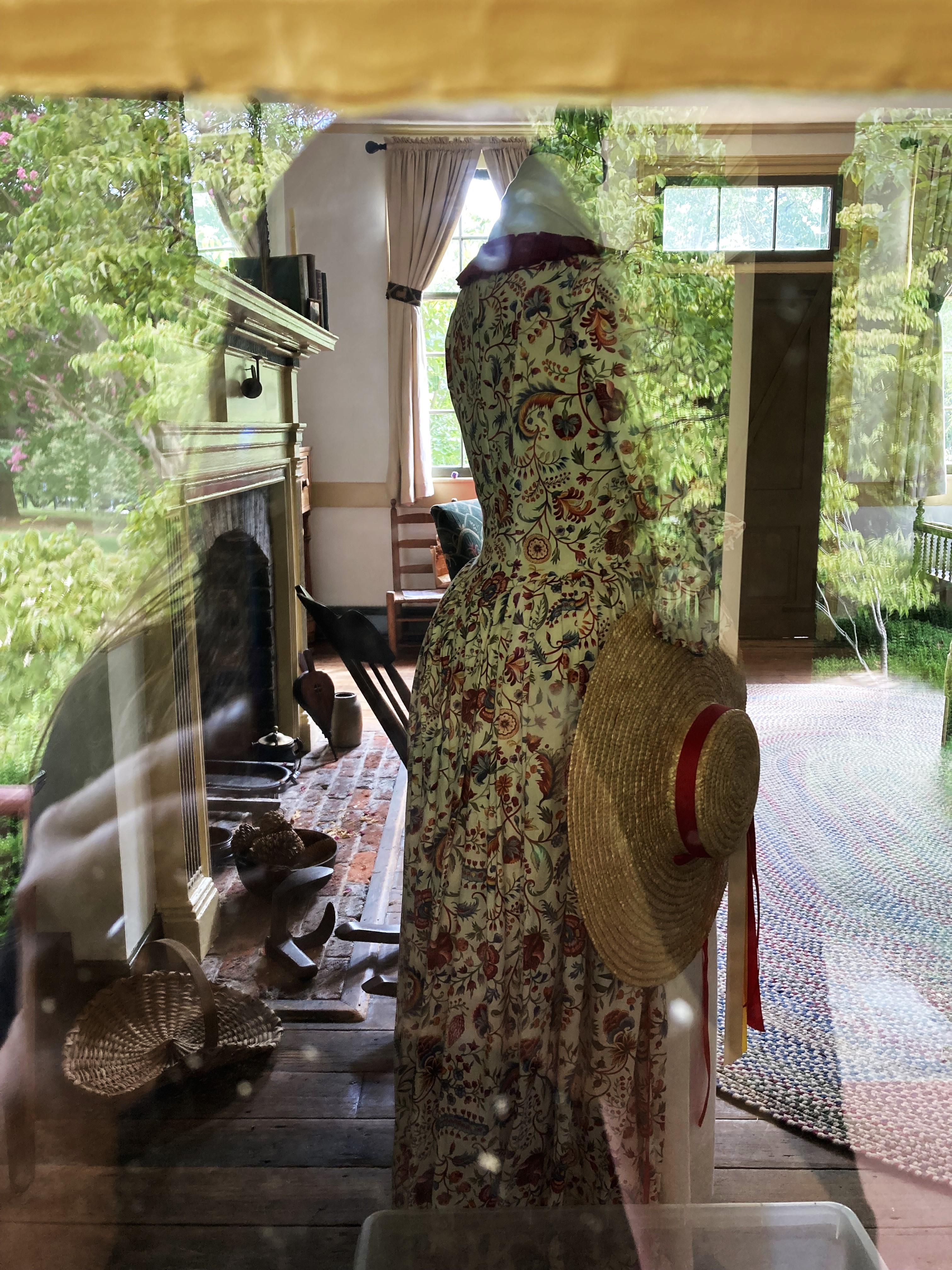
I never thought I’d enjoy being forced to write the truth. Fiction is my first love, and even within that genre, I especially love exploring the blurred edge between the real and the mythic. But I’ve been working for a museum and as part of that work, writing and telling true stories about people that lived, places that exist, events that unfolded. Even though there are limitations that come with sticking to the truth, I’m finding history writing to be a powerful way to communicate some of the themes I care about.
I’ve written here about the creative potential of form—how limits can push or propel a writer into a greater set of ideas, a more rigorous or intense result that full freedom might not have prompted. Writing to share history is something like writing within a form. There are parameters and a set of facts that cannot be embroidered or mislaid. But within those boundaries, and using some of the same skills I employ in my creative projects, I find so much potential.
Every story, true or not, is more effective if it achieves an arc: a provocative beginning, an intense middle, and a satisfying or stunning end. Interpreting history seems to be about finding the perfect arrangement of truths to achieve this shape. Without a shape holding them together, facts can be difficult to hold onto. In this process of arrangement, my perspective is essential. Every interpretation conveyed through a different storyteller is unique. Even while tethered to the truth, as I frame anecdotes, layer details, find connections, and create subtle shifts in focus, I make a story my own.
Finally, working with true stories is satisfying because I see it making a tangible difference. At the museum, we are committed to finding narratives that have been forgotten or written over, stories of the marginalized that, until lately, have remained untold. I’m seeing these stories reach an audience in real time as I give guided walking tours, or put together themed exhibits.
As much as I’ve enjoyed this experience, I’m not abandoning my first love. In fact, I’m longing to dive back into my own invented worlds now more than ever. While sharing history, I’m allowed to provoke but not predict. I can make connections between people or objects or places in the past, but I can’t leap forward and apply those connections to the precarious future.
To warn, to predict, to leap intuitively to what might come next—this is the purview of the poet, the inventor of worlds. There will always be a need to look at and learn from the past, but there is also the need for a different kind of storyteller, too, a need for those writers on the frontier, looking forward, bringing powerful truths back from what they foresee.
Noelle Beverly writes poetry and prose, interprets local history at the Lynchburg Museum, and is a member of the BACCA Literary group. Photo by author.
 BACCA Literary